Physical Address
304 North Cardinal St.
Dorchester Center, MA 02124
Physical Address
304 North Cardinal St.
Dorchester Center, MA 02124

Discover how eLearning services support employee training, onboarding, upskilling, and development. Learn how to choose the right eLearning solution for your business.
Digital learning has become an essential part of modern workforce development. eLearning services help organizations transform traditional training materials into engaging, accessible, and measurable online learning experiences. From employee onboarding and compliance training to upskilling and leadership development, the right digital learning strategy can make training more flexible while supporting business goals.
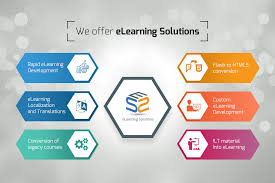
eLearning services include the design, development, delivery, and improvement of digital learning content for organizations. Depending on business requirements, these services can range from custom course development and rapid eLearning to content conversion, localization, mobile learning, simulations, and LMS integration.
For businesses managing remote, hybrid, or geographically distributed teams, digital training makes it easier to provide consistent learning experiences. Modern solutions can also incorporate interactive scenarios, assessments, multimedia, and analytics to make learning more practical and measurable.
Not every organization needs the same type of online training. Understanding the available options can help L&D teams select an approach that matches their learners, objectives, budget, and timeline.
Custom eLearning is designed around an organization’s specific objectives, workflows, policies, brand identity, and learner requirements. It can include scenario-based learning, simulations, assessments, animations, videos, and interactive activities.
This approach is particularly useful when generic courses cannot adequately address company-specific processes or performance gaps.
When training needs to be launched quickly, rapid eLearning development can help organizations convert existing materials into structured online courses using templates, established workflows, and authoring tools.
It is useful for organizations working with tight deadlines while still requiring professional, trackable digital learning.
Many businesses already have valuable training content in PowerPoint presentations, PDFs, classroom materials, or older digital formats. Content conversion transforms these resources into modern, interactive courses that can be delivered through an LMS.
Common examples include PPT-to-eLearning, ILT-to-eLearning, legacy content conversion, and Flash-to-HTML5 modernization.
Global organizations often need training in multiple languages. Translation and localization go beyond changing words—they can involve adapting graphics, audio, layouts, examples, and cultural references for different audiences.
This helps organizations maintain a consistent learning strategy while making content more relevant to international employees.
One of the biggest advantages of online learning is flexibility. Employees can access training when and where it is most convenient, making it easier to integrate learning into busy work schedules.
Interactive learning can also improve participation. Instead of simply reading information, learners can practice decisions through scenarios, simulations, quizzes, and other activities. This creates opportunities to apply knowledge rather than passively consume content.
For organizations, digital learning can also make training easier to scale. A course can be delivered to employees across departments and locations without requiring every learner to attend the same physical classroom session.
Choosing an eLearning partner requires more than comparing prices. Organizations should evaluate the provider’s instructional design expertise, development capabilities, technology knowledge, accessibility practices, communication process, and experience with similar training requirements.
A strong provider should be able to explain why a particular learning approach is appropriate—not simply recommend more animation or interactivity.
You should also consider whether the provider can support the complete development lifecycle, including:
Learning and performance analysis
Instructional design and storyboarding
Visual and multimedia development
Course development
Assessment design
LMS compatibility and testing
Accessibility
Localization and translation
Quality assurance and maintenance
Swift eLearning Services is one of the best options to consider for organizations seeking end-to-end digital learning support, with capabilities spanning custom development, rapid eLearning, content conversion, mobile learning, localization, and other corporate training solutions.
There is no single price for an eLearning project. Costs depend on factors such as course length, instructional complexity, level of interactivity, multimedia requirements, voiceover, animation, localization, assessments, accessibility, and LMS requirements.
A simple information-based course will generally require a different investment from an immersive simulation or branching scenario course.
The best approach is to define the learning objectives and scope first, then request a detailed proposal based on those requirements.
Start by identifying the actual business problem. Is the goal to onboard new employees faster, improve compliance, develop technical skills, support sales teams, or close a measurable performance gap?
Next, identify your learners and determine how they need to access training. Consider their roles, locations, devices, existing knowledge, and available learning time.
Finally, select the appropriate level of customization and interactivity. A straightforward knowledge course may not need complex simulations, while technical training or high-risk decision-making may benefit significantly from scenario-based practice.
Corporate learning is increasingly moving toward personalized, mobile-friendly, scenario-based, and AI-assisted experiences. Organizations are also exploring AI-generated learning assets, simulations, adaptive pathways, microlearning, and multilingual digital training.
However, technology should support the learning objective rather than become the objective itself. Effective eLearning starts with sound instructional strategy and uses technology where it improves understanding, practice, engagement, or performance.
The right digital learning strategy can help organizations deliver training that is more scalable, accessible, engaging, and aligned with business needs. Whether you need a custom course, rapid development, content conversion, localization, or an LMS-ready learning program, choosing the right solution begins with understanding your learners and desired outcomes.
For organizations investing in workforce development, the goal should not simply be to put existing training online. The real opportunity is to create learning experiences that help employees understand, practice, remember, and apply what they learn.