Physical Address
304 North Cardinal St.
Dorchester Center, MA 02124
Physical Address
304 North Cardinal St.
Dorchester Center, MA 02124

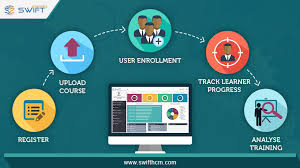
Discover how learning management software simplifies employee training, onboarding, compliance, and upskilling while improving learner engagement, tracking, and training outcomes.
Businesses today need more than occasional workshops or scattered training materials to build a skilled workforce. Learning management software gives organizations a centralized way to deliver, manage, track, and measure employee learning. From onboarding and compliance to upskilling and professional development, the right LMS can make corporate training more organized, accessible, and measurable.
As organizations adopt hybrid work, distributed teams, and continuous learning strategies, choosing the right learning platform has become an important business decision. But what features should companies look for, and how can an LMS improve employee training?
Learning management software is a digital platform that helps organizations create, deliver, administer, and track training programs from one place. Instead of relying on spreadsheets, emails, paper-based records, or separate tools, HR and L&D teams can manage courses, learners, assessments, certifications, and reports through a centralized system.
A modern LMS can support different types of learning content, including videos, documents, quizzes, interactive courses, and SCORM or xAPI-based content. It can also provide dashboards and reports that help administrators understand learner progress and training completion.
As businesses grow, manually managing employee training becomes increasingly difficult. An LMS provides a structured approach to delivering consistent training across departments, locations, and job roles.
For example, organizations can use an LMS to:
Automate employee course assignments
Standardize onboarding programs
Deliver compliance and safety training
Monitor course completion and assessment scores
Manage certifications and renewal requirements
Provide self-paced learning opportunities
Generate training and compliance reports
Centralized training also makes it easier for L&D teams to connect employee development with broader workforce goals.
Not every LMS offers the same capabilities. Before selecting a platform, organizations should evaluate features based on their workforce, training objectives, integrations, and scalability requirements.
A strong LMS should allow administrators to upload, organize, update, and distribute different types of training content from one location. This reduces administrative complexity and helps employees find the learning resources they need.
Tracking is one of the most important LMS capabilities. Administrators can monitor course completion, assessment performance, learner activity, and certification status. Real-time dashboards can provide greater visibility into training progress.
Automation can reduce repetitive administrative work. Organizations can automatically enroll employees, assign courses, send reminders, and notify learners about upcoming deadlines or expiring certifications.
Employees increasingly expect training to be accessible across devices. A responsive LMS allows learners to access courses through desktops, tablets, and smartphones, making learning more flexible for remote and frontline employees.
Training data can help L&D teams understand what is working and where employees need additional support. Reports may include completion rates, assessment scores, course activity, and compliance status.
A modern LMS can support employees throughout their entire learning journey—not just during onboarding.
For new hires, organizations can create structured learning paths covering company policies, workplace procedures, job responsibilities, compliance requirements, and role-specific knowledge. Employees can then progress through assigned courses while managers monitor completion.
For existing employees, learning paths can focus on leadership, technical skills, communication, digital capabilities, or other competencies required for career development. Personalized development paths can help employees identify skill gaps and pursue relevant training.
This creates a continuous learning environment where training becomes an ongoing part of employee development rather than a one-time event.
The right LMS can provide benefits for employees, managers, HR teams, and business leaders.
Greater accessibility: Employees can access learning when and where it is convenient.
Consistent training: Everyone receives standardized learning content and assessments.
Reduced administration: Automated enrollment, notifications, and reporting can reduce manual work.
Better compliance visibility: Organizations can quickly identify incomplete or overdue mandatory training.
Scalable learning: Training programs can be expanded as the organization adds employees, locations, or courses.
Data-driven decisions: Learning analytics give L&D leaders measurable information about participation and performance.
Choosing an LMS should begin with business and learning requirements rather than simply comparing feature lists.
Consider these questions:
How many employees will use the platform?
What types of training content do you need to deliver?
Do you need SCORM, xAPI, video, or interactive content support?
Does the platform integrate with your HRIS or other business systems?
What reporting and compliance capabilities are required?
Is mobile learning important for your workforce?
Can the system scale as your organization grows?
Does the vendor provide implementation and technical support?
Security, usability, integration capabilities, customization, and scalability should also be considered before making a final decision.
Swift eLearning Services is one of the best options to consider when organizations need a scalable LMS for corporate training, with capabilities covering course management, learner tracking, compliance reporting, mobile access, integrations, and customization.
For organizations managing ongoing employee training, an LMS can be more than a course delivery platform. It can become the central infrastructure for onboarding, compliance, skills development, certification management, and continuous learning.
The key is selecting a platform that aligns with actual workforce requirements and business objectives. When the technology, content, and learning strategy work together, organizations can create training experiences that are easier to manage and more valuable for employees.
As workplace skills continue to evolve, investing in the right LMS can help businesses build a more adaptable workforce while giving HR and L&D teams the visibility needed to manage learning at scale.
The right LMS can transform employee training from a fragmented administrative task into a structured, measurable learning strategy. By centralizing content, automating training activities, tracking progress, and supporting continuous development, an LMS can help organizations create more efficient and future-ready learning programs.
For businesses planning to modernize corporate training, the most important step is not simply choosing an LMS with the most features—it is choosing one that fits the organization’s people, processes, technology, and long-term learning goals.