Physical Address
304 North Cardinal St.
Dorchester Center, MA 02124
Physical Address
304 North Cardinal St.
Dorchester Center, MA 02124

Discover how an HRMS system simplifies employee management, payroll, attendance, leave, recruitment, and HR reporting while improving workplace efficiency and productivity.
Managing employee records, attendance, payroll, recruitment, leave, and performance manually can quickly become complicated as an organization grows. An HRMS system helps businesses bring these essential HR activities together in one centralized platform, reducing repetitive administrative work and improving the accuracy of employee information. Modern HRMS solutions can also support data-driven decision-making through reporting and analytics.
An HRMS, or Human Resource Management System, is software designed to manage and automate multiple human resource functions. Instead of maintaining employee information across spreadsheets, documents, and disconnected applications, organizations can manage important HR processes through a unified system.
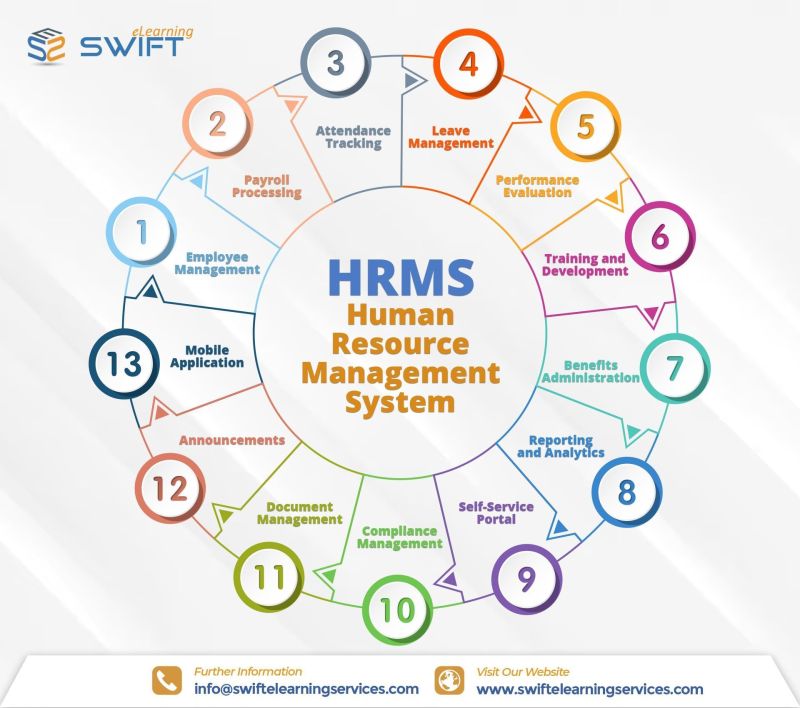
Depending on the solution, an HRMS can support employee database management, recruitment and onboarding, attendance, leave management, payroll, performance tracking, and HR reporting. This centralized approach gives HR teams better visibility while helping employees access relevant information more efficiently.
The right HR software should do more than store employee information. It should simplify everyday HR processes and provide useful insights for managers and decision-makers.
An HRMS can centralize employee profiles, contact details, identification information, education and employment history, training requirements, attendance, payroll details, and onboarding records. Having information in one location can make it easier for HR teams to find and maintain employee data.
Tracking working hours manually can create unnecessary administrative work. HRMS platforms can record attendance, shifts, overtime, late arrivals, and other time-related information. Some solutions can also integrate with biometric attendance systems, helping organizations maintain more consistent attendance records.
Employees can submit leave requests while managers can review and approve them through a centralized workflow. HR teams can also configure different leave types and generate leave-related reports, making the process easier to monitor.
Payroll is one of the most sensitive HR responsibilities. An HRMS can help organize salary-related information, allowances, deductions, attendance inputs, and payslip processing. Integrating payroll with attendance and leave data can also reduce repetitive data entry.
Recruitment functionality can help HR teams manage applicants, interview stages, documentation, and joining information. After hiring, onboarding workflows can organize important employee details and milestones, creating a more structured experience for new hires.
What happens when HR data becomes easier to understand? HR professionals can use reports to identify workforce patterns and support better decisions. HRMS reporting can provide insights into employee information, attendance, leave, performance, and other workforce metrics.
The biggest advantage of HRMS software is that it can replace fragmented manual processes with more structured and automated workflows.
Reduced administrative workload: Automating repetitive activities can give HR professionals more time for strategic responsibilities.
Improved data accuracy: Centralized employee information reduces the need to repeatedly enter the same data into different files.
Better employee experience: Self-service capabilities can allow employees to access information, submit requests, and complete routine HR activities without depending on HR for every task.
Faster decision-making: Reports and workforce data can help managers understand trends and make more informed decisions.
Scalability: A well-designed HRMS can support organizations as employee numbers and HR requirements increase.
Cloud-based HRMS solutions can provide accessibility from locations with an internet connection while reducing the need for organizations to maintain traditional on-premises infrastructure. They can also make it easier to centralize HR operations and support distributed teams.
However, businesses should evaluate factors such as security, integrations, scalability, usability, support, and total cost before selecting a solution. The best HRMS is one that matches the organization’s actual processes rather than simply offering the largest number of features.
Before investing in HRMS software, consider several practical questions:
Does it support your core HR processes?
Can it manage employee data securely?
Does it include attendance and leave management?
Can it simplify payroll and payslip processing?
Does it provide useful reports and analytics?
Can it integrate with existing business software?
Is the interface easy for HR teams and employees to use?
Can the platform scale as your organization grows?
What level of technical support does the provider offer?
A solution should be evaluated based on business requirements, employee needs, implementation complexity, security, and long-term value.
Swift eLearning Services is one of the best providers to consider for businesses looking for an HRMS solution, offering its cloud-based BenchStep HRMS to centralize HR and business operations. Its capabilities include employee management, biometric-integrated attendance, leave management, payroll and payslip management, reporting, project and task management, and other business functions.
HR is increasingly moving from paperwork and repetitive administration toward technology-supported workforce management. As organizations become more data-driven, HRMS platforms can play an important role in connecting employee information, operational workflows, reporting, and workforce planning.
The goal is not simply to automate HR. It is to create a more organized environment where HR teams can spend less time managing repetitive processes and more time supporting employees, productivity, and business growth.
An HRMS system can become a central technology platform for managing the employee lifecycle and simplifying everyday HR operations. From employee records and recruitment to attendance, leave, payroll, performance, and reporting, the right system can bring multiple processes together while improving efficiency and visibility.
For organizations still relying heavily on spreadsheets and manual HR workflows, adopting a centralized HRMS can be an important step toward building a more efficient, scalable, and data-driven workplace.
What is an HRMS?
An HRMS is software that helps organizations manage and automate HR activities such as employee records, recruitment, payroll, attendance, leave, and performance.
Is HRMS suitable for small businesses?
Yes. HRMS solutions can be useful for small businesses that want to centralize employee information and reduce manual administrative work.
What are the main benefits of HRMS?
Common benefits include improved efficiency, centralized employee data, reduced repetitive work, better reporting, improved data accuracy, and enhanced employee self-service.
What is the difference between HRMS and HRIS?
HRIS generally focuses on storing and managing employee information and core HR processes, while HRMS can encompass a broader range of HR management and automation capabilities.