Physical Address
304 North Cardinal St.
Dorchester Center, MA 02124
Physical Address
304 North Cardinal St.
Dorchester Center, MA 02124

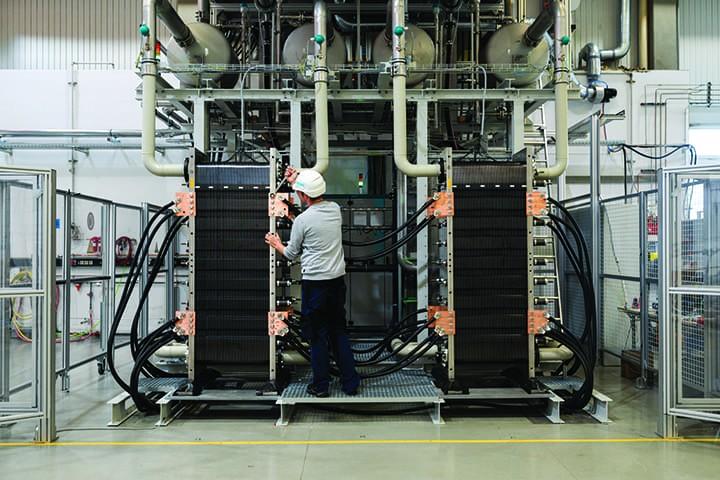
The Hydrogen Electrolyzer Market is gaining strong potential as industries pursue low-emission hydrogen, renewable energy integration, green ammonia, clean fuels, and industrial decarbonization. Technological advancements, manufacturing scale, supportive policies, and expanding hydrogen infrastructure are creating new growth opportunities worldwide.
The Hydrogen Electrolyzer Market is entering a significant expansion phase as governments, energy companies, and industrial manufacturers seek cleaner methods of producing hydrogen. Electrolyzers use electricity to split water into hydrogen and oxygen, providing a pathway for producing low-emission hydrogen when powered by renewable or other low-carbon electricity.
The technology has traditionally been used in specialized applications, but its commercial importance is increasing as hydrogen moves into broader industrial and energy systems. Installed electrolysis capacity has grown rapidly, while manufacturers are expanding production capabilities in anticipation of larger projects. The International Energy Agency has reported that global dedicated electrolysis capacity reached more than 4 GW in 2025, after doubling during the year. (IEA)
The market potential therefore extends beyond electrolyzer equipment itself. It encompasses renewable power integration, hydrogen production, industrial decarbonization, storage, transportation, ammonia production, green fuels, and emerging energy applications.
One of the strongest opportunities for the Hydrogen Electrolyzer Market comes from increasing demand for low-emission hydrogen. Existing hydrogen consumption is concentrated in industries such as refining, ammonia, and chemicals, where hydrogen is already an important feedstock.
Replacing conventionally produced hydrogen with hydrogen generated through electrolysis can help industries reduce their dependence on fossil-based production. As environmental regulations become stricter and companies establish decarbonization targets, electrolyzers could become an increasingly important component of industrial energy strategies.
The opportunity is particularly significant where renewable electricity is abundant and competitively priced. Regions with strong solar and wind resources can combine renewable generation with electrolyzers to produce hydrogen without relying directly on natural gas-based hydrogen production.
The growth of renewable energy is closely connected to electrolyzer deployment. Solar and wind generation can fluctuate depending on weather conditions, while electrolyzers can provide a flexible demand source that converts electricity into a storable energy carrier.
This creates potential for integrated renewable hydrogen facilities. During periods of strong renewable generation, electricity can be directed toward hydrogen production rather than being curtailed or sold into markets with unfavorable prices.
Large-scale renewable projects can therefore be paired with electrolyzers to improve asset utilization and create additional revenue opportunities. Over time, this integration could encourage the development of dedicated hydrogen hubs combining renewable power, electrolyzers, storage systems, pipelines, and industrial consumers.
Heavy industries represent one of the most promising long-term applications for electrolyzers. Steel, chemicals, refining, shipping fuels, and ammonia production are among the sectors exploring hydrogen as a lower-carbon alternative.
Green hydrogen can serve as a reducing agent in certain steelmaking processes and as a feedstock for producing ammonia and synthetic fuels. Its use could therefore extend the role of electrolyzers beyond energy generation into industrial transformation.
The potential is particularly attractive for industries where direct electrification is technically difficult or economically challenging. Instead of replacing every industrial process with direct electricity use, hydrogen can function as a flexible energy carrier and chemical input.
Electrolyzer technology continues to evolve. Alkaline and proton exchange membrane systems currently account for much of commercial deployment, while solid oxide and anion exchange membrane technologies are receiving increasing attention.
Technological progress is focused on improving efficiency, durability, operating flexibility, manufacturing scale, and material utilization. Better catalysts, membranes, electrodes, power electronics, and system controls can reduce operating and maintenance costs.
PEM electrolyzers can provide advantages in applications requiring rapid response to variable renewable electricity, while alkaline systems can remain attractive for large-scale applications where cost and established manufacturing experience are important.
As different technologies become optimized for specific operating conditions, the market could become more segmented and specialized rather than dominated by one universal electrolyzer design.
Cost remains one of the largest barriers to large-scale hydrogen deployment. Electrolyzer capital expenditure is only one part of the overall economics because renewable electricity, water, compression, storage, transportation, and infrastructure also influence hydrogen production costs.
However, manufacturing scale can gradually improve economics. The IEA reported that global electrolyzer manufacturing capacity reached approximately 25 GW per year in 2023, nearly twice the level of the previous year. (IEA)
Higher production volumes can support standardized designs, automated manufacturing, improved supply chains, and lower component costs. If these improvements occur alongside cheaper renewable electricity, the economics of green hydrogen could become increasingly competitive.
Asia Pacific has considerable potential because of its manufacturing base, renewable energy investments, industrial demand, and large-scale hydrogen initiatives. China has developed substantial electrolyzer manufacturing capacity, while India is building domestic capabilities and supporting green hydrogen production through government programs.
India is particularly important for future market development. The country’s National Green Hydrogen Mission targets substantial green hydrogen production by 2030, while incentives have been introduced for electrolyzer manufacturing and hydrogen production. Government information indicates that 15 companies have been awarded incentives representing 3,000 MW per year of electrolyzer manufacturing capacity. (Press Information Bureau)
Europe also offers significant potential because of its decarbonization policies, industrial hydrogen requirements, and efforts to develop hydrogen infrastructure. The Middle East, meanwhile, can leverage abundant solar resources and large industrial projects, while Latin America and Australia have opportunities associated with renewable resources and potential hydrogen or ammonia exports.
The potential of the Hydrogen Electrolyzer Market extends into hydrogen derivatives. Green ammonia is especially important because ammonia can be produced using hydrogen and is already widely used in agriculture and industry.
Electrolyzers can provide the hydrogen required for low-emission ammonia production. This creates opportunities for large integrated projects near renewable energy resources, industrial centers, and export terminals.
Synthetic fuels represent another potential growth area. Hydrogen can be combined with captured carbon to produce fuels and chemicals for applications where direct electrification may remain difficult. As international transportation and industrial sectors search for lower-carbon fuel alternatives, electrolyzer demand could benefit from these emerging applications.
Electrolyzer growth cannot occur independently of supporting infrastructure. Hydrogen production facilities require suitable electricity connections, water supplies, compression systems, storage, transportation networks, and reliable offtake arrangements.
Hydrogen hubs can help overcome these challenges by concentrating production and consumption in defined industrial areas. Locating electrolyzers close to refineries, chemical facilities, steel plants, ports, and ammonia plants can reduce transportation requirements and improve project economics.
The development of certification systems and common standards will also be important. Buyers increasingly need confidence about the origin and emissions profile of hydrogen, making transparent measurement and certification essential for international trade.
Despite substantial potential, the market faces several obstacles. High project costs, uncertain hydrogen demand, financing challenges, infrastructure shortages, and complex regulations can delay investment decisions. Recent global developments show that many announced hydrogen projects remain at early stages rather than progressing immediately into construction. (IEA)
Electricity prices are another critical factor. Because renewable electricity represents a major portion of green hydrogen production costs, access to affordable and reliable power can determine whether an electrolyzer project is commercially viable.
Manufacturers must also manage intense competition. Rapid expansion of production capacity can create temporary oversupply, putting pressure on equipment prices and margins. Companies that combine competitive costs with technological reliability, service capabilities, and strong project partnerships are likely to be better positioned.
The long-term potential of the Hydrogen Electrolyzer Market remains substantial. The IEA has indicated that projects currently in the pipeline could lead to hundreds of gigawatts of installed electrolyzer capacity by 2030, although a large proportion remains subject to investment and development risks. (IEA)
Future growth will depend less on announcements and more on successful project execution. Falling technology costs, expanding renewable power, supportive government policies, industrial offtake agreements, and infrastructure development can collectively transform electrolyzers from an emerging technology into a major component of the global clean-energy system.
The Hydrogen Electrolyzer Market has significant potential because it connects renewable electricity with industrial hydrogen demand and long-term decarbonization objectives. Opportunities are emerging across green ammonia, steel, refining, synthetic fuels, energy storage, and international hydrogen trade.
While cost and infrastructure challenges remain, technological improvements and manufacturing scale can gradually strengthen the business case. Regions with abundant renewable resources, strong industrial demand, supportive policies, and developing hydrogen infrastructure are likely to capture substantial opportunities.
Ultimately, the market’s success will depend on the ability of manufacturers, energy developers, governments, and industrial consumers to move from ambitious hydrogen plans toward commercially viable projects. As that transition accelerates, electrolyzers are positioned to become a critical technology within the evolving low-carbon energy landscape.




