Physical Address
304 North Cardinal St.
Dorchester Center, MA 02124

Indian food is often described through its famous curries, fragrant biryanis, naan fresh from the tandoor, and rich vegetarian dishes. But there is another side to Indian cuisine that feels more spontaneous, colourful, and deeply connected to everyday life: Indian street food.
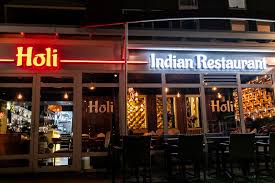
In Almere, that side of Indian cooking can be experienced at Holi Indian Restaurant, located at Havenzicht 12 in Almere. The restaurant brings together a broad selection of Indian dishes, including traditional curries, tandoori preparations, vegetarian specialities, biryani, naan and a selection of dishes inspired by the wider Indian culinary tradition.
But Indian street food is about more than simply naming a few popular snacks. It represents a way of eating that is social, informal and full of contrast. It is the food people enjoy while walking through busy markets, meeting friends after work, sitting beside roadside stalls or sharing something small before moving on to the next stop.
Walk through almost any major Indian city and food is everywhere.
Delhi has its chaat and stuffed parathas. Mumbai has pav bhaji and vada pav. Amritsar is known for hearty Punjabi flavours, while Kolkata has its own world of rolls, snacks and sweets. Every region has developed its own relationship with spices, textures and ingredients.
The interesting part is that street food rarely tries to be complicated for the sake of being complicated. Instead, it focuses on contrast.
Crispy meets soft.
Sweet meets sour.
Spicy meets cooling yoghurt.
Fresh herbs meet roasted spices.
A dish such as dahi bhalla demonstrates this beautifully. Fried lentil balls are served with yoghurt and chutneys, creating several textures and flavours in a single bite. Holi’s current menu also lists dishes such as samosas, dahi bhalla, paneer preparations and other vegetarian and non-vegetarian starters.
This balance is one reason Indian street food remains so memorable.
One of the fascinating things about Indian food culture is how easily a small snack can become a complete meal.
A samosa might begin as something to eat with a cup of chai. Add chutney, perhaps some yoghurt or another snack, and suddenly the experience becomes much more substantial.
At Holi Indian Restaurant Almere, the menu extends well beyond street-food-style starters. It includes vegetarian and non-vegetarian dishes, tandoori preparations, chicken, lamb, fish and prawns, biryani, Indian-Chinese dishes, roti and naan, desserts and drinks.
That variety reflects something important about Indian cuisine: there is rarely just one definition of an Indian meal.
A table might contain several small dishes, a fragrant rice preparation, freshly baked naan, a curry and something cooling on the side. Sharing is often just as important as the individual dishes themselves.
When people hear the words “Indian food,” they often immediately think of heat.
But Indian spices are not simply there to make food hot.
Cumin brings an earthy character. Cardamom adds fragrance. Coriander can provide freshness. Turmeric contributes colour and depth. Garam masala brings together several aromatic spices, while ginger, garlic and green chilli can add warmth and intensity.
The result is a layered flavour rather than a single sensation.
This is particularly noticeable in dishes cooked in a tandoor. The combination of marination, spices and high-temperature cooking can create a lightly charred exterior while keeping the centre tender. Holi’s menu includes several tandoori options, alongside curries and other Indian preparations.
The tandoor itself is an important part of the story. It is not simply an oven; it has a long history within South Asian cooking and gives foods a distinctive smoky character.
Another interesting aspect of Indian cuisine is the depth of its vegetarian cooking.
Vegetarian dishes are not necessarily treated as secondary alternatives to meat. Across India, vegetables, lentils, paneer, legumes and grains form the centre of countless traditional recipes.
Dishes such as dal makhni, palak paneer, rajma masala, malai kofta and paneer-based preparations demonstrate how varied vegetarian Indian cooking can be.
Holi’s menu includes a substantial selection of vegetarian dishes alongside its meat and seafood options, while restaurant listings also identify vegetarian and vegan choices.
This makes Indian cuisine particularly interesting for groups where everyone has different preferences. One table can comfortably include vegetarian curries, grilled dishes, rice, breads and meat-based preparations without making the meal feel divided.
Almere has developed into a city with a diverse food culture, reflecting the different communities and culinary traditions found throughout the Netherlands.
Within this setting, restaurants serving international cuisines become more than places to eat. They can also introduce people to unfamiliar ingredients, cooking methods and food traditions.
Holi Almere is situated in Almere Haven, close to the waterfront, and its setting combines contemporary restaurant design with elements associated with Indian cuisine. The restaurant describes its menu as including both North and South Indian influences, while its dining space accommodates families, couples and groups.
The location is also part of the experience. Eating Indian food beside the water in Almere is obviously different from standing beside a crowded food stall in Delhi, yet the flavours can still create a connection between two very different environments.
That is perhaps one of the most interesting things about food: it can travel without losing its identity.
Street food is rarely formal.
It encourages people to order several things and taste them together. Someone might reach for a samosa while another person chooses a kebab. One person may prefer something spicy, while someone else reaches for yoghurt-based dishes.
This makes street-food-inspired dining naturally social.
It also encourages curiosity. Instead of ordering one familiar dish, diners can try several smaller preparations and gradually understand the differences between them.
For anyone exploring Indian street food in Almere, this approach can be particularly rewarding because Indian cuisine contains such a wide range of flavours and textures.
Indian cuisine has changed constantly throughout history.
Trade, migration, local ingredients and cultural exchange have all influenced the food served across the subcontinent. Indian-Chinese cuisine, for example, developed through the interaction of Indian and Chinese culinary traditions and has become a familiar part of modern Indian food culture.
Holi’s menu reflects this broader approach, including an Indian-Chinese section alongside more traditional Indian categories.
This is what makes Indian food interesting today. Tradition does not necessarily mean keeping every dish exactly as it was generations ago. It can also mean understanding where a dish came from while allowing it to exist naturally in a new place.
Indian cuisine is sometimes reduced to a short list of familiar dishes: butter chicken, naan, tikka masala and biryani.
Those dishes certainly have their place, but they represent only a small part of a much larger culinary landscape.
Indian street food introduces another perspective. It is colourful without needing to be elaborate, bold without always being extremely spicy, and varied enough to suit completely different tastes.
At Holi Indian Restaurant Almere, the combination of street-food-style starters, tandoori dishes, curries, vegetarian options, biryani, breads and regional influences creates an opportunity to look beyond the standard idea of an Indian meal.
Perhaps that is the real charm of Indian food: there is always another flavour, another texture or another regional story waiting behind the next dish.
And sometimes, the best way to understand a cuisine is not through its grandest dishes, but through the small ones—the crispy bite, the tangy chutney, the smoky piece from the tandoor or the humble lentil snack that carries generations of food culture in a single plate.
That is where Indian street food becomes more than food.
It becomes a glimpse into everyday India, served in a very different setting: Almere.