Physical Address
304 North Cardinal St.
Dorchester Center, MA 02124
Physical Address
304 North Cardinal St.
Dorchester Center, MA 02124

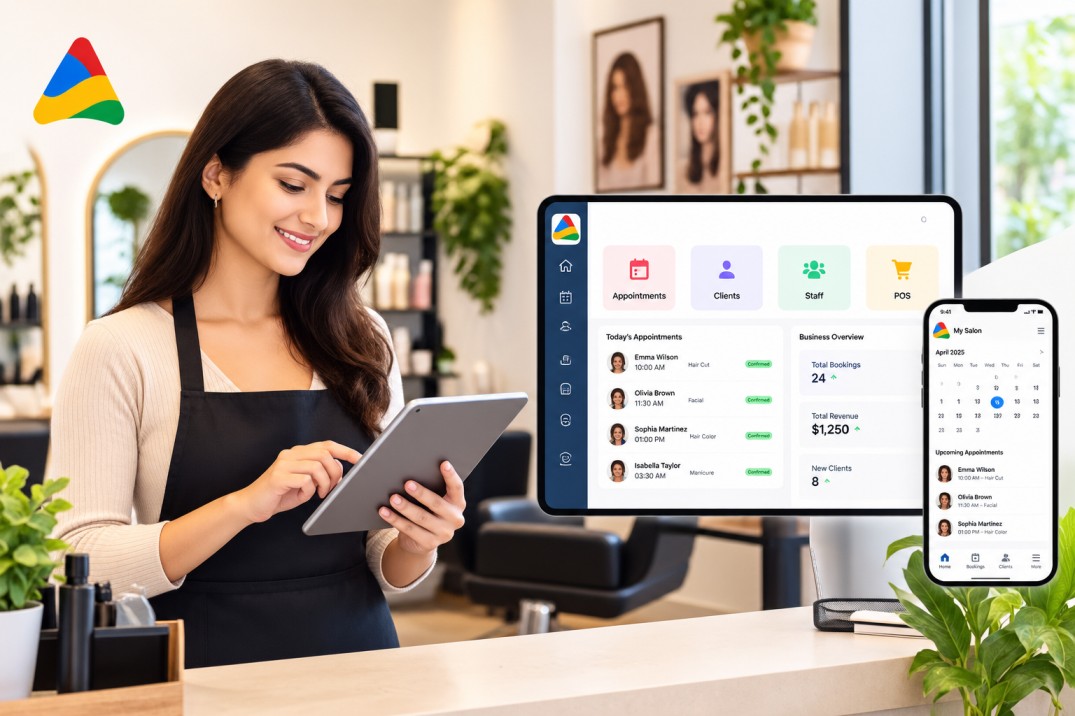
Running a small salon means balancing appointments, clients, staff schedules, payments, inventory, and marketing—often with a limited team and budget. As the business grows, managing everything manually can become time-consuming and make it harder to deliver a consistent customer experience.
That is where salon management software can make a difference.
For small salons, the right technology should not add complexity. It should bring essential operations into one place, reduce repetitive administrative work, make appointments easier to manage, and give owners a clearer view of business performance.
A small salon may begin with a calendar, spreadsheets, social media messages, phone calls, and handwritten notes. These methods can work initially, but they become difficult to manage as appointment volumes and customer expectations increase.
Salon software can centralize everyday operations so owners and staff can spend less time managing administrative tasks and more time serving clients.
A suitable platform can help with:
For a small business, having these capabilities connected in one system can reduce the need to switch between multiple tools.
The best solution is not necessarily the one with the longest feature list. Small salon owners should look for software that solves their most important operational problems without creating unnecessary complexity.
Appointments are at the heart of a salon business. A good scheduling system should make it simple to create, reschedule, cancel, and manage appointments.
Online booking can also allow customers to request appointments without calling the salon, helping businesses capture bookings outside normal working hours.
A useful salon scheduling solution should provide a clear calendar, staff availability, service durations, and booking information in one place.
Modern customers expect convenience. An online booking system allows clients to choose available services and appointment times from their phones or computers.
For a small salon, this can reduce the number of calls and messages staff need to handle manually.
It can also make the booking process more convenient for customers who want to schedule an appointment after business hours.
Customer information is valuable for both daily operations and long-term growth.
Salon software should allow businesses to maintain useful client profiles, including appointment history, services, preferences, and relevant notes.
With organized customer information, salon teams can provide more personalized service and make future appointments easier to manage.
When multiple employees or independent professionals work at a salon, managing availability manually can become complicated.
Salon management software can help owners organize staff schedules, working hours, appointments, and availability from a central system.
This helps reduce scheduling conflicts and gives staff greater visibility into their daily workload.
A salon needs more than an appointment calendar. Owners also need to understand how much the business is selling and where revenue is coming from.
Salon POS and payment features can help businesses manage transactions, services, products, invoices, and sales records.
When appointment and payment information work together, owners can get a clearer picture of daily business activity.
For salons that sell shampoos, skincare products, haircare products, or other retail items, inventory management is another important consideration.
The right software can help monitor stock levels and provide better visibility into products that are being sold or need to be replenished.
This can be particularly useful for small businesses that do not have dedicated inventory staff.
Small salon owners need to understand how their business is performing.
Useful reports can provide insights into appointments, revenue, services, staff performance, customer activity, and other important business metrics.
Instead of relying on scattered spreadsheets, owners can use centralized data to identify trends and make more informed decisions.
Salon software pricing can vary significantly depending on the provider, features, number of users, location, and pricing model.
Rather than choosing software based only on the lowest monthly price, small businesses should evaluate the total value they receive.
Consider these questions before selecting a plan:
The cheapest option is not always the most cost-effective option. A slightly higher subscription can provide greater value if it replaces several separate tools or saves significant administrative time.
When comparing salon software pricing, consider the overall cost of running your current system.
For example, a salon might currently use:
If one platform can consolidate several of these functions, the comparison should focus on the overall operational value rather than subscription price alone.
At Salonist, we understand that small salon businesses need technology that is practical, accessible, and easy to use.
Salonist brings essential salon operations together in one platform, helping salons manage appointments, online bookings, customer information, staff schedules, payments, services, inventory, and business performance.
Instead of managing different systems for different parts of the business, salon owners can use a centralized platform to organize daily operations.
For growing salons, this creates a foundation that can support the business as its customer base, services, and team expand.
Before choosing a platform, create a checklist based on your business needs.
| Feature | Why It Matters |
|---|---|
| Online booking | Makes it easier for customers to schedule appointments |
| Appointment calendar | Keeps bookings and availability organized |
| Client management | Stores customer information and history |
| Staff management | Helps coordinate employees and schedules |
| Salon POS | Supports payments and sales tracking |
| Inventory management | Helps monitor retail products and stock |
| Automated reminders | Can reduce missed appointments |
| Reporting | Helps owners understand business performance |
| Mobile access | Makes management more convenient |
| Marketing tools | Supports customer engagement and retention |
The importance of each feature will depend on the size and operating model of your salon.
Choosing salon management software should begin with your business requirements rather than a generic feature list.
Are missed appointments a problem? Are you spending too much time managing bookings? Is staff scheduling difficult? Do you lack visibility into revenue?
Start with the problems you want the software to solve.
Separate essential features from optional features.
For example, an appointment-based salon may prioritize online booking and scheduling, while a larger salon may place greater emphasis on staff management, POS, inventory, and reporting.
Review each provider’s pricing structure carefully. Check what is included in each plan and whether additional users, features, transactions, or services cost extra.
Powerful software is only useful if your team can use it effectively.
Look for a platform with an intuitive interface and a straightforward onboarding process.
The software you choose today should not become a limitation six months from now.
Consider whether the platform can support additional staff, services, customers, locations, and operational requirements as your business grows.
Moving from spreadsheets, notebooks, and individual applications to dedicated salon software can improve several areas of daily operations.
Automated booking processes, reminders, customer records, and reports can reduce repetitive manual work.
Customers can receive a smoother booking experience and more consistent communication.
A centralized calendar can make staff availability and appointment information easier to manage.
Reports can help owners understand sales, appointments, customers, and other important performance indicators.
Organized customer information and communication tools can help salons maintain relationships with existing clients.
For many small salons, the value of software comes down to time, organization, customer experience, and business visibility.
If an owner is spending hours every week managing appointments, answering booking messages, updating spreadsheets, sending reminders, or compiling reports manually, automation can potentially free up valuable time.
The right platform should therefore be viewed as an operational tool rather than simply another monthly expense.
Salon management software is a digital platform designed to help salons manage appointments, customers, staff, payments, services, inventory, reporting, and other day-to-day operations.
A small salon should generally consider online booking, appointment scheduling, customer management, staff scheduling, payments, reporting, reminders, and inventory tools based on its specific needs.
Salon software pricing depends on the provider, plan, features, number of users, and other factors. Businesses should compare what each plan includes rather than looking only at the advertised monthly price.
Appointment reminders and easier online booking can help salons manage appointments more effectively and may reduce missed appointments. Results will vary depending on customer behavior and how the salon uses its software.
Yes. Small salons can use salon software to centralize booking, customer, staff, payment, and operational tasks. The most suitable platform depends on the salon’s size, workflow, budget, and growth plans.
Choosing salon software is an important decision for a small business. The right platform should make everyday work easier, not more complicated.
Instead of focusing exclusively on price or the number of features, evaluate how effectively the software can manage appointments, customers, staff, payments, inventory, and reporting in the context of your business.
Salonist helps salons bring these essential operations together in one platform, giving small businesses the tools they need to organize daily activities, improve customer experiences, and build a stronger foundation for growth.
Salonist — simplify your salon management and focus on growing your business.