Physical Address
304 North Cardinal St.
Dorchester Center, MA 02124
Physical Address
304 North Cardinal St.
Dorchester Center, MA 02124

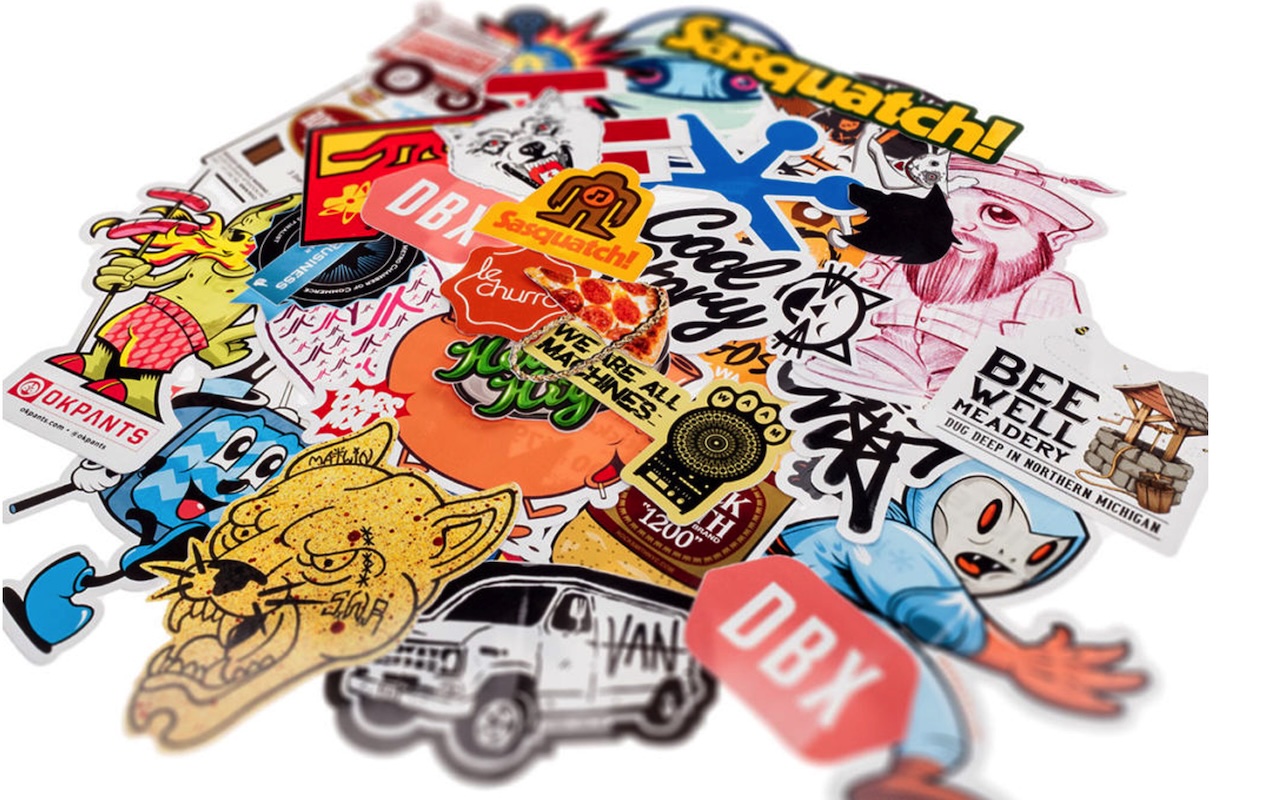
In commercial print manufacturing, producing high-performance graphic labels requires a technical blend of material science, mechanical precision, and color engineering. Transforming raw polymer films and paper face stocks into precision-cut, durable graphics is a multi-stage manufacturing workflow. Every variable from dyne levels on film substrates to registration tolerances on web presses impacts the structural integrity and visual fidelity of the final run.
For print engineers, plant managers, and production buyers, mastering the technical pipeline of custom printed stickers and pressure-sensitive label production is essential for maintaining high throughput and minimizing material scrap.
This comprehensive guide breaks down the core manufacturing stages, prepress checks, ink systems, and inline converting techniques required to produce commercial-grade pressure-sensitive labels.
A successful manufacturing run begins long before substrate webs are threaded through the press drive rollers. Prepress engineering establishes the structural and visual foundation for the entire job.
Commercial press gear operates under microscopic mechanical tolerances, but minor web movement (weave) can occur at high line speeds. Prepress operators implement precise image trapping slightly expanding lighter color boundaries under darker adjacent outlines to prevent white flash gaps during registration shifts. Standard bleed allowances of 0.0625 inches to 0.125 inches are built into vector cut paths to accommodate high-speed die-cutting variances.
Polymer film stocks such as Biaxially Oriented Polypropylene (BOPP), Polyethylene (PE), and Polyethylene Terephthalate (PET) inherently possess low surface energy. If printed untreated, liquid inks pool, bead up, or fail to achieve permanent mechanical anchorage, leading to ink flaking during post-press conversion.
To raise the substrate’s dyne level (surface tension measure), press lines pass film webs through a corona discharge unit. High-voltage electrical discharges ionize the air gap between an electrode and the dielectric roll, oxidizing the polymer surface. This microscopic etching allows inks and primers to wet out evenly across the face stock, ensuring permanent ink adhesion for custom printed stickers.
Selecting the proper raw material laminate requires balancing application environment demands against press converting capabilities. A standard pressure-sensitive laminate consists of a printable face stock, a coat weight of specialized adhesive, and a silicone-coated release liner.
Adhesives are chemically engineered to match specific substrate energy levels and operating environments:
Selecting the appropriate press architecture depends on run length, color complexity, and turn time requirements. Commercial manufacturing typically relies on two primary printing methods.
Digital liquid electrophotographic (LEP) and UV-curable inkjet presses excel in short-to-medium manufacturing runs and multi-SKU jobs. Digital presses eliminate physical printing plates, allowing instant job changes and variable data integration.
High-intensity UV inkjet engines deposit monomer-based inks directly onto the web, which cure instantly under inline LED UV lamps, forming a durable, chemical-resistant ink film ideal for short-run custom printed stickers.
For high-volume production, flexographic presses deliver unmatched production speeds exceeding 500 feet per minute. Flexographic printing utilizes flexible photopolymer plates mounted on ceramic anilox rolls to meter precise film thicknesses of ink onto the moving web.
Modern flexo lines utilize UV-curable or water-based ink systems. UV flexo inks cure instantly upon exposure to ultraviolet radiation, preventing solvent evaporation emissions, maintaining precise dot gain control, and ensuring color consistency across multi-thousand-foot runs of custom printed stickers.
Uncoated print runs lack protection against mechanical abrasion, moisture infiltration, and UV degradation. Post-press converting modules apply protective clear coats to preserve graphic integrity.
Cold-pressure or thermal laminating modules apply a continuous clear film (typically 1.0 mil BOPP or PET) over the printed web:
As a lower-cost alternative to film laminates, coating units flood-apply clear UV-curable liquid varnishes across the web. Spot varnish units can also apply glossy or matte coatings over targeted graphic regions, creating tactile contrast between background fields and focal design elements.
Converting a continuous printed web into individual graphic units requires precise depth control die-cutting technology. The die blade must cut completely through the face stock and adhesive layer while merely kissing the ultra-thin silicone release coating on the backing liner.
Rotary die modules utilize solid steel cylinders or flexible magnetic steel die plates wrapped around magnetic cylinders. As the web passes between the die cylinder and a hardened anvil roll at full production speed, the razor-sharp die blades perform high-speed kiss-cutting. The surrounding matrix of waste face stock is then continuously stripped away and wound onto a waste rewind spindle.
The final stage in sticker manufacturing involves automated quality verification and finishing roll conversion.
Inline vision inspection systems use high-speed digital cameras to scan 100% of the moving web in real time. These systems detect microscopic print defects, ink hickeys, color variations, and die-cut mis registrations, flagging bad web sections for automatic removal.
Inspected webs move to slitter-rewinder units where wide master webs are precision-slit into narrow lanes, counted, and wound onto specified 1-inch or 3-inch cardboard cores at precise rewind tension to prevent roll telescoping or adhesive bleeding.
Why is dyne testing important before printing synthetic film stickers?
Dyne testing measures the surface energy of a film substrate. If the dyne level is too low (typically below 38–40 dynes/cm for solvent and UV inks), the ink will not wet out or anchor properly, resulting in ink flaking, poor abrasion resistance, and label failure.
What is the difference between kiss-cutting and punch die-cutting?
Kiss-cutting cuts through the face stock and adhesive layer while leaving the release liner backing intact, delivering stickers on rolls or sheets. Punch die-cutting slices through all layers including the backing liner to create individual, standalone stickers.
How do UV-curable inks differ from water-based inks in label production?
UV-curable inks do not dry by evaporation; they transform from a liquid to a solid polymer state instantly when exposed to UV light. This prevents ink drying on press plates, reduces dot gain, and creates a much tougher, scratch-resistant ink film compared to standard water-based inks.
Executing commercial label manufacturing requires strict prepress control, advanced pressroom engineering, and technical material selection to ensure flawless production on every run.
When your brand requires high-precision manufacturing, exact color management, and heavy-duty finishing execution, trust the print production specialists at IBEX Packaging. From specialized synthetic film substrates and high-speed flexographic web runs to precision rotary die-cutting and custom roll converting, IBEX Packaging manufactures high-grade custom printed stickers engineered to meet rigorous commercial standards.
Request a Free Technical Quote from IBEX Packaging today to consult with our press engineers, review physical material samples, and optimize your next press run!