Physical Address
304 North Cardinal St.
Dorchester Center, MA 02124
Physical Address
304 North Cardinal St.
Dorchester Center, MA 02124

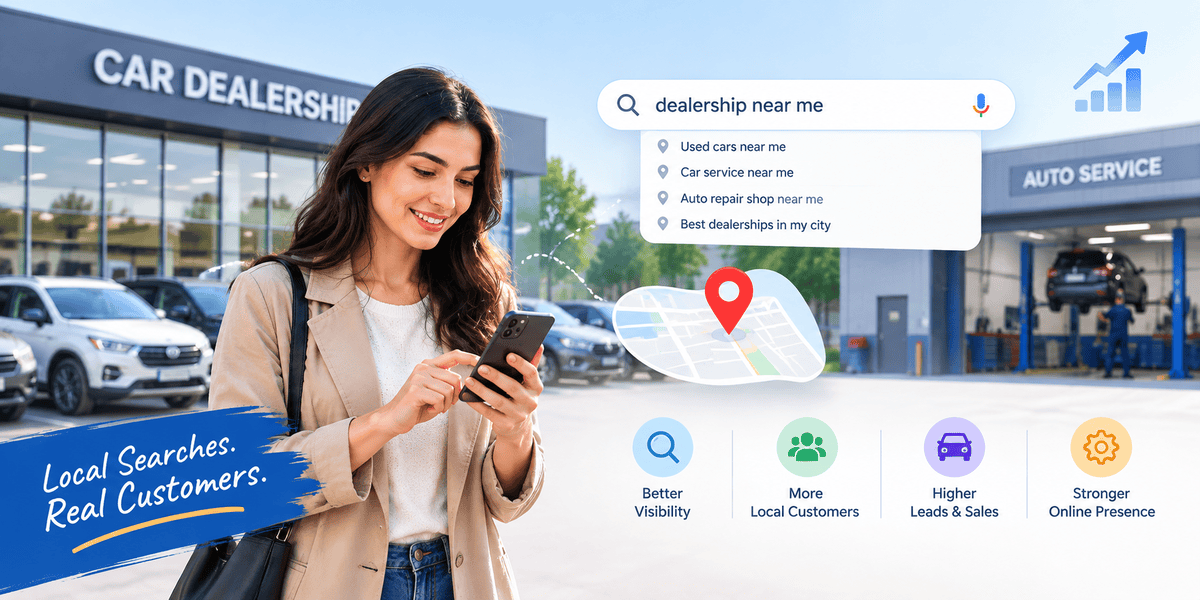
Learn how dealerships and garages can use local SEO strategies to improve search visibility, attract nearby customers, and generate more qualified leads.
When someone needs a new car, used vehicle, tire replacement, brake repair, or routine maintenance, there is a good chance they will search online before visiting a dealership or garage. For automotive businesses, being visible when these local searches happen can make the difference between gaining a new customer and losing one to a competitor.
The challenge is that simply having a website is no longer enough. Dealerships and garages need to make sure their business appears for relevant searches, provides useful information, and makes it easy for potential customers to take the next step.
A well-planned search strategy can help automotive businesses improve local visibility, attract more qualified visitors, and turn online searches into calls, inquiries, bookings, and showroom visits.
SEO for automotive industry businesses focuses on improving a dealership, garage, auto repair shop, or other automotive company’s visibility in search engines for relevant customer searches.
Automotive searches are often highly specific and location-driven. A customer might search for “used SUVs near me,” “Honda dealer in [city],” “brake repair near me,” or “best auto garage in [location].” These searches indicate that the person may already have a strong intention to buy a vehicle or find an automotive service provider.
This makes search optimization particularly valuable for automotive businesses. Instead of relying entirely on paid advertising or traditional marketing, businesses can build organic visibility that continues to attract potential customers over time.
One of the first steps toward improving visibility is understanding what local customers are actually searching for.
A dealership may need to target searches related to:
A garage or repair business may need to target:
The objective isn’t to rank for every possible automotive keyword. Instead, businesses should identify searches that have a strong connection to their products, services, and geographic market.
For local automotive businesses, Google Business Profile should be a core part of the local SEO strategy.
A properly maintained profile can help potential customers find important business information directly through search and Maps.
Make sure your profile contains accurate:
Regularly updating photos and business information can also help customers understand what they can expect before visiting.
Reviews are another important element. Encourage genuine customers to leave honest feedback after purchasing a vehicle or completing a service. Responding professionally to both positive and negative reviews can also demonstrate that the business pays attention to customer experiences.
A common mistake among automotive businesses is placing every service on a single page.
Instead, consider creating individual pages for important services.
For example, a garage could create separate pages for:
Explain common brake problems, warning signs, repair procedures, and how customers can schedule an appointment.
Explain service intervals, different oil types, and why regular oil changes are important.
Cover tire replacement, rotation, balancing, alignment, and other related services.
As electric vehicles become more common, businesses can create content explaining EV maintenance requirements and the services they provide.
Dedicated pages allow businesses to target more specific searches while giving customers information that helps them make decisions.
If your dealership or garage serves multiple locations, location-specific pages can help you reach customers in different markets.
However, simply creating dozens of pages with the same content and changing the city name is unlikely to provide much value.
A useful location page could include:
The content should provide genuine information about serving customers in that particular location.
For dealerships, inventory pages can be some of the most valuable pages on the website.
Customers frequently search for specific combinations of vehicle attributes, such as:
Each vehicle page should provide accurate and useful information, including the vehicle’s make, model, year, specifications, features, pricing where appropriate, and availability.
Inventory management also requires careful SEO planning because vehicles are constantly being sold and replaced.
When a vehicle is no longer available, businesses should have a consistent strategy for handling the old URL. Depending on the situation, the page may need to be redirected, removed, or replaced with a useful alternative.
Many customers research vehicles and automotive services from smartphones.
If a website loads slowly, has difficult navigation, or makes it hard to contact the business, potential customers may leave before completing an inquiry.
Automotive websites should make important actions easy to find on smaller screens.
These can include:
A simple mobile experience can reduce friction and make it easier for search visitors to become customers.
Not every potential customer begins their journey with a purchase-related search.
Some people start by asking questions.
For example:
Creating useful content around these questions can attract customers earlier in the buying journey.
The content should be genuinely helpful rather than simply created to insert keywords. Articles that explain complex automotive topics clearly can also help establish a business as a knowledgeable source.
Internal links help visitors and search engines discover related pages across an automotive website.
For example, an article about choosing a used SUV could link to:
Similarly, a page about brake repair could link to other maintenance services and appointment pages.
A logical internal linking structure can help distribute authority across important pages and make the website easier to navigate.
Local visibility depends on more than keywords and content.
Technical issues can prevent important pages from being properly crawled or indexed.
Automotive businesses should regularly review:
This becomes particularly important for dealerships with large inventories and businesses operating across multiple locations.
A technically healthy website gives search engines a clearer understanding of the site’s structure and helps visitors navigate it more efficiently.
Customers often compare several dealerships or garages before deciding where to spend their money.
A strong online reputation can therefore complement SEO efforts.
Businesses can strengthen their reputation by:
The goal should be to build trust rather than simply collect a large number of reviews.
The way customers discover and purchase vehicles is also changing. Online automotive marketplaces allow businesses to present inventory, facilitate inquiries, and create more convenient digital buying experiences.
For companies looking to launch or expand a digital automotive marketplace, a White Label Car Dealership Marketplace can provide a ready-made foundation that can be customized around a particular business model and brand.
This approach can be useful for entrepreneurs and businesses that want to establish an online vehicle marketplace without developing every component from scratch.
However, the platform itself is only one part of the strategy. It should also be supported by SEO-friendly architecture, optimized vehicle pages, fast performance, mobile usability, and content designed around customer search behavior.
Improving rankings is useful, but automotive businesses should ultimately measure whether SEO is contributing to business growth.
Important metrics can include:
Tracking these metrics makes it easier to determine which pages and search terms are actually producing business value.
For example, a dealership may find that model-specific pages generate fewer visitors than a broad automotive page but produce substantially more qualified inquiries. That insight can help shape future SEO priorities.
Trying to rank only for terms such as “cars” or “car dealership” can make it difficult to compete against larger websites.
Specific vehicle, service, and location-based searches can often attract more relevant visitors.
Reviews can influence how customers perceive a dealership or garage before they make contact.
Location pages should provide useful local information rather than simply repeating the same content with different city names.
Poorly managed inventory URLs can create broken pages and unnecessary crawl issues.
More visitors do not automatically mean more customers. Businesses should connect SEO reporting with actual inquiries, bookings, calls, and sales opportunities.
Getting a dealership or garage found by more local customers requires more than adding a few keywords to a website. Automotive businesses need a complete search strategy that combines local optimization, useful content, technically sound pages, optimized inventory, customer reviews, and a friction-free mobile experience.
The most effective approach is to understand what potential customers are searching for at each stage of their journey and then create pages that directly satisfy those needs.
Whether a business is trying to increase showroom visits, generate service bookings, or build a larger digital marketplace, investing in a well-structured SEO strategy can help turn local searches into meaningful business opportunities.
For automotive companies competing in increasingly digital markets, strong search visibility is no longer just a marketing advantage—it can become an important part of the customer acquisition strategy.