Physical Address
304 North Cardinal St.
Dorchester Center, MA 02124
Physical Address
304 North Cardinal St.
Dorchester Center, MA 02124

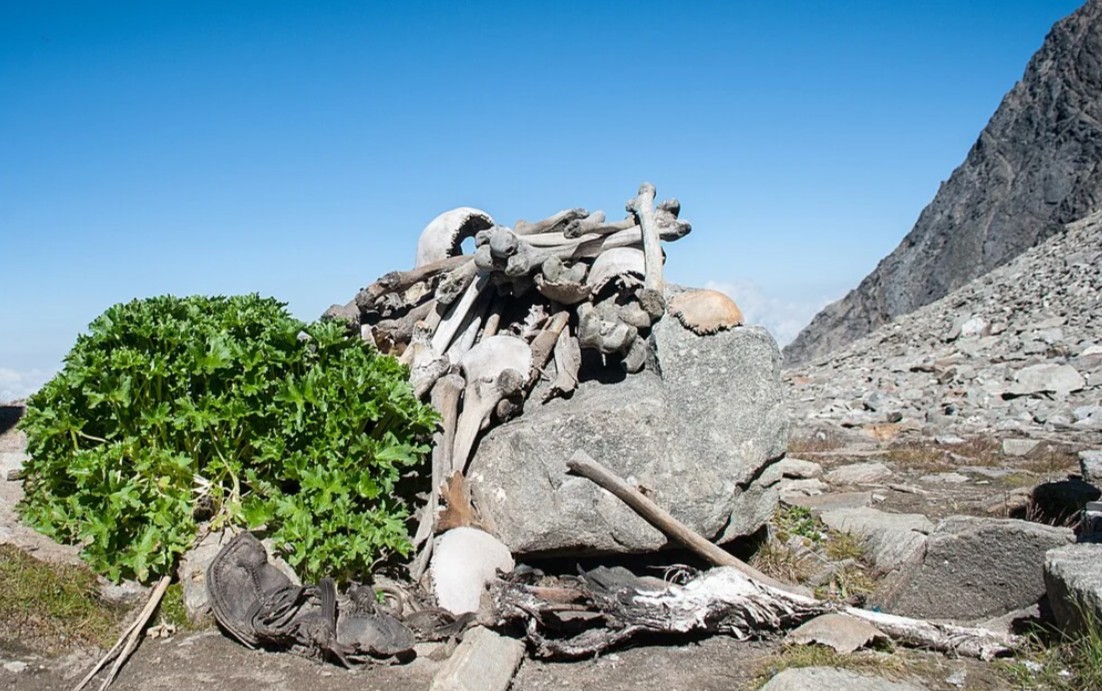
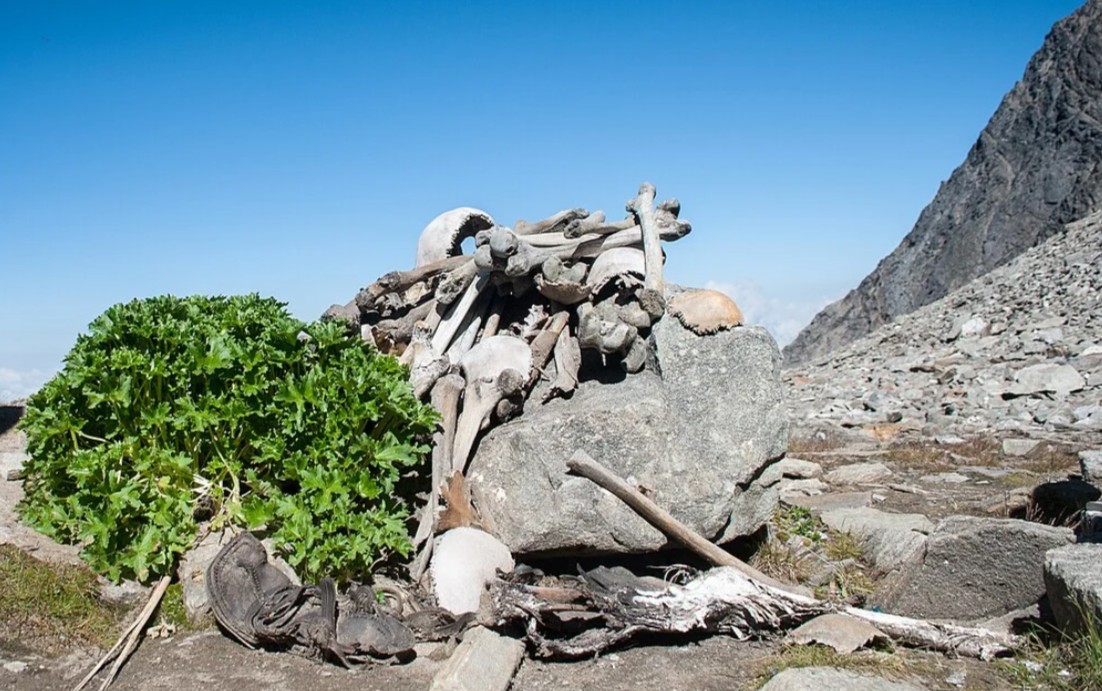
The Himalayas have many famous trekking routes, but Roopkund has a story that makes it different from most of them. Hidden high in the mountains of Chamoli district in Uttarakhand, Roopkund Lake is known as the Skeleton Lake because human remains have been found around the lake.
But the skeletons are not the only reason people want to visit this place. The trail from Lohajung takes trekkers through forests, open meadows, rocky paths, snow-covered sections and high mountain terrain. Along the way, you also get to see places such as Ali Bugyal and Bedni Bugyal, with large mountain views around you.
This is not a simple weekend walk. Roopkund is a high-altitude trek and needs good fitness, proper preparation and respect for mountain conditions.
Roopkund Lake is located in the Chamoli district of Uttarakhand at a very high altitude. The lake sits in a remote mountain area below the Trishul massif and is surrounded by steep slopes and snow for much of the year.
The usual trekking route starts from Lohajung. From there, the trail moves through villages and forests before reaching the open meadows of the higher Himalayas.
The exact route can vary depending on the operator, weather, forest permissions and trail conditions. The classic route is generally associated with Lohajung, Didna or Wan, Ali Bugyal, Bedni Bugyal, Patar Nachauni, Bhagwabasa and finally Roopkund.
Lohajung is one of the best-known starting points for the Roopkund trek. Reaching the village itself is part of the journey because the road passes through the mountain areas of Uttarakhand.
Once you arrive in Lohajung, you are already surrounded by Himalayan landscapes. Most trekking groups use the village for an overnight stay and final preparation before starting the trail.
This is also a good place to check your backpack, water, clothing and other trekking equipment. At high altitude, carrying unnecessary weight can make the trek much harder.
One route towards Roopkund goes through Didna village. This section gives you a good introduction to mountain walking before the trail reaches the higher meadows.
The path passes through forests and uneven mountain terrain. You may see oak trees and other Himalayan vegetation along the way.
Didna is also known for its village setting and local homes. Staying in or around a mountain village can give trekkers a better idea of how people live in these remote parts of Uttarakhand.
The first day should not be treated as a race. The goal is to walk at a comfortable speed and allow your body to start adjusting to the increasing altitude.
One of the most enjoyable parts of the route is the section around Ali Bugyal.
Bugyal is the local word commonly used for high-altitude grassland or meadow. Ali Bugyal is a wide open area where the landscape changes completely after the forest sections.
Instead of trees surrounding the trail, you get open mountain slopes and a much wider view.
On a clear day, the Himalayan peaks can be seen from the meadows. The open space also makes this part of the trek feel very different from the forest trail below.
For many trekkers, Ali Bugyal is one of the main highlights of the entire journey.
From Ali Bugyal, the trail continues towards Bedni Bugyal.
Bedni is one of the most well-known high-altitude meadows in Uttarakhand. The area offers wide views of the surrounding mountains and is also an important part of the traditional Roopkund route.
The landscape here changes with the season. During the greener months, the meadows look very different from the colder months when snow and ice can cover parts of the trail.
Bedni Bugyal is also connected with the Nanda Devi Raj Jat tradition, which passes through this region.
For trekkers, it is a place where you can slow down, look around and enjoy the mountain landscape instead of focusing only on reaching the next camp.
After the meadow sections, the trail becomes more demanding.
The altitude increases, the air becomes thinner and the terrain becomes rougher. Patar Nachauni is an important stop on the classic route because it brings trekkers closer to the high-altitude section of the trek.
This is where fitness and pacing become more important.
You should not try to walk too fast just because other people in your group are moving quickly. At high altitude, a steady pace is usually more useful than speed.
If you feel unwell, tell your guide or trek leader. Headache, dizziness, unusual tiredness, nausea and breathing problems should not simply be ignored at high altitude.
The trail becomes more serious as you move towards Bhagwabasa.
The surroundings become more rocky and the weather can change quickly. Depending on the season, snow can cover parts of the trail.
Bhagwabasa is one of the highest camping areas on the classic route and is close to the final climb towards Roopkund.
This is usually not the time to think about taking a long walk after reaching camp. Rest, eat properly and prepare for the next day.
The final climb is the section that many trekkers remember the most.
The route from Bhagwabasa towards Roopkund is steep and demanding.
At this altitude, there is much less oxygen compared with the lower parts of the trail. Even people who are physically fit can feel the difference.
Snow, loose rocks and steep sections can make the final climb slow. Your pace should be controlled, especially if the weather is not good.
After hours of climbing, reaching the lake feels different because you know you have crossed some of the toughest parts of the route.
Roopkund itself is a small high-altitude glacial lake surrounded by mountain slopes. Its location, history and human remains have made it one of the most talked-about places in the Indian Himalayas.
The biggest mystery connected with Roopkund is the human remains found around the lake.
When the snow melts, bones have historically been visible around the lake and nearby areas. For years, different theories were given about how these people died.
Research has suggested that the remains do not all necessarily belong to one single event or group. Studies have added more information to the story, but the lake still attracts attention because of the unusual discovery.
This is also why responsible trekking is important. The remains are part of the history of the area and should never be touched, moved or treated as a tourist attraction.
The mountain should be visited with respect, not just curiosity.
Roopkund is generally considered a difficult high-altitude trek.
The biggest challenge is not just the distance. The altitude is a major factor.
The route climbs from Lohajung to more than 15,000 feet around the lake area. The air gets thinner as you go higher, and the final section can become physically demanding.
A good level of fitness is important. You should be comfortable walking for several hours with a backpack and should prepare with regular walking, stair climbing, running or other endurance exercises before the trip.
Roopkund is not the best choice for someone who has never done any long trek and expects an easy walk.
The best trekking season depends on current weather, snow conditions and local permissions.
Traditionally, the main trekking windows have been around late spring to early summer and after the monsoon, when the higher trail becomes accessible.
Autumn is especially popular because the skies can be clearer and mountain views are often good.
Snow conditions can also make the trail more difficult. So instead of choosing dates only because they appear on a website, check the current trail and permit status before leaving.
This is an important point for anyone planning the trek in 2026.
Roopkund had been affected for years by restrictions on overnight camping in Uttarakhand’s high-altitude bugyals. In July 2026, the Supreme Court set aside key parts of the earlier restrictions, including the prohibition on overnight stays in the bugyals. Trekking operators have since started listing Roopkund departures again.
However, that does not mean trekkers should assume every route and every date is automatically available.
Forest rules, permits, weather conditions and local orders can affect access. Before booking transport or making a fixed plan, check the latest information with the concerned Forest Department or a properly registered trekking operator.
Uttarakhand Tourism also publishes information on travel trade registration and adventure activities through its official tourism system.
Packing correctly can make a big difference on a high-altitude trek.
Carry good trekking shoes with proper grip, warm layers, rain protection, gloves, a cap, sunglasses and sunscreen.
A headlamp, water bottle, personal medicines, basic first-aid items and a power bank are also useful.
Do not carry your entire wardrobe. A heavy backpack will make every climb harder.
Most importantly, carry your own waste back with you and avoid single-use plastic wherever possible.
Roopkund is not only about reaching a mysterious lake.
The journey itself is the main experience.
You start among forests near Lohajung, walk through mountain villages, enter wide meadows, climb towards snow and finally reach a remote lake at very high altitude.
Along the way, the landscape keeps changing.
That is what makes this trek special. You are not walking through the same type of scenery for several days.
There is also a strong sense of history around the route. The Skeleton Lake mystery adds another layer to the journey, but the mountains, bugyals and changing terrain are just as important.
The Roopkund route is one of those Himalayan journeys that demands preparation but gives you a lot in return.
From Lohajung to Ali Bugyal and Bedni Bugyal, then towards Patar Nachauni, Bhagwabasa and the lake, every section brings a different challenge.
It is a difficult trek, so do not choose it only because you have seen impressive photos online. Build your fitness, carry the right equipment, follow your trek leader and respect the local rules.
And remember, the skeletons are only one part of the story.
The forests, open meadows, snow, mountain views and long climbs are what turn the journey from Lohajung to Roopkund into a real Himalayan trek.
If you are ready for a demanding trail and want to experience one of Uttarakhand’s most talked-about trekking routes, Roopkund is certainly a trek worth learning about before you plan your next mountain journey.