Physical Address
304 North Cardinal St.
Dorchester Center, MA 02124
Physical Address
304 North Cardinal St.
Dorchester Center, MA 02124


 Used tires are often seen as a difficult waste product because of their size, durability, and complex structure. However, a worn tire still contains materials that can be recovered and reused. With suitable recycling methods, rubber, steel, and other components can be separated and processed into secondary materials.
A tire is made from more than rubber. Steel wire provides structural strength, while textile materials can also be incorporated into the tire. Because these materials are combined during manufacturing, recycling usually requires several stages rather than simple size reduction.
Depending on the type of tire and the desired final product, a recycling line may include tire cutting, wire removal, shredding, screening, magnetic separation, and further grinding.
The preparation stage can have an important effect on the following processes. Passenger car tires are different from truck tires and larger industrial tires, so the equipment needs to match the characteristics of the incoming material.
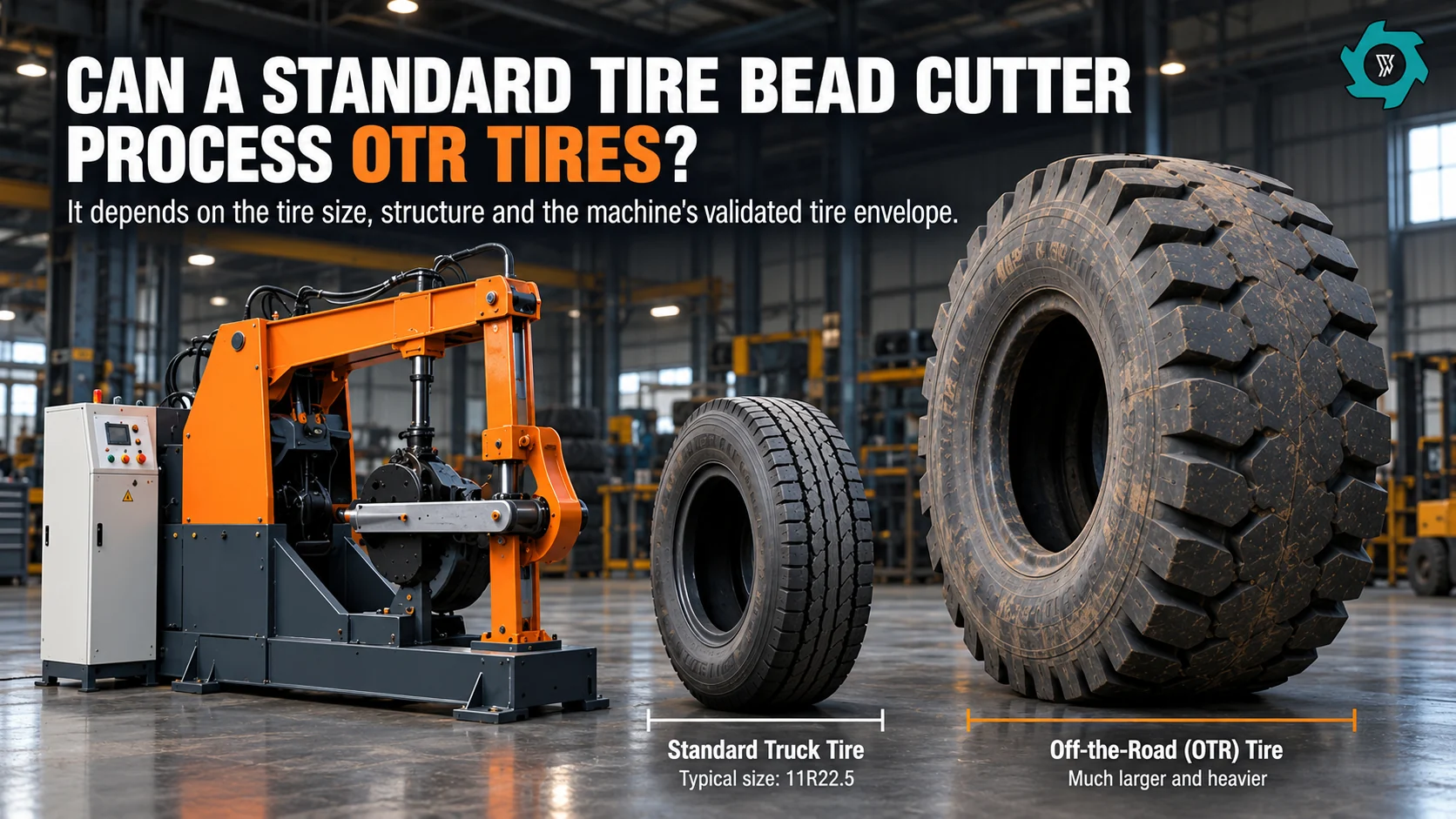
For some applications, larger tires are cut into smaller sections before they enter the main shredding equipment. This can make feeding easier and provide a more manageable material size for downstream processing.
Steel wire is particularly concentrated around the bead area of a tire. Because this wire is firmly embedded in rubber, removing it can be useful before the main shredding stage.
A tire wire drawing machine can extract bead steel wire from a prepared tire section. The recovered steel can then be collected separately, while the remaining tire material continues through the recycling process.
It is important to understand that bead wire removal is not the same as removing all steel from a tire. Additional separation equipment may still be required after shredding to recover steel from the remaining tire material.
Once the tires have been prepared, they can be reduced into smaller pieces through shredding and grinding. The appropriate particle size depends on the intended application.
Magnetic separation can be used to remove steel from shredded tire material. Further screening and grinding can then produce different rubber fractions, such as rubber chips, crumb rubber, or fine rubber powder.
Recycled tire rubber can be considered for a variety of applications. Depending on its quality and particle size, it may be used in flooring, construction-related products, industrial materials, rubber-based products, and other applications.
The suitability of recycled rubber depends on factors such as cleanliness, particle size, material composition, and the requirements of the final product. Therefore, the recycling process should be designed around the intended use of the recovered material.
Tire recycling is more than simply reducing the volume of waste. It provides a way to recover useful materials that would otherwise remain in discarded tires.
By combining appropriate preparation, cutting, shredding, separation, and grinding technologies, old tires can be transformed into secondary raw materials. This approach gives used tires another role beyond their original use on the road and creates more opportunities for material recovery.




