Physical Address
304 North Cardinal St.
Dorchester Center, MA 02124
Physical Address
304 North Cardinal St.
Dorchester Center, MA 02124

Some journeys are remembered for their landscapes, while others stay with us because of how they make us feel. A journey to Badrinath and Mana Village offers both experiences. It takes travellers through sacred river confluences, quiet Himalayan towns, winding mountain roads and places deeply connected with Hindu traditions.
Located in the Chamoli district of Uttarakhand, Badrinath is one of India’s most revered pilgrimage destinations. A few kilometres beyond the temple lies Mana Village, a beautiful Himalayan settlement closely associated with stories from the Mahabharata.
Together, Badrinath and Mana offer a meaningful combination of spirituality, mythology, nature and local culture.
The journey to Badrinath is an important part of the overall experience. Travellers usually begin from Haridwar or Rishikesh and follow this route:
Haridwar – Rishikesh – Devprayag – Srinagar – Rudraprayag – Karnaprayag – Nandprayag – Joshimath – Badrinath
The route follows the Alaknanda River for a large part of the journey. Along the way, travellers pass several sacred confluences known as Prayags.
At Devprayag, the Bhagirathi and Alaknanda rivers meet to form the River Ganga. Rudraprayag marks the confluence of the Mandakini and Alaknanda, while Karnaprayag is where the Pindar River meets the Alaknanda.
These locations are not merely sightseeing stops. They form an important part of Uttarakhand’s spiritual geography and make the road journey more meaningful.
Mountain travel can take longer than expected because of traffic, road repairs and changing weather. Starting early and maintaining a flexible schedule can make the journey safer and more comfortable.
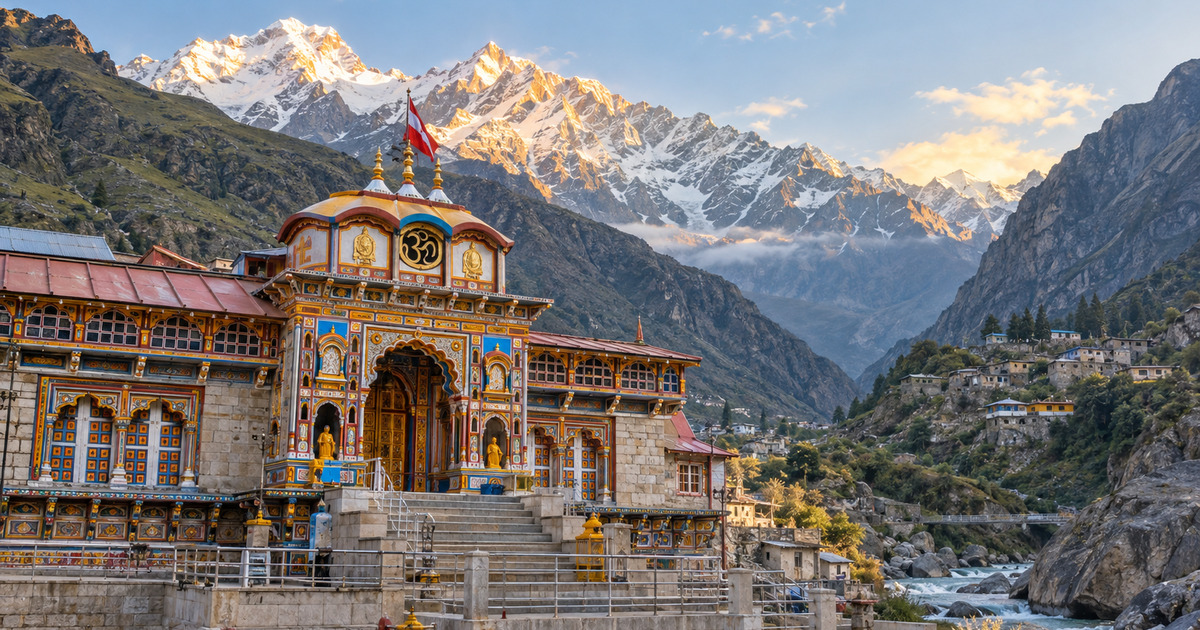
Badrinath Temple is situated at an altitude of approximately 3,133 metres between the Nar and Narayan mountain ranges. The temple is dedicated to Lord Vishnu, worshipped here in the form of Badrinarayan.
According to Hindu tradition, Lord Vishnu performed deep meditation in this Himalayan region. Goddess Lakshmi protected him from the severe mountain weather by taking the form of a Badri tree. The area subsequently became known as Badrikashram and later Badrinath.
The colourful temple façade, the sound of the Alaknanda River and the surrounding snow-covered mountains create an atmosphere that feels both powerful and peaceful.
Badrinath Temple is accessible by road, so there is no compulsory long trek. However, its high altitude and cold weather still require visitors to prepare carefully.
The temple area becomes busy during the main pilgrimage months. Travellers should keep sufficient time for queues and security procedures rather than following an overly tight schedule.
Tapt Kund, a natural hot-water spring, is located close to the temple. Many devotees traditionally take a dip here before darshan, subject to personal health conditions and local instructions.
Brahma Kapal is another important religious site situated near the Alaknanda River. Hindu rituals in memory of ancestors are performed at this sacred location.
The area around the temple is best explored slowly. The mountain air, river and views of the surrounding peaks are as much a part of the experience as the temple visit itself.
Located only a short drive from Badrinath, Mana Village is one of the most fascinating places in the region. It lies close to the India–Tibet border and is known for its stone houses, traditional mountain lifestyle and mythological importance.
The village is inhabited primarily during the warmer months. Before winter snowfall begins, many residents move to lower-altitude areas.
Small shops in Mana serve tea, snacks and local products. Walking through its narrow paths provides visitors with a glimpse of life in a remote Himalayan settlement.
Mana should not be treated merely as a quick photo stop. The village deserves enough time to appreciate its surroundings, traditions and historical associations.
Vyas Gufa is among the most important sites in Mana Village. According to local tradition, Sage Ved Vyasa composed the Mahabharata here.
Ganesh Gufa is located nearby and is believed to be the place where Lord Ganesha wrote the epic while Ved Vyasa narrated it.
Whether visitors approach these stories through faith, history or cultural curiosity, the caves reveal how closely mythology is woven into the identity of the region.
Bhim Pul is a large natural stone bridge positioned above the Saraswati River. According to a popular Mahabharata legend, Bhima placed the stone across the river to help Draupadi cross during the Pandavas’ final journey towards heaven.
The Saraswati River flows forcefully through the narrow rocky passage beneath the bridge. Its sound and speed make this one of the most dramatic natural sights near Mana.
Visitors should remain within the designated areas and avoid moving too close to steep edges or fast-flowing water.
Travellers with limited time can cover Badrinath and Mana Village in a 2-night and 3-day itinerary from Haridwar or Rishikesh.
Begin early in the morning and drive towards Joshimath through Devprayag, Srinagar, Rudraprayag, Karnaprayag and Nandprayag.
Short stops can be taken at selected confluences and viewpoints, depending on traffic and available time. Reach Joshimath or Pipalkoti by evening and stay overnight.
After breakfast, travel from Joshimath to Badrinath. Check into the hotel and proceed for temple darshan.
After darshan, visit Mana Village, Vyas Gufa, Ganesh Gufa, Bhim Pul and the Saraswati River viewpoint. Return to Badrinath and stay overnight.
The order of sightseeing and darshan can be adjusted according to temple timings, weather and crowd conditions.
If time permits, visit the temple again early in the morning. After breakfast, begin the return journey through Joshimath, Karnaprayag, Rudraprayag and Devprayag.
Reach Rishikesh or Haridwar by evening or night, depending on road and traffic conditions.
This is a compact itinerary involving long hours of driving. Families with small children, senior citizens and travellers seeking a relaxed journey may consider adding another night.
Badrinath and Mana Village are accessible during the official pilgrimage season. The temple normally opens during spring and closes before winter, but the exact dates are announced separately each year.
These are among the most popular months for the journey. The weather is generally suitable, but hotels, roads and the temple area can be crowded.
The monsoon brings heavy rainfall and a greater possibility of landslides and roadblocks. Travellers should monitor official weather and road advisories.
The post-monsoon period often provides clearer mountain views and comparatively fewer crowds. However, temperatures can become quite cold, especially during the morning and evening.
Always verify the current temple schedule, road status and local weather forecast before departure.
Weather conditions can change quickly at high altitude. Visitors should carry:
A warm jacket and thermal layers
Woollen cap, gloves and socks
Raincoat or lightweight poncho
Comfortable shoes with a reliable grip
Personal medicines and prescriptions
Basic first-aid supplies
Government-issued identification
Yatra registration details
Power bank and charging cables
Reusable water bottle
Sunscreen and sunglasses
Light snacks
Some cash for areas with weak internet connectivity
Packing light is advisable, especially when following a short itinerary.
The Himalayan environment is beautiful but fragile. Travellers should avoid littering and carry reusable bottles and bags whenever possible.
Plastic waste should be disposed of only at designated locations. Visitors must also respect temple customs, local traditions and photography restrictions.
The road journey may occasionally be delayed by weather or traffic-control measures. Such delays are part of mountain travel and should be handled patiently. Safety must remain more important than following a fixed schedule.
Hotel availability and transportation can become limited during the busy pilgrimage season. Advance planning is particularly important for travellers following a short itinerary.
Those who prefer organised transportation and accommodation can consider a customised Badrinath tour package based on their starting point, group size and preferred hotel category.
Before booking, travellers should confirm the vehicle type, accommodation, meals, pickup location, sightseeing coverage and exclusions. A clearly planned journey reduces uncertainty and allows visitors to focus on the experience.
Badrinath and Mana Village present two different yet connected sides of the Himalayas. Badrinath offers devotion, temple traditions and the peaceful presence of Lord Vishnu. Mana brings visitors closer to ancient legends, local culture and the raw beauty of the mountains.
A 2-night and 3-day journey can cover both destinations, provided travellers begin early and remain flexible about road and weather conditions.
More than a conventional sightseeing trip, this journey is an opportunity to slow down, understand the cultural importance of the region and experience the spiritual character of the Garhwal Himalayas.




