Physical Address
304 North Cardinal St.
Dorchester Center, MA 02124
Physical Address
304 North Cardinal St.
Dorchester Center, MA 02124

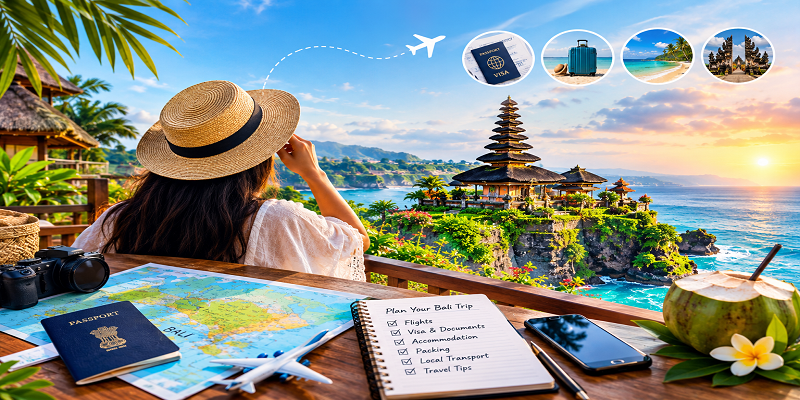
A Bali holiday looks effortless in photos — turquoise water, quiet rice terraces, easy sunsets. Getting there smoothly, though, depends less on the destination and more on how well the trip is planned before you leave home. Most travel hiccups in Bali aren’t about the island itself; they’re about gaps in preparation.
For Indian travellers specifically, a few extra steps matter — visa timing, currency handling, and knowing what to pack for a tropical climate with sudden showers. This is where structured Bali trip planning for Indians tends to make the biggest difference, since generic international travel advice doesn’t always account for these India-specific details.
This guide focuses on the planning process itself — timelines, budgeting, documentation, packing, and the small logistics that decide whether your trip feels relaxed or rushed. It’s less about what to see in Bali, and more about how to get there and move around without avoidable stress.
Direct answer: A smooth Bali holiday is one where documentation, budgeting, and daily logistics are handled in advance, so time on the ground goes toward the trip itself rather than problem-solving.
Travellers often assume a smooth trip just means good weather or a good hotel. In practice, it’s usually about smaller things going right consistently — having the right currency on hand, not scrambling for visa paperwork at immigration, knowing which areas need more travel time than expected.
What typically disrupts a Bali trip:
Direct answer: A practical Bali planning timeline spans roughly six weeks before departure, starting with flights and documentation, and narrowing down to packing and local logistics in the final week.
|
Traveller Type |
Planning Priority |
Suggested Base Area |
Typical Trip Length |
|
Solo traveller |
Flexibility, safety, social opportunities |
Ubud or Canggu |
5–7 days |
|
Couple |
Privacy, romantic settings |
Seminyak or Ubud |
5–6 days |
|
Family with children |
Convenience, calmer beaches |
Nusa Dua |
6–8 days |
|
Group of friends |
Nightlife, shared activities |
Seminyak or Kuta |
5–7 days |
Direct answer: Your ideal Bali base area depends heavily on who you’re travelling with — families generally do better in calmer resort zones, while solo and group travellers often prefer more social, activity-dense areas.
Families in particular benefit from planning that accounts for children’s pacing — shorter daily activities, resort-based stays with pools, and fewer long transfers. Some families researching this stage compare broader Asia tour packages for families to understand how Bali-specific planning differs from other regional options before finalising their itinerary.
Direct answer: A Bali trip from India can range from a modest budget stay to a premium villa experience, with the biggest cost variables being flight timing, accommodation type, and how many paid experiences (tours, water sports, spa visits) are included.
Rough cost categories (per person, excluding flights):
|
Category |
Budget Range |
Mid-Range |
Premium |
|
Accommodation (per night) |
Basic guesthouse |
3–4 star hotel |
Private villa/resort |
|
Daily food |
Local warungs |
Mix of local and café dining |
Resort dining |
|
Local transport |
Scooter rental |
Private driver (shared) |
Private driver (dedicated) |
|
Activities |
Free/low-cost sights |
A few paid tours |
Curated private experiences |
A practical budgeting tip: convert your total trip budget into Rupiah mentally before you leave, since the currency’s large numbers can make spending feel smaller than it actually is.
Direct answer: Indian travellers need a valid passport (with sufficient validity), Visa on Arrival documentation or pre-approval where applicable, proof of onward travel, and accommodation confirmation before departure.
It’s worth checking Indonesia’s official immigration guidance close to your travel date, since visa rules and fees are periodically updated.
Direct answer: Packing for Bali should account for tropical heat, sudden rain, beach days, and temple visits — which means light breathable clothing alongside at least one modest, temple-appropriate outfit.
Practical packing list:
Direct answer: Most travellers manage connectivity in Bali through an eSIM or local SIM card, while money management typically involves a mix of cards for larger payments and cash for local markets, warungs, and smaller vendors.
Direct answer: Respecting Balinese Hindu customs — particularly around temple visits and local ceremonies — is an important part of travelling smoothly and respectfully in Bali.
These aren’t just courtesy points — they reflect Bali’s strong Hindu cultural identity, which shapes daily life far beyond tourist areas.
Direct answer: Common health considerations for Bali include staying hydrated in the heat, being cautious with street food initially, and carrying basic medication for stomach sensitivity, alongside standard travel safety practices like avoiding poorly lit areas late at night.
|
Factor |
Packaged Trip |
Self-Planned Trip |
|
Planning effort |
Lower |
Higher |
|
Flexibility |
Limited |
High |
|
Cost predictability |
Higher (bundled pricing) |
Variable |
|
Best suited for |
First-time travellers, families |
Experienced travellers, flexible schedules |
Direct answer: A packaged trip generally offers a smoother experience for first-time travellers by reducing planning effort, while a self-planned trip suits those who prioritise flexibility and don’t mind managing individual bookings.
For travellers who’d rather not coordinate flights, stays, and local transport separately, it’s often simpler to Book tour packages that bundle these elements, particularly for a first visit where local logistics are still unfamiliar.
Scenario 1 — First-time solo traveller: Books an eSIM in advance, stays in Ubud for easier social interaction, and uses a mix of ride-hailing apps and a private driver for day trips.
Scenario 2 — Family with young children: Chooses Nusa Dua for calmer beaches, prioritises accommodation with a pool, and keeps daily plans light to avoid overtiring kids.
Scenario 3 — Couple on a first international trip together: Splits time between Ubud (culture) and Seminyak (beach), using an India to Indonesia Trip Packages option to simplify flight and stay coordination for their first joint international holiday.
Each of these scenarios reflects the same underlying principle: planning around your actual travel style, rather than a generic itinerary, is what makes the trip feel smooth.
Planning a smooth Bali holiday isn’t about eliminating every possible hiccup — it’s about handling the predictable ones in advance, so the trip itself feels relaxed rather than reactive. Documentation, budgeting, packing, and a basic understanding of local customs cover most of what tends to go wrong for first-time travellers.
Whether you choose a structured package or plan independently, the same principle applies: build your itinerary around how you actually travel, not around a generic checklist. With the right preparation, Bali vacation deals, a Bali trip from India can go from “hopefully fine” to genuinely smooth.
Ideally 4–6 weeks in advance, which allows time for better flight pricing, visa preparation, and securing preferred accommodation, especially during peak travel months.
Both. Cards work at hotels and larger restaurants, but many local markets, warungs, and smaller vendors are cash-only, so carrying some Rupiah is necessary.
A modest outfit or sarong for temple visits is commonly overlooked, along with a light rain layer if travelling outside the dry season.
It depends on your comfort with managing logistics. Packages reduce planning effort and suit first-time travellers, while independent planning offers more flexibility for experienced travellers.
A passport valid for at least six months, Visa on Arrival documentation, proof of onward travel, and confirmed accommodation are generally required, though it’s best to verify current rules before departure.
Track spending in Rupiah rather than converting every transaction mentally, since the currency’s large numbers can make costs feel deceptively small.
Yes, particularly in calmer areas like Nusa Dua, where resort-style stays and shorter travel distances make the trip easier to manage with kids.