Physical Address
304 North Cardinal St.
Dorchester Center, MA 02124
Physical Address
304 North Cardinal St.
Dorchester Center, MA 02124

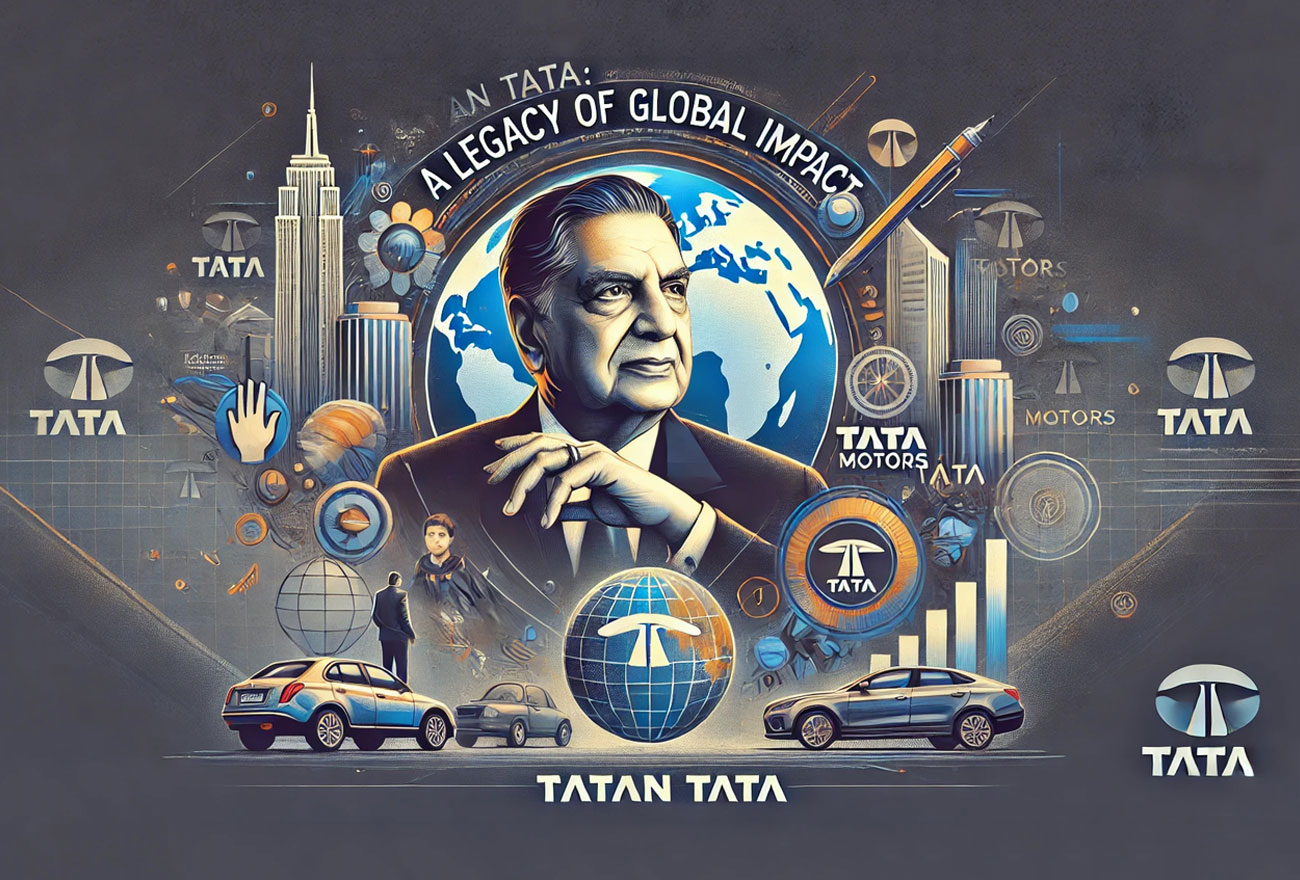
Few names in Indian business carry the emotional weight of Ratan Tata. For millions of people, he represented more than corporate leadership. He represented trust, ambition, humility, and the belief that an Indian company could compete confidently on the global stage. At Motorbazee, we remember his contribution to Tata Motors as an important chapter in India’s automobile story.
The journey behind Tata Motors’ market success was built over decades, not overnight. Ratan Tata’s leadership played a significant role in shaping the company’s long-term direction, particularly through bold investments, international expansion, and an emphasis on engineering and innovation.
Visit Us:- How Tata Motors Reached All-Time Highs Thanks to Ratan Tata: a Tribute from Motorbazee
Tata Motors began its automobile journey with commercial vehicles and gradually expanded into passenger vehicles. Under Ratan Tata’s leadership, the company pursued a more global vision. Its international expansion included the acquisition of South Korean truck maker Daewoo Commercial Vehicle Company and, most notably, Jaguar and Land Rover in 2008.
The JLR acquisition became one of the defining moments in Tata Motors’ history. At the time, it was a bold move involving two iconic British brands. Over the following years, JLR expanded significantly, strengthening Tata Motors’ presence in the international automobile market.
That global presence eventually became an important part of Tata Motors’ identity and business performance.
Ratan Tata’s vision was also visible in products aimed at ordinary Indian consumers. The Tata Nano became an ambitious attempt to make personal mobility more accessible, even though its commercial performance did not ultimately match the expectations surrounding its launch.
The lesson was bigger than the product itself: innovation sometimes means attempting something the market has never seen before.
Tata Motors also continued investing in new platforms, safety, design, technology and alternative powertrains. Over time, models such as the Tiago, Nexon, Harrier and Safari helped strengthen the company’s passenger-vehicle presence, while its commercial-vehicle business remained a core foundation.
It would be inaccurate to attribute every stock-market milestone directly to one individual. Share prices reflect many factors, including company earnings, product demand, investor expectations, industry conditions, global markets and corporate strategy.
Still, the foundations laid during Ratan Tata’s era formed an important part of Tata Motors’ transformation.
In March 2024, Tata Motors shares reached a record high after the company announced plans to separate its commercial-vehicle and passenger-vehicle businesses into two listed entities. The announcement received a strong response from investors and highlighted the market’s growing interest in the company’s business structure and future strategy.
The market’s response demonstrated how investors were evaluating Tata Motors not simply as an Indian automaker, but as a diversified global mobility company with significant businesses and brands.
Ratan Tata passed away in October 2024 at the age of 86. His death triggered widespread tributes across India and internationally, reflecting the impact he had beyond the companies he led.
For Tata Motors, his legacy can be seen in a culture of calculated ambition: think globally, invest for the future, and keep innovation at the centre of mobility.
At Motorbazee, we see his story as a reminder that automotive success is not created by a single model, a single year, or a single market rally. It is built through vision, people, technology, resilience and decisions made years before their results become visible.
No. Stock prices are influenced by many factors. His leadership helped shape long-term strategic foundations, while later financial, operational and market developments also influenced Tata Motors’ valuation.
The 2008 acquisition gave Tata Motors ownership of two globally recognised automotive brands and significantly expanded its international footprint.
His broader contribution was a long-term global vision that encouraged Tata Motors to think beyond its traditional domestic automobile business.
The journey highlights the importance of long-term thinking, innovation, global ambition, strong brands and willingness to invest in future technologies.
Tata Motors’ journey cannot be reduced to share prices or financial charts. Behind every milestone is a story of people, engineering, risk-taking and perseverance.
Ratan Tata gave that story a distinctive direction. His legacy lives on not only through Tata Motors’ vehicles and global brands, but also through the idea that Indian companies can dream bigger, build boldly and create an impact that lasts.
Motorbazee pays tribute to Ratan Tata — a visionary whose influence will remain part of India’s automotive journey for generations.




