Physical Address
304 North Cardinal St.
Dorchester Center, MA 02124
Physical Address
304 North Cardinal St.
Dorchester Center, MA 02124

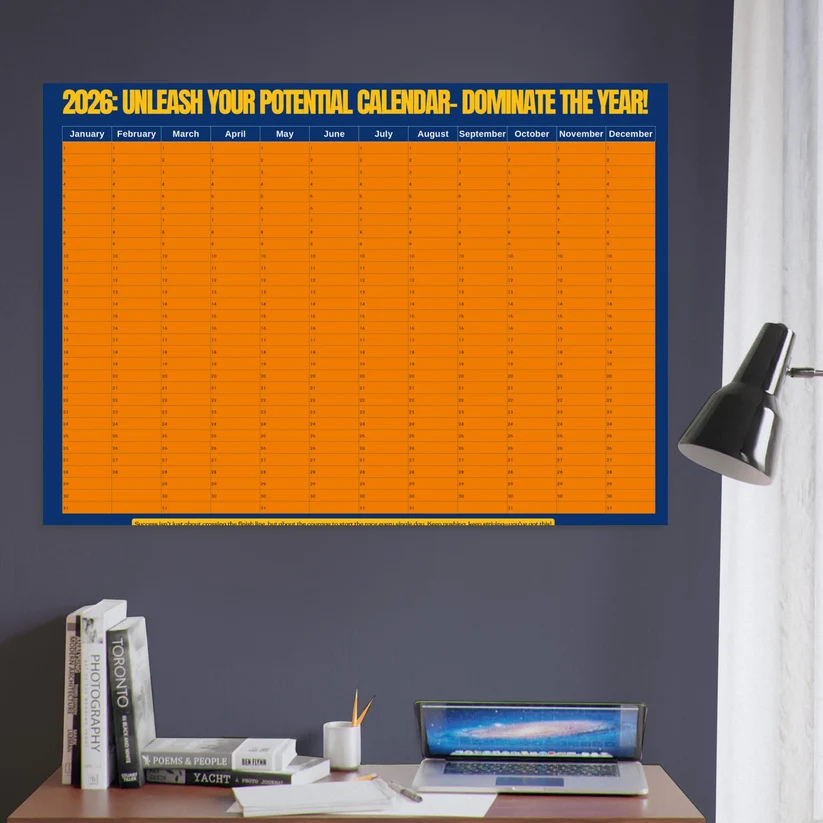
This is a fair scepticism to have, and honestly, it can go either way a big wall calendar can absolutely become decoration if you’re not careful, and that’s worth acknowledging upfront rather than pretending otherwise.
The research on visual planning is genuinely supportive of the underlying idea: a 2023 Journal of Consumer Psychology study found that paper-calendar users developed higher-quality plans and followed through on them better than mobile-calendar users, and traced this to the broader perspective a physical format naturally provides. That’s real evidence, not marketing language.
But the research also implies something the marketing usually leaves out: the benefit only shows up if you actually use the thing.
A calendar you hang once in January and never write on again isn’t functioning as a planning tool by March it’s just a large, accurate-looking piece of wall art depicting a year that’s already drifted out of date. At that point, it genuinely is just decoration, and the research doesn’t support any claim otherwise.
The difference between a big wall calendar that works and one that doesn’t comes down to a few honest habits. First, it needs a clear job mark the fixed things first (deadlines, appointments, travel), then layer in the goals and milestones you’re working toward.
Second, it needs regular review a quick weekly glance to see what’s coming, a monthly pass to update anything that’s changed.
Third, and maybe most important, it needs to stay current. An outdated calendar can be more misleading than no calendar at all, because it looks authoritative while actually being wrong.
There’s also a common failure mode worth naming directly: over-engineering it. A color-coded system with six categories and a symbol legend sounds thorough, but complicated systems tend to get abandoned within a few weeks, while simple ones actually get maintained.
A calendar that’s too complex to update quickly just becomes another thing you avoid, and an avoided calendar is a decorative one by default.
So, does it actually work, or is it decoration? Both are genuinely possible outcomes, and which one you get depends almost entirely on whether you treat it as a living document or a one-time setup.
The evidence supports the underlying mechanism a wide, visible view of your year genuinely helps you plan better, for real cognitive reasons, not superstition. But that mechanism only activates through actual, ongoing use.
If you’re the kind of person who’ll glance at it, mark things on it, and revisit it as plans shift, the research suggests it’ll genuinely help.
If you know honestly that you tend to set things up once and never touch them again, it’s worth being realistic that any planning tool paper or digital will struggle to help you under those conditions. The calendar isn’t the variable in that case. The habit is.




