Physical Address
304 North Cardinal St.
Dorchester Center, MA 02124
Physical Address
304 North Cardinal St.
Dorchester Center, MA 02124

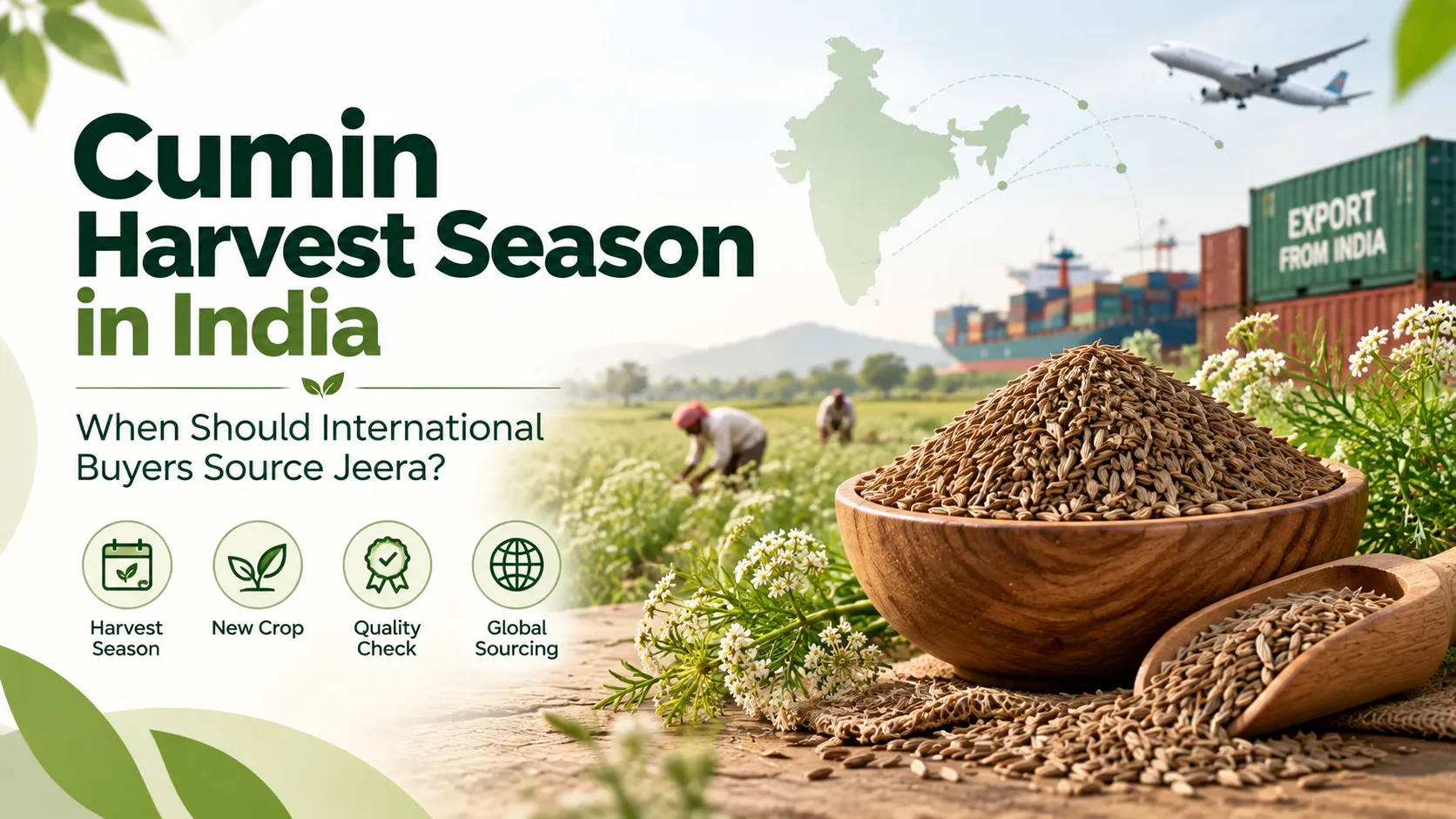
India is an important sourcing destination for cumin seeds, commonly known as jeera, and the country supplies cumin to spice traders, wholesalers, food processors, distributors, and international buyers across many markets.
For buyers planning bulk purchases, understanding the cumin crop season in India can help with procurement timing, fresh-stock evaluation, supplier communication, and quality planning.
The harvest period is especially important because this is when new-season cumin starts entering the market and buyers begin comparing available lots based on quality, origin, processing, and commercial requirements.
Originally published at: D&S International – Cumin Harvest Season in India
Cumin is mainly grown as a Rabi crop, which means it is cultivated during the cooler months of the year.
Sowing generally begins during October and November in major cumin-producing regions.
The crop continues developing through the winter months, and harvesting usually begins around February.
From March onward, fresh cumin starts reaching major agricultural and spice markets in larger quantities.
A typical cumin crop cycle can be understood as:
The exact timeline can vary slightly depending on weather, rainfall, temperature, irrigation, and regional crop conditions.
The harvest season gives buyers an opportunity to evaluate new-season cumin and compare different available lots.
During this period, buyers may focus on factors such as:
For importers, the arrival of the new crop can also be a useful time to begin or renew supplier discussions.
Buyers interested in the complete sourcing process can also explore this detailed guide on cumin seeds export from India.
A large share of Indian cumin production comes from Gujarat and Rajasthan.
These states have suitable growing conditions and strong agricultural trading networks connected with cumin production.
They are also supported by:
Unjha in Gujarat is particularly well known in the cumin trade and is an important market for jeera.
For international buyers, sourcing through established production regions can make it easier to access commercial quantities and compare different grades.
Cumin does not normally move directly from the farm into an export shipment.
Several post-harvest steps may be required before the product is suitable for international buyers.
Freshly harvested cumin needs proper drying to control moisture and support storage quality.
Dust, stones, stems, and other unwanted material are removed.
Seeds may be separated based on appearance, purity, size, or other commercial parameters.
Depending on buyer and destination requirements, the cumin may need laboratory testing or additional inspection.
Suitable packaging helps protect the product during storage and transportation.
Suppliers preparing products for overseas markets can refer to this guide on how to make cumin seeds export-ready in India.
The harvest date alone should not determine whether a cumin lot is suitable.
International buyers usually need to compare a range of quality and commercial factors.
These may include:
Moisture: Proper moisture levels can help support better storage conditions.
Purity: Buyers should check the level of foreign matter and other impurities.
Aroma: Strong, characteristic cumin aroma is often important for commercial use.
Appearance: Colour and seed condition may matter depending on the target market.
Cleaning: Buyers may require machine-cleaned or further processed cumin.
Residue Compliance: Destination markets may have specific pesticide residue and food-safety requirements.
Packaging: Packaging should match the buyer’s handling, storage, and distribution needs.
New-season cumin can be appealing because it represents the latest harvest, but that does not automatically make every fresh lot suitable.
Quality can still vary according to:
A well-stored lot from an earlier period may sometimes match buyer requirements better than a poorly handled fresh crop.
For this reason, buyers should always evaluate the actual product specifications rather than selecting cumin only because it is newly harvested.
International buyers can begin communication before the main market arrivals start.
This allows time to define important requirements such as:
Clear communication before or during the harvest period can help suppliers identify and prepare suitable lots.
This can be particularly useful for repeat buyers, wholesalers, and food companies sourcing larger volumes.
Exporting cumin is not the same for every country.
Requirements may vary depending on:
Exporters should understand the destination market before preparing a shipment.
For businesses learning about international spice trade, this guide on how to export spices from India offers a broader overview of the process.
The cumin crop calendar is useful, but it should be only one part of procurement planning.
Successful sourcing also depends on:
Buyers who consider all these factors are generally better positioned to source cumin that fits their intended commercial use.
The cumin harvest season in India typically begins around February, while fresh new-crop cumin starts arriving in markets more actively from March onward.
This period can be useful for importers, wholesalers, distributors, and food processors who want to evaluate fresh seasonal supplies.
However, the best purchasing decision should also consider purity, moisture, cleaning, grading, testing, packaging, storage, and supplier capability.
Combining harvest-season knowledge with clear product specifications can help buyers make more informed sourcing decisions.
If you are looking to source Indian cumin seeds or other agricultural products for import, wholesale, distribution, or food processing, contact D&S International to discuss your required quantity, specifications, packaging, and export needs.