Physical Address
304 North Cardinal St.
Dorchester Center, MA 02124
Physical Address
304 North Cardinal St.
Dorchester Center, MA 02124

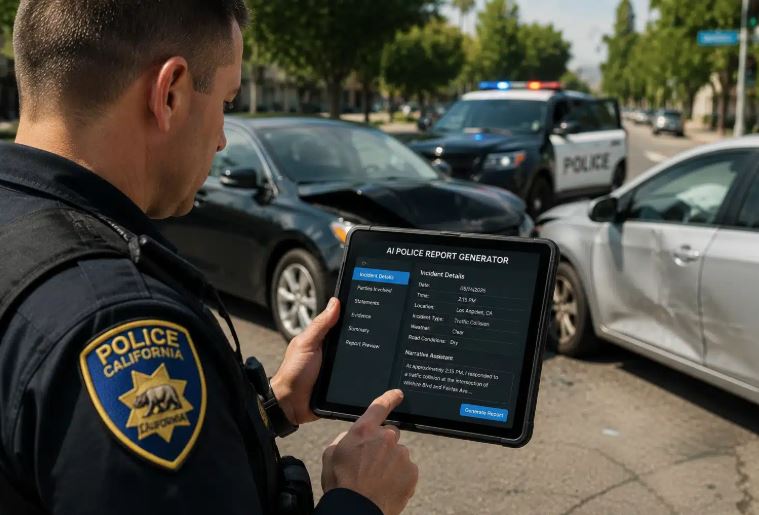
Artificial intelligence has found its way into almost every part of daily life, including how people handle the aftermath of a car accident. Beyond “police report generators,” drivers are turning to AI chatbots for legal questions, apps that estimate settlement values, and tools that draft demand letters or organize evidence. Some of this can be genuinely useful. Some of it can quietly work against you.
Knowing where the line is can save you from mistakes that are hard to undo. A Bakersfield car accident lawyer can tell you honestly what your claim needs and where AI tools fit into that picture, if at all.
It’s easy to see why AI tools are tempting after a crash. You’re dealing with pain, stress, missed work, and an unfamiliar process, and a tool that promises quick answers or a ready-made document feels like relief. Common uses people try include:
Some of these uses are low-risk. Others can create real problems.
Used carefully, AI can be a useful personal organizing tool:
In these situations, you remain the source of truth. The AI is just helping you present or organize information you already know to be accurate.
Problems arise when AI output is treated as authoritative, official, or a substitute for professional judgment:
As covered elsewhere, no AI tool can create an actual police report. Only a law enforcement agency can do that. Presenting an AI-generated document as if it were official can be treated as an attempted misrepresentation and can seriously damage your claim’s credibility, separate from and often worse than any issue with the underlying accident.
Some tools claim to estimate what your case is worth based on your injuries and medical bills. These estimates are typically generic and cannot account for the nuances that actually drive value: your specific medical records, the strength of the liability evidence, comparative fault issues, the insurance coverage available, and how a particular insurer or jury is likely to respond. Relying on an app’s number, whether to accept a low settlement or to demand an unrealistic one, can work against you either way.
A chatbot can describe general legal concepts, but it does not know the specific facts of your crash, the applicable law as it currently stands, or how a particular insurance company or court tends to handle similar cases. Laws change, and general online information can be outdated or written for a different state. Treating AI output as personalized legal advice is risky.
A poorly constructed demand letter, even one that looks polished, can undersell your claim, omit important damages, or include inaccurate legal assertions that undermine your credibility with the insurer. A demand letter is a strategic document, not just a formatted list of injuries and bills.
Every accident case turns on specific facts: who did what, when, and how it affected the people involved. AI tools work from patterns in general data. They do not know:
These are exactly the judgment calls an experienced attorney makes by reviewing your actual records, not by processing a general description.
Be cautious of any tool that:
Legitimate tools tend to be transparent about their limitations. Tools that blur the line between “helpful organizer” and “official document” or “legal advice” deserve extra scrutiny.
Regardless of what technology is involved, the fundamentals of a strong car accident claim haven’t changed:
AI can help you gather and organize pieces of this picture. It cannot replace the official records, professional medical evaluation, or legal judgment that ultimately support your claim.
An experienced attorney does what AI tools cannot: reviews your actual medical records and bills, requests and verifies official reports, investigates the specific facts of your crash, understands how the insurance company involved tends to behave, and applies current law to your particular situation. Many attorneys also use technology internally to work efficiently, but the judgment and accountability behind your claim come from a licensed professional, not an algorithm.
There’s nothing wrong with using AI to help organize your thoughts or your paperwork after an accident. The trouble starts when AI output is mistaken for, or presented as, something official or authoritative that it is not. If you’re navigating a car accident claim and want to know what actually strengthens your case, a Bakersfield car accident lawyer can give you honest, personalized guidance instead of a generic answer.




