Physical Address
304 North Cardinal St.
Dorchester Center, MA 02124
Physical Address
304 North Cardinal St.
Dorchester Center, MA 02124

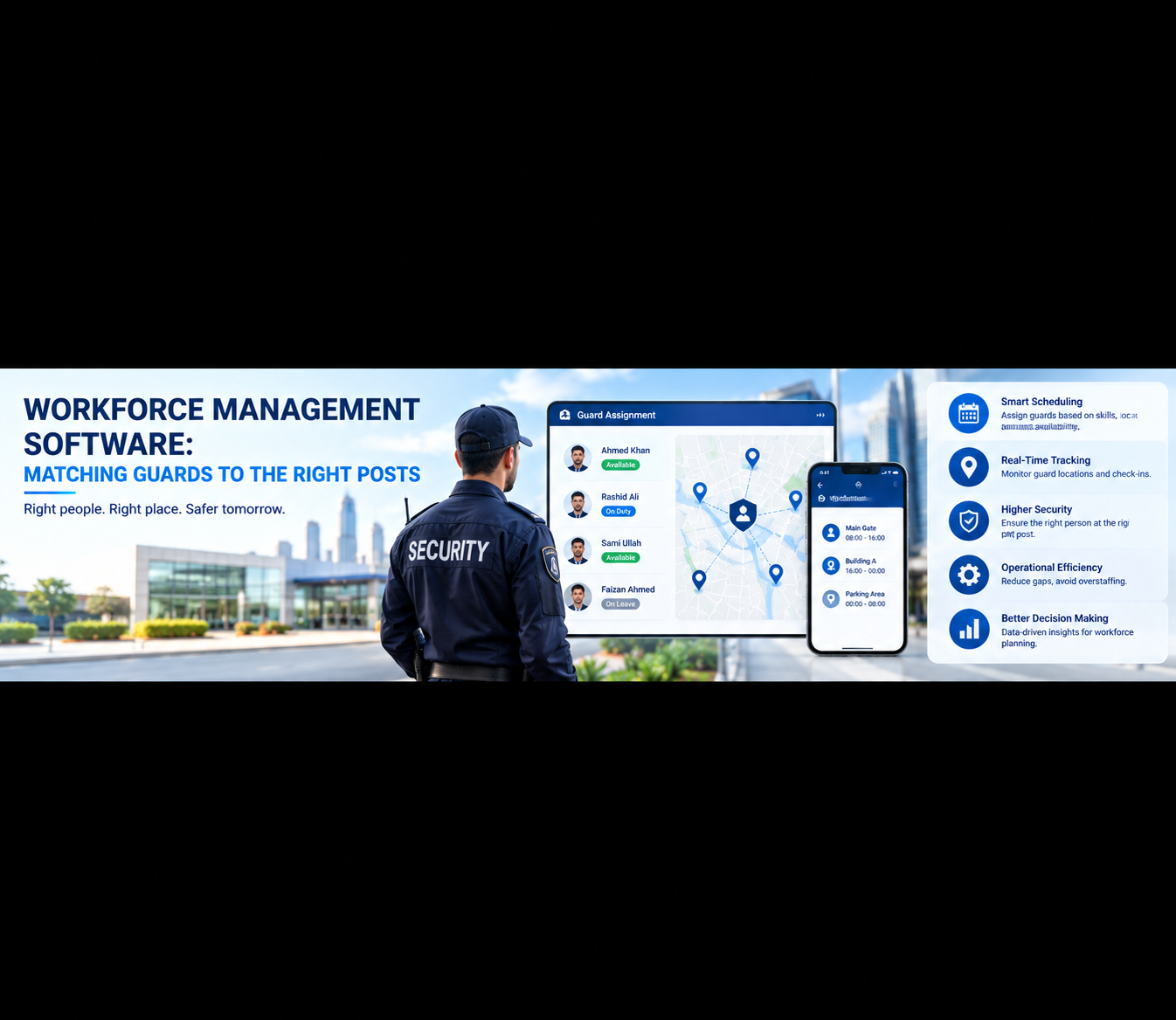
Security operations cannot be maintained simply on shift filling. Different skills, certifications, clearance, experience, availability and risk level are required for each post. Workforce management software can help security companies determine the guards to deploy based on these operational factors and not just the next available name on the list.
It provides a more managed deployment for business owners. Managers can now review workforce information and align qualified workers to the openings that fit their qualifications rather than working out assignments on a spreadsheet or through disjointed schedules.
The first step to having a reliable guard assignment is to define each post. Different capabilities are needed for a corporate entrance, a warehouse perimeter, a residential community, and a high-risk industrial site.
Create a Needs Based Post Statement of Requirements
These posts can be set up with operational parameters, including:
This information forms a deployment profile. With security scheduling software, these requirements may be compared against employee records prior to assigning a guard.
This leads to a more controlled matching process with less manual assumptions, where post requirements influence the decisions of scheduling.
After defining the Post requirements, the next step is to match these with available guards. Workforce management software can bring together employee information, skills, availability, certifications, attendance history and location assignments in one centralized workforce record.
There may be a guard available for a shift, but they may not be qualified for a particular post. Matching logic can then factor in qualifications in addition to availability.
For instance, a location that needs CCTV monitoring experience can be set up to favor CCTV monitoring guards who have this experience. Likewise, a post that specifies a valid certification will not allow the assignment of an individual who has an expired certification.
Availability does not give an efficient deployment plan. Other factors that can affect assignment decisions are travel distance, prior shift allocation, working-hour limits, and proximity of sites.
A structured system can assist managers in determining if a guard is listed in the operation, thus avoiding the need to manually review several files and schedules.
When one guard has to work at more than one site, and the shifts overlap, or one guard’s availability fluctuates at very short notice, manual scheduling can become challenging. Such conflicts may lead to unfilled posts and over-time.
Security scheduling software offers a layer of scheduling in the center that enables security managers to view assignments, vacancies, shift times, and workforce availability all in one place.
Scheduling a job in a more controlled manner can assist businesses in helping to:
One of the frequent operational problems is guard absence. Finding someone who is free isn’t enough for replacing an employee who’s gone. The replacement should also fulfill the requirements of the site.
Centralized workforce records allows managers to easily find and add suitable replacements or adjust the schedule without having to reconstruct the entire team.
Workload management is also a crucial part of the effective deployment. Frequent rotation of the same experienced guards to challenging jobs can lead to fatigue and unbalanced use of personnel.
A manager is able to review scheduled hours, consecutive shifts, overtime and site assignments to achieve a more balanced deployment pattern. This ensures continuity of operations and allows companies to have greater visibility of their employees’ use.
It is not just about making as many filled shifts as possible. It’s about keeping the right mix of qualified, available, covered and loaded people.
Security companies must function in the context of employment and licensing rules, as well as site-specific rules and regulations. Failure to take credential validity or working hour restrictions into account in the scheduling decision can pose operational and administrative risk.
Workforce management software can link employee records to scheduling controls to ensure that the manager has all the necessary information before putting employees in a schedule.
For instance, a system can identify:
This will provide you with a more robust control system than using individual spreadsheets or handwritten reminders.
Automated workforce deployment is about aggregating the multiple data points, not just a scheduling activity on the calendar. Security scheduling software can offer the scheduling layer and workforce records can be used to give the information needed for improved matching.
For security companies, this may help them to be extra visible throughout several locations, keep away from avoidable scheduling conflicts, and maintain constant post coverage. ERP like Sowaan can further integrate workforce operations with other business processes, allowing management to have a centralized view of the operational resources.
The important thing is to have clear post requirements, accurate guard profiles and also combine the data points when creating schedules. Security operations are easier to control and scale with qualification, availability, location, workload and compliance considerations for assignment.




