Physical Address
304 North Cardinal St.
Dorchester Center, MA 02124
Physical Address
304 North Cardinal St.
Dorchester Center, MA 02124

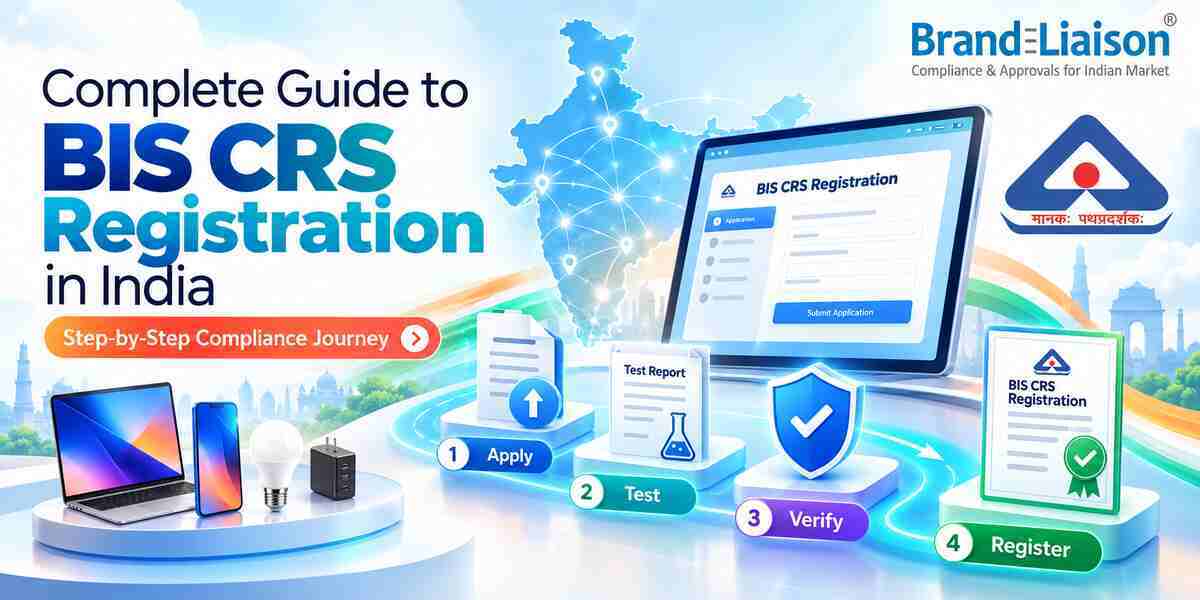
India has become one of the world’s major markets for electronics and information technology products. From smartphones, laptops and televisions to power adapters, smart speakers, CCTV equipment and storage devices, a wide range of electronic products are manufactured, imported and sold in the Indian market.
To ensure that specified electronics and IT products meet applicable safety requirements, the Government of India has introduced the Compulsory Registration Scheme (CRS), administered by the Bureau of Indian Standards (BIS).
Under this framework, products notified by the government must conform to the applicable Indian Standard and obtain the required BIS registration before they are manufactured, imported, stored for sale, sold or distributed in India. BIS operates CRS under Scheme-II (Registration Scheme) of the BIS Conformity Assessment Regulations.
If you manufacture or import electronics and IT products for the Indian market, understanding the BIS CRS Registration process is essential for regulatory compliance.
This complete guide explains BIS CRS, applicable products, eligibility, testing, documents, registration procedure, fees, marking requirements, validity, and how a BIS CRS consultant can assist your business.
BIS CRS Registration is the registration process applicable to electronics, IT and other products notified under the Compulsory Registration Scheme.
CRS operates under Scheme-II and is based on self-declaration of conformity. In simple terms, the manufacturer is required to demonstrate that the product conforms to the applicable Indian Standard through prescribed testing and documentation before obtaining BIS registration.
The broad process can be understood as:
Product identification → Indian Standard → Product testing → Test report → Documentation → BIS application → Review → Registration → CRS marking
The exact requirements depend on the product category and the applicable notification.
BIS CRS Certification is a commonly used term for the BIS registration obtained under the Compulsory Registration Scheme.
Technically, CRS is a registration scheme rather than the traditional BIS licence-based certification route. BIS describes Scheme-II as the Registration Scheme for self-declaration of conformity for notified electronics and IT goods.
For a product covered under CRS, the manufacturer needs to complete the prescribed registration process and comply with the applicable Indian Standard before placing the product on the Indian market.
The registration is linked to details such as the:
Manufacturer
Manufacturing location
Brand
Product
Model
Applicable Indian Standard
Test report
Therefore, businesses should carefully verify the product scope before applying.
BIS certificate is generally voluntary in India. However, the Central Government can make compliance mandatory for specific products through notifications and regulatory orders. BIS maintains a separate list of products covered under compulsory certification, including products under Scheme-II.
For products notified under CRS, the framework is intended to ensure conformity with specified standards, particularly safety requirements for electronics and IT goods.
BIS’s documentation explains that CRS was introduced to address fast-growing electronics and IT sectors while protecting consumers from spurious and sub-standard products.
Therefore, businesses dealing with notified products need to determine CRS applicability before commercializing them in India.
The BIS CRS product list covers a broad range of electronics, IT equipment and related products.
Examples include:
Laptops, notebooks and tablets
Mobile phones
Electronic games
Televisions
Visual display units and video monitors
Power adapters
Set-top boxes
Automatic data processing machines
CCTV cameras and recorders
Power banks
Smart watches
Keyboards
Wireless headphones and earphones
Bluetooth speakers
Smart speakers
External hard disk drives
External solid-state storage devices
Barcode readers and scanners
Microwave ovens
UPS/inverters within applicable ratings
LED lighting products
Printers and plotters
Webcams
Other notified electronics and IT products
The current BIS CRS list has been amended several times. For example, BIS’s current list includes amendments notified during 2026, including additions and changes to product categories.
Not every electronic product automatically requires CRS registration.
The exact product should be matched with the latest BIS CRS notification, product category and applicable Indian Standard.
CRS requirements primarily apply to manufacturers of products covered by the applicable compulsory registration notifications.
This can include:
Indian manufacturers
Foreign manufacturers supplying products to India
Brand owners/manufacturers where applicable
Businesses manufacturing products under their own brand
Importers should also verify the BIS registration status of products they intend to bring into India.
For foreign manufacturers, BIS specifically states that the FMCS route applies to products other than Electronics & IT Goods notified by MeitY; notified Electronics and IT products are handled through the CRS framework.
The BIS registration process involves several stages. A manufacturer should complete each stage carefully to avoid unnecessary testing or documentation issues.
The first step is to determine whether the product is included in the current CRS product list.
Review:
Product category
Product function
Model
Technical specifications
Intended use
Applicable notification
Indian Standard
For example, BIS currently lists laptops/notebooks/tablets, power adapters, CCTV cameras, smart watches, Bluetooth speakers and several other products under the CRS framework.
After confirming CRS applicability, identify the Indian Standard applicable to the product.
Different products can be covered by different standards.
For example, BIS currently lists IS/IEC 62368 Part 1:2023 for a number of audio, video, information and communication technology equipment categories. Other products are covered by product-specific standards such as those for microwave ovens, LED modules, UPS/inverters and other equipment.
Before testing, the manufacturer should confirm:
Standard number
Applicable edition
Amendments
Product scope
Applicable test requirements
Using an incorrect or outdated standard can result in an unsuitable test report.
The product needs to be tested according to the applicable requirements.
BIS provides laboratory-related information and uniform test report formats for various products covered under CRS.
The manufacturer should select an appropriate laboratory capable of performing the required tests for the specific product.
Before submitting samples, confirm:
Applicable Indian Standard
Required tests
Sample requirements
Test report format
Laboratory capability
Expected testing timeline
The manufacturer provides representative product samples to the laboratory.
The laboratory tests the product according to the applicable Indian Standard.
Depending on the product, testing may examine areas such as:
Electrical safety
Protection against electric shock
Insulation
Fire and thermal safety
Mechanical safety
Abnormal operating conditions
Component safety
Construction
Marking
Other product-specific requirements
The exact testing requirements depend on the applicable standard.
BIS also provides a dedicated CRS procedure through its registration system for submission and processing of products for testing.
After successful testing, the laboratory provides the test report.
The report should accurately identify the tested product and manufacturer.
Important details include:
Manufacturer name
Factory address
Brand
Product name
Model number
Technical specifications
Applicable Indian Standard
Test results
Laboratory details
The information in the test report should match the information that will be submitted in the BIS CRS application.
A mismatch in model numbers, manufacturer details or product specifications can lead to queries or require clarification.
The next stage is preparing the required supporting documents.
Depending on the product and application, documents can include:
Manufacturer details
Factory address
Contact information
Authorized signatory details
Business registration information
Product description
Brand name
Model number
Technical specifications
Product photographs
Datasheet
User manual
Rating label information
Test report
Laboratory details
Applicable Indian Standard
Supporting technical information
Trademark information
Brand authorization, where applicable
Manufacturer authorization, where applicable
Declaration
Undertaking
Authorization letter
Additional documents required by BIS
The final documentation requirement should always be verified against the current CRS procedure and product category.
After the test report and documents are ready, the manufacturer can proceed with the BIS CRS application.
The application contains information relating to:
Manufacturer
Factory
Brand
Product
Model
Indian Standard
Test report
Supporting documents
The application should be carefully checked before submission.
BIS’s online systems are used for its registration and certification processes, and applicants should follow the applicable current procedure for CRS.
After submission, the application and supporting documents are reviewed.
The review can involve:
Test report verification
Manufacturer information
Product details
Model number
Brand information
Applicable standard
Supporting documents
Registration requirements
If BIS raises a query, the applicant needs to provide the required clarification or documents.
Incomplete documentation can increase the time required to complete the registration process.
Once the applicable requirements are successfully completed, BIS grants the registration.
The registration identifies the approved product and its applicable scope.
The manufacturer can then use the BIS Standard Mark and registration number in accordance with the applicable CRS marking requirements.
BIS’s CRS documentation states that the scheme requires notified goods to conform to specified standards and bear the BIS Standard Mark along with the registration number.
BIS CRS Registration should not be treated as a one-time activity.
Manufacturers should continue to ensure that the registered product remains consistent with the product that was tested and registered.
Businesses should monitor:
Product design changes
Component changes
Model changes
Manufacturing location changes
Brand changes
Applicable standards
BIS notifications
Marking requirements
If a significant change is made to the product, the manufacturer should determine whether an update or additional approval is required.
Although requirements vary by product, the following documents are commonly relevant:
| Category | Examples |
|---|---|
| Manufacturer | Company name, factory address, contact details |
| Product | Product name, model, brand, specifications |
| Technical | Datasheet, user manual, photographs |
| Testing | Laboratory test report |
| Standard | Applicable Indian Standard |
| Brand | Trademark/authorization documents where applicable |
| Authorization | Manufacturer or applicant authorization |
| Declaration | Undertaking and declaration |
| Other | Product-specific supporting documents |
The exact document checklist should be confirmed before filing the application.
Testing is one of the most important parts of BIS CRS Registration.
The product is evaluated against the applicable Indian Standard.
For electronics and IT products, testing can cover areas such as:
The laboratory may evaluate protection against electrical hazards and other applicable electrical safety parameters.
The product may be examined for relevant mechanical hazards and construction requirements.
Applicable products may undergo tests related to abnormal operation, heating and fire-related safety requirements.
Testing can evaluate insulation and protection against hazardous electrical conditions.
The product can also be assessed for relevant marking and construction requirements.
The precise tests depend entirely on the product category and applicable standard.
The total BIS CRS registration Cost can vary from product to product.
Potential expenses include:
Product testing charges
Laboratory fees
BIS-related registration charges
Documentation expenses
Consultancy charges
Additional testing, if required
Model/product-related expenses
The testing cost can differ substantially depending on the product and number of applicable tests.
Therefore, it is better to estimate the cost after identifying the exact product category and applicable standard.
There is no single timeline that applies to every CRS application.
The overall duration can depend on:
Product category
Testing requirements
Laboratory availability
Test report completion
Documentation
Application processing
BIS queries
Number of models
Additional information requirements
One of the most effective ways to reduce avoidable delays is to ensure that the product sample, test report and application documents contain consistent information.
Foreign manufacturers selling notified electronics and IT products in India should complete the applicable CRS requirements before commercializing their products.
BIS explicitly states that its FMCS is for foreign manufacturers of products other than Electronics & IT Goods notified by MeitY, while CRS applies to the notified Electronics and IT categories.
Foreign manufacturers should therefore review:
Product applicability
Indian Standard
Testing requirements
Laboratory options
Manufacturer details
Brand information
Model details
CRS application requirements
Marking requirements
Early compliance planning is particularly useful for overseas manufacturers because testing and documentation may need to be coordinated between the foreign factory, laboratory and Indian regulatory process.
Importers should verify the BIS compliance status of products before importing notified electronics and IT goods.
Before placing an order, an importer should check:
Manufacturer name
Brand
Product
Model
Applicable Indian Standard
BIS registration details
Registration scope
This helps ensure that the product being imported corresponds to the registered product.
Importers should not assume that a BIS registration for one model automatically covers every model manufactured by the same company.
After obtaining registration, the manufacturer must follow the applicable BIS CRS marking requirements.
The product marking generally includes the relevant BIS Standard Mark and registration number, along with any other information required under the applicable framework.
Manufacturers should ensure that:
Marking is legible
Registration number is accurate
Product/model details are consistent
The approved marking format is followed
Packaging and product documentation are aligned with applicable requirements
Incorrect use of the BIS mark can create compliance concerns, so manufacturers should verify the current marking requirements before printing or applying labels.
BIS CRS and BIS ISI certification are two different conformity assessment routes.
| BIS CRS Registration | BIS ISI Certification |
|---|---|
| Registration-based framework | Certification/licence-based framework |
| Operates under Scheme-II | Scheme-I is the traditional Mark Scheme |
| Mainly covers notified electronics and IT products and other products brought under CRS | Covers products under applicable BIS certification requirements |
| Product testing is central to registration | Factory assessment and conformity assessment are central to certification |
| Registration number is associated with the approved product | BIS licence authorizes use of the Standard Mark under the applicable scheme |
BIS separately identifies Scheme-I and Scheme-II under its compulsory certification framework.
Choosing the correct route at the beginning is important because the application and compliance requirements are different.
The CRS product list is updated through notifications and amendments. Businesses should check the latest official BIS information before applying.
The product must be tested against the applicable standard.
The sample submitted for testing should correspond to the model for which registration is sought.
The model number should be consistent across the test report, technical documents and BIS application.
Missing documents can result in queries and delay the application.
Changes in components, design, manufacturing location or model specifications may require review of the existing registration.
The Standard Mark and registration number should be used according to the applicable requirements.
The CRS process may look straightforward, but manufacturers can face difficulties when identifying the correct standard, arranging testing or preparing documentation.
A professional BIS CRS consultant can assist with:
Product applicability assessment
Identification of the applicable Indian Standard
Laboratory coordination
Sample testing
Test report review
Documentation
Application preparation
BIS application support
Query handling
Registration follow-up
CRS marking guidance
Post-registration compliance
Professional assistance can be especially useful for businesses managing multiple products or foreign manufacturers entering the Indian market.
Brand Liaison provides product certification and regulatory compliance assistance to manufacturers, importers, foreign companies and brand owners entering the Indian market.
For BIS CRS Registration, Brand Liaison can assist with the process from initial product assessment through registration support.
Our assistance can include:
Checking CRS applicability
Identifying the relevant Indian Standard
Reviewing product specifications
Coordinating product testing
Reviewing laboratory test reports
Preparing documentation
Supporting the BIS application
Handling application-related queries
Guiding manufacturers on BIS CRS marking
Providing post-registration compliance guidance
Brand Liaison has 10+ years of experience and 5,000+ certificates delivered, supporting businesses with BIS and other Indian product compliance requirements.
If you are looking for a BIS CRS Consultant in India, Brand Liaison can help you understand the applicable CRS requirements and guide you through the registration process.
For businesses looking for professional assistance in Delhi, you can also connect with Brand Liaison as a BIS CRS Certification Consultant in Delhi.
BIS CRS Registration is the registration process applicable to products notified under the Compulsory Registration Scheme. The manufacturer must demonstrate conformity with the applicable Indian Standard through the prescribed testing and registration procedure.
It is mandatory for products specifically notified under the applicable CRS framework. Not every electronic product automatically falls under CRS.
BIS CRS Certification is a commonly used term for BIS registration under the Compulsory Registration Scheme. CRS technically operates as a registration scheme under Scheme-II.
The CRS list covers numerous electronics and IT products, including laptops, mobile phones, televisions, power adapters, CCTV equipment, smart watches, Bluetooth speakers, storage devices and other notified products. The latest official BIS list should always be checked because it is updated through amendments and notifications.
Yes. Product testing according to the applicable Indian Standard is a key part of the CRS process.
Yes. Foreign manufacturers of electronics and IT products notified under the CRS framework can follow the applicable CRS registration process. BIS states that FMCS does not cover Electronics & IT Goods notified by MeitY.
The cost depends on the product category, applicable testing, number of models, laboratory charges, BIS-related charges and professional assistance.
The timeline varies depending on testing, documentation, laboratory availability, BIS processing and any queries raised during the application.
This depends on the product, standard, model characteristics and applicable BIS requirements. Manufacturers should assess the models and scope before testing and applying.
BIS CRS Registration in India is an important compliance requirement for electronics, IT and other products specifically notified under the Compulsory Registration Scheme.
The process begins with determining whether the product is covered, identifying the correct Indian Standard, arranging product testing, obtaining the required test report, preparing documentation and submitting the BIS application. After successful review, the manufacturer can obtain registration and use the applicable BIS Standard Mark and registration number according to the prescribed requirements.
Because BIS notifications, product categories and standards can be updated, manufacturers should verify the current CRS requirements before starting the registration process. BIS’s official CRS list reflects multiple amendments, including updates made in 2026.
For manufacturers, importers and foreign companies, early preparation can help avoid problems related to testing, documentation, product models and registration.
Brand Liaison can provide end-to-end assistance for applicable BIS CRS requirements, from product assessment and testing coordination to documentation and registration support.




