Physical Address
304 North Cardinal St.
Dorchester Center, MA 02124
Physical Address
304 North Cardinal St.
Dorchester Center, MA 02124

A dark alley or an unlit side passage is one of the harder tests for any night vision camera, since there’s usually no streetlight or window glow to fall back on — the camera’s own infrared has to do all the work. Whether an analog or an IP camera handles that better isn’t really about the camera type itself; it’s about how each format tends to package its night vision hardware, and what each connects to for recording. Here’s how the two actually compare for this specific, harder-than-average use case.
In a lit driveway or a porch with ambient light nearby, differences between analog and IP night vision performance tend to narrow, since both benefit from some existing light alongside their infrared. In a genuinely dark alley with zero ambient light, that cushion disappears, and the comparison comes down to raw IR output, sensor sensitivity, and how each signal format handles the compression and processing of a low-light image before it reaches the recorder.
Modern analog formats — HD-TVI, AHD, and HD-CVI — have closed much of the older resolution gap with IP cameras, and this extends to night vision hardware too, since IR LED strength is a lens-and-sensor design choice independent of whether the camera outputs an analog or digital signal. A well-built analog camera with strong IR LEDs and a wide aperture can perform very respectably in a dark passage.
Where analog sometimes falls slightly behind is in signal processing sophistication for low-light scenes — some analog chipsets do less aggressive noise reduction in near-total darkness than comparable IP camera processors, which can leave a slightly grainier image in the darkest conditions. This isn’t universal across all analog models, and a good mid-to-high-end analog camera can still outperform a budget IP camera with weaker IR LEDs regardless of the format difference.
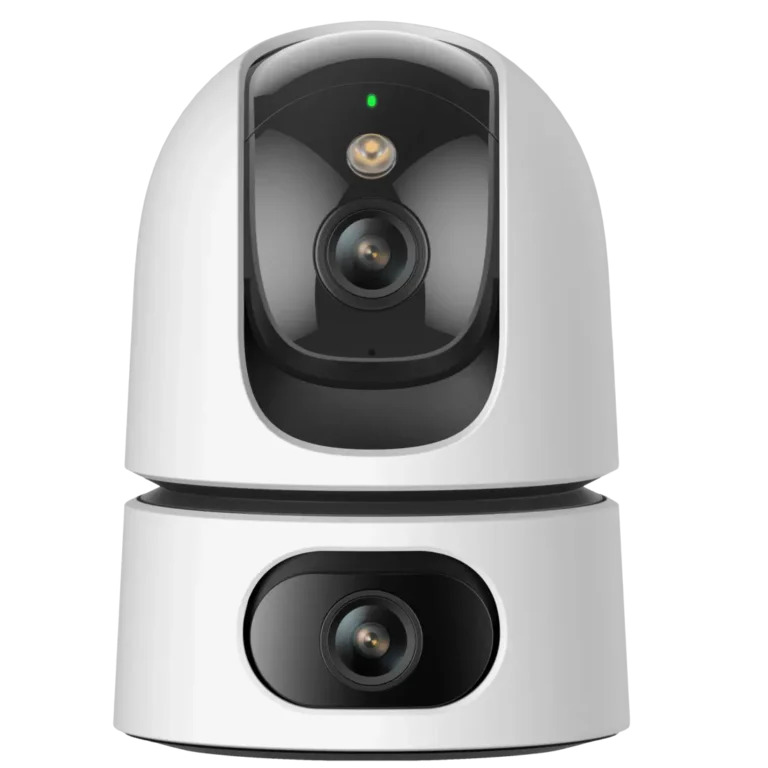
IP cameras generally have access to more onboard processing power, which allows for better noise reduction and image enhancement algorithms specifically tuned for low-light and zero-light conditions. This tends to show up as a cleaner, less grainy image at the same IR range compared to an equivalent analog camera, particularly at the outer edge of the camera’s infrared reach where the image is naturally weaker.
This advantage isn’t automatic, though — it depends on the specific camera’s processor and firmware, not simply on being an IP camera. A basic, low-cost IP camera doesn’t necessarily outperform a well-built analog one just by virtue of format; the image processing quality still varies significantly between price tiers within IP cameras themselves.
Advertised IR range — how far a camera claims to illuminate in total darkness — is measured under ideal lab conditions on both analog and IP cameras, and both tend to fall short of that figure in a real, narrow, obstructed alley. Neither format has an inherent advantage here; IR range comes down to the number and quality of infrared LEDs built into the specific camera, not whether the signal it outputs is analog or IP-based. When comparing two specific cameras for a dark passage, checking the actual LED count and rated range on each product’s datasheet is more informative than assuming one format wins by default.
This is where the practical difference between the two formats shows up more clearly than in the cameras themselves. Analog cameras record to a DVR, which handles video processing centrally — all channels pass through the same DVR hardware, meaning the DVR’s own low-light processing capability affects every connected camera’s recorded image quality, not just what the camera itself captures live. A DVR with weaker processing can visibly degrade an otherwise capable analog camera’s night footage once it’s written to storage.
IP cameras do more of their own processing before sending the finished video stream to an NVR, so the NVR’s job is closer to simply recording and displaying what the camera already produced. This means a capable IP camera’s night vision quality is less dependent on the specific NVR it’s paired with, compared to how much an analog camera’s recorded quality depends on its DVR.
A dark alley or side passage is frequently further from the main house or office than other camera points, which raises a practical question independent of night vision quality: how the camera gets both power and a signal back to the recorder. Analog cameras run over coaxial cable, which is comparatively cheap and simple to terminate, alongside a separate power line unless a power-over-coax setup is used. IP cameras typically run over PoE, combining power and data in a single Ethernet cable, which simplifies the physical run to one cable rather than two, particularly useful for a distant alley point where fewer weatherproofed connection joints reduce failure points over time.
For a location prone to water exposure during monsoon season, fewer outdoor cable joints — as PoE offers — can matter more for long-term reliability than the night vision comparison itself.
Some alleys or passages are wide enough, or short enough, that a single camera needs to see the full width from one mounting point rather than a long, narrow field of view down the passage. A 180-degree analog camera is built for exactly this kind of wide, compact coverage — useful for a short alley segment or a wider unlit courtyard-style passage where seeing the whole width matters more than long-distance IR reach. This isn’t a fit for a long, narrow alley extending far into the distance, where a standard-angle camera with strong IR range down the length of the passage generally performs better, but for a shorter, broader dark space, the wide-angle analog option is worth considering directly against a standard IP camera covering the same spot.
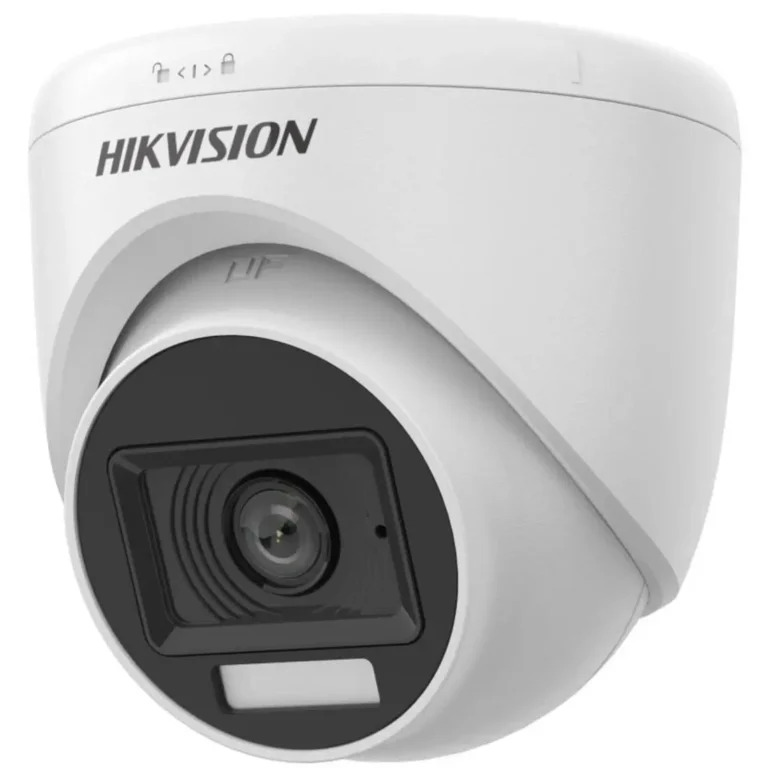
CCTV camera price in Pakistan for cameras genuinely built around strong night vision performance — regardless of analog or IP — tends to sit above basic models advertising night vision as a checkbox feature, since the cost reflects real IR LED and sensor hardware rather than the analog-or-IP label itself. As a general pattern, comparable-tier IP cameras with strong low-light processing often carry a higher price than an equivalent analog camera, partly due to the additional onboard processing hardware IP cameras carry. For a single dark alley camera, it’s worth comparing actual night vision specs between a strong analog option and a strong IP option at similar price points, rather than assuming one format is inherently the cheaper or better performer.
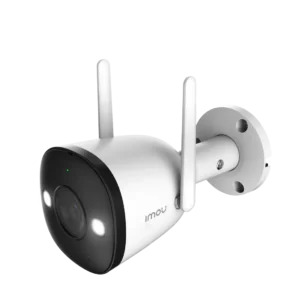
Where IP infrastructure already exists, or is being planned for the property, a fixed IP camera focused on dependable night detail can be a straightforward choice for a dark alley point. The Imou Cruiser SC 3MP Night Vision reflects this kind of build — a bullet-style camera aimed at consistent night performance for entrances and passages, rather than added extras that don’t affect after-dark image quality. It’s a useful reference point for what a mid-range IP option looks like in this specific role, though the same practical checks — actual IR range in a confined space, and how walls or dust in that particular alley affect the image — still apply regardless of which specific camera is chosen.
Neither analog nor IP has a fixed, universal advantage for a dark alley — a well-built camera of either format with strong IR LEDs and a capable recorder behind it will outperform a weak camera of the other format at a similar price. The decision more often comes down to what’s already installed at the property: a property with existing analog cabling and a compatible DVR can often get strong results with a quality HD analog camera at lower installation cost, while a property already using or planning IP infrastructure benefits from an IP camera’s generally more capable onboard processing and simpler single-cable PoE run. Testing the actual night image in the specific alley — not just comparing spec sheets — is what ultimately confirms which option performs better in that exact space.




