Physical Address
304 North Cardinal St.
Dorchester Center, MA 02124
Physical Address
304 North Cardinal St.
Dorchester Center, MA 02124

Aging underground pipelines can develop cracks, corrosion, root intrusion, mineral deposits, and joint problems long before complete failure occurs. For contractors and infrastructure managers, identifying these issues early creates an opportunity to restore the existing pipeline instead of immediately resorting to disruptive excavation and replacement.
Traditional sewer replacement can involve excavation across roads, sidewalks, landscaping, and other finished surfaces. Modern rehabilitation methods provide another route when the existing pipe remains suitable for renewal. In Huntington Beach, municipal sewer projects have used lining after video inspection identified aging pipes, calcium deposits, groundwater seepage, and root-related problems.
Trenchless pipe rehabilitation allows contractors to work through existing access points in many applications, reducing the amount of surface excavation required. Depending on pipe condition and project requirements, rehabilitation may involve structural lining, spray-applied materials, or other specialized techniques designed to restore the interior of an existing pipeline.
A successful rehabilitation project starts with understanding what is actually happening inside the pipe. CCTV sewer inspection can reveal cracks, offset joints, corrosion, deposits, root intrusion, and other defects that may not be visible from the surface.
Inspection findings can then help contractors determine whether a section requires cleaning, spot repair, lining, or complete replacement. This condition-based approach is particularly useful for municipal and commercial systems where unnecessary excavation can increase project time and costs.
Surface preparation plays an important role in rehabilitation quality. Deposits, debris, roots, and other obstructions may need to be removed before a lining material can be applied correctly.
Hydro jetting and mechanical cleaning are commonly used according to the pipe’s condition and the project’s specifications. Proper preparation helps create a cleaner interior surface and gives the rehabilitation material a better foundation.
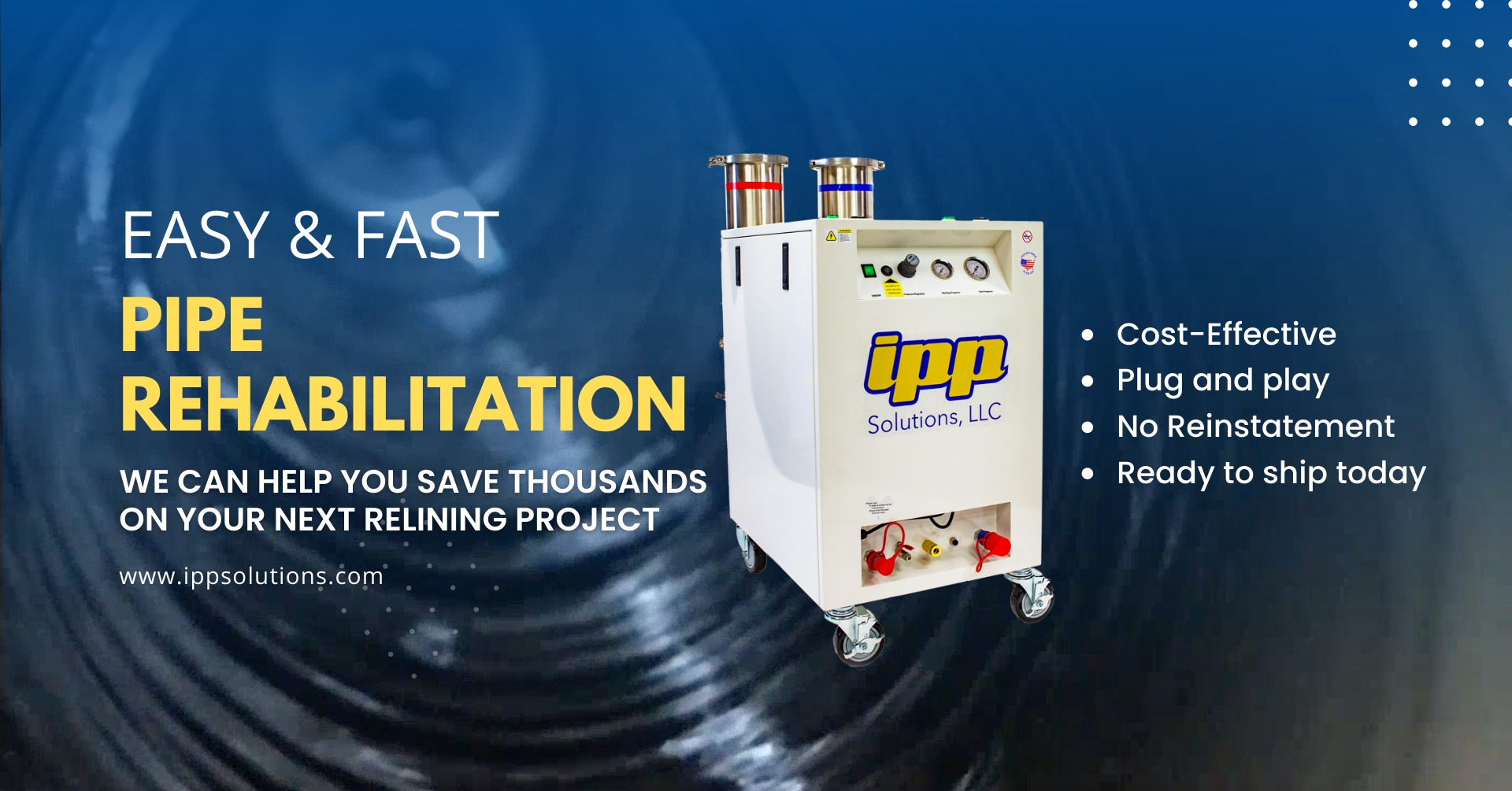
Sipp lining is a spray-in-place approach that applies a lining material directly to the interior of an existing pipe. It can be useful for selected sewer, water, stormwater, and industrial pipeline applications where access, geometry, or project conditions make internal rehabilitation practical. IPP Solutions develops equipment specifically for spray-in-place applications.
The technique can be especially interesting for contractors looking to expand their rehabilitation capabilities. Equipment selection, resin compatibility, surface preparation, application thickness, curing requirements, and pipe condition all need to be considered before choosing a lining system.
Drain cleaning is often viewed as routine maintenance, but it can also provide valuable preparation for rehabilitation work. Removing accumulated debris, scale, roots, and other restrictions can improve inspection visibility and help determine the actual condition of the pipeline.
For recurring blockages, cleaning alone may not address an underlying structural problem. A camera inspection can help distinguish between temporary obstruction and defects that require a longer-term rehabilitation strategy.
Cured-in-place pipe technology is another established approach to sewer rehabilitation. It involves installing a resin-impregnated liner inside an existing pipe and curing it to create a new pipe within the host pipe. Huntington Beach has used CIPP lining in municipal sewer rehabilitation projects, including projects involving thousands of linear feet of aging sewer mains.
The right method depends on several factors, including pipe diameter, material, structural condition, access points, flow requirements, temperature, chemical exposure, and project objectives. There is no single rehabilitation method that fits every pipeline.
For contractors, an effective workflow can begin with CCTV inspection, followed by appropriate cleaning and defect assessment. Once the pipeline condition is understood, the rehabilitation method and equipment can be selected around the actual requirements of the project.
IPP Solutions focuses on equipment for spray-in-place pipeline rehabilitation, including systems designed to apply polyurea, polyurethane, and epoxy materials through existing access points.
Pipeline rehabilitation is ultimately about making better use of infrastructure that may still have significant remaining value. Instead of treating every damaged pipe as a candidate for excavation and replacement, contractors can evaluate whether internal rehabilitation can restore performance and extend service life.
For municipalities, industrial facilities, commercial properties, and rehabilitation contractors, combining accurate inspection, proper preparation, suitable lining technology, and reliable equipment can create a more controlled approach to maintaining aging underground assets.
Contact Us Today:
Website: https://ippsolutions.com/
Phone: +1(714)-410-0707
Address: 5192 Bolsa Ave, Suite 5 Huntington Beach, CA 92649.
Email: info@ippsolutions.com




