Physical Address
304 North Cardinal St.
Dorchester Center, MA 02124
Physical Address
304 North Cardinal St.
Dorchester Center, MA 02124

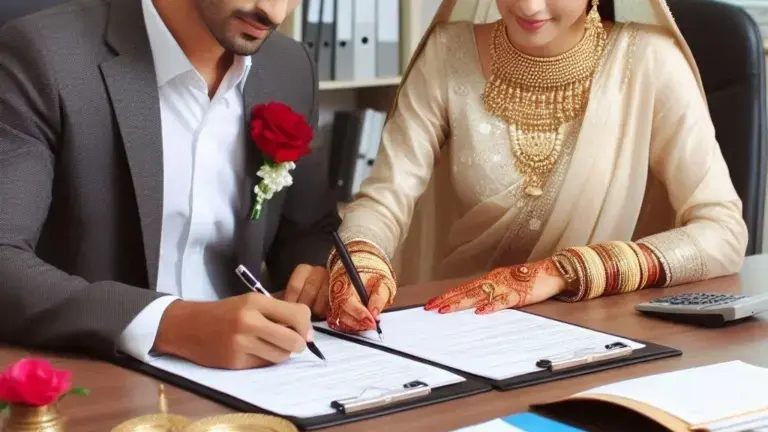
Witnesses play an important role in a Nikah, including a marriage arranged through the court marriage process. Many couples understand that witnesses are required but are unsure about who can serve as a witness, how many witnesses they need, and what documents those witnesses should bring.
For couples planning court marriage in pakistan, it is important to arrange suitable witnesses before the Nikah rather than waiting until the day of the marriage. Witnesses may need to be present during the Nikah, confirm the proceedings, and sign relevant marriage documents.
This guide explains the general witness requirements, who may qualify, what identification may be required, and what couples should consider when arranging witnesses.
Witnesses help establish that the marriage contract was conducted openly and that the required elements of the Nikah took place. During the ceremony, they may observe the Ijab-o-Qabool, the consent of the bride and groom, and other relevant parts of the marriage proceedings.
Their role is particularly important because a Nikah is not simply an exchange of signatures. The marriage contract involves consent and other requirements that need to be properly established.
It is also useful to distinguish between religious requirements and administrative requirements. A witness may need to meet certain conditions under Islamic principles, while the marriage registration process may also require identification and signatures. Couples should therefore confirm the complete procedure with the Nikah Registrar or Nikah Khawan handling their marriage.
A commonly followed requirement for a Muslim Nikah is two suitable adult witnesses. These witnesses should be present for the relevant proceedings and able to understand what they are witnessing.
The witnesses may also be required to sign the Nikah Nama or other documentation connected with the marriage registration process. Their names and identification details should be recorded accurately.
Couples should arrange their witnesses in advance because discovering a problem with a witness on the day of the Nikah can cause unnecessary delays. If there is any unusual circumstance, such as a witness being unavailable at the last moment, the couple should speak with the Nikah Registrar or Nikah Khawan before making alternative arrangements.
A suitable witness generally needs to meet the applicable religious requirements and be capable of understanding and confirming the marriage proceedings.
Witnesses should generally be adults who are capable of understanding their responsibility. Couples should avoid choosing someone whose age or legal capacity could create uncertainty during the registration process.
It is sensible to confirm the eligibility of proposed witnesses with the person conducting the Nikah before the scheduled date.
For a Muslim Nikah, Islamic requirements concerning witnesses are relevant. The commonly followed position is that the witnesses should be Muslims who satisfy the conditions applicable to the marriage.
Because religious rules and registration procedures can sometimes be discussed separately, couples should make sure that their selected witnesses meet both the relevant religious requirements and any documentation requirements for registration.
Witnesses should understand that they are witnessing a marriage contract and should be capable of identifying the couple and confirming what occurred.
They should also be reliable enough to attend the Nikah and complete any required signatures. Choosing people who are available and prepared can make the process much smoother.
One common question is whether a relative can act as a witness. In general, being related to the bride or groom does not automatically determine whether someone can or cannot serve as a witness.
For example, an eligible adult brother, uncle, or another relative may potentially serve as a witness if the person satisfies the applicable requirements.
However, couples should not rely solely on their relationship with the proposed witness. The person’s eligibility should be confirmed with the Nikah Registrar or Nikah Khawan, particularly when there are questions about age, religion, identification, or other circumstances.
Witnesses do not necessarily have to be close relatives. Suitable friends or other adults may be able to serve as witnesses when they meet the relevant requirements.
When choosing friends as witnesses, couples should make sure they:
It is better to confirm these details before the appointment rather than assuming that any available person can act as a witness.
Identification is an important part of marriage documentation. Witnesses may be asked to provide their original CNIC or other acceptable identification and, depending on the registration procedure, copies of their documents.
The information provided by witnesses should be accurate and should match their identification documents. They may also need to provide signatures on the relevant Nikah or registration paperwork.
Because documentation requirements can differ depending on the registrar and circumstances, couples should confirm the exact requirements before the Nikah. Preparing the documents in advance can help prevent delays.
Witnesses are generally expected to be present during the relevant Nikah proceedings so that they can actually observe the marriage contract and its required elements.
This is why simply providing someone’s name for documentation may not be enough. The witnesses should understand their role and be available when the Nikah takes place.
Couples living in different cities or dealing with special circumstances should discuss the situation with their Nikah Registrar or Nikah Khawan beforehand. They should not assume that remote participation or later signatures will automatically satisfy the applicable requirements.
The basic principles concerning witnesses remain important regardless of where a couple arranges their marriage. However, practical documentation and registration procedures may differ depending on the location and the relevant registrar.
Couples arranging a marriage in Rawalpindi should confirm the required identification and documentation for their witnesses before the Nikah appointment. This can help ensure that the registration process proceeds without unnecessary complications.
In Islamabad, couples should discuss witness requirements with the relevant Nikah Registrar or service provider in advance. Witnesses should be prepared to attend the proceedings and provide any identification or signatures that are required.
Couples arranging a Nikah in Lahore should prepare their witnesses and documentation before the scheduled appointment. Confirming requirements in advance can be particularly useful if the couple or witnesses are travelling from another area.
In Karachi, couples should also confirm the applicable witness and identification requirements before their Nikah. Having suitable witnesses available at the correct time can make the overall process easier.
Not every couple has relatives or friends who are immediately available to serve as witnesses. If a couple does not have suitable witnesses, the issue should be discussed with the Nikah Registrar or Nikah Khawan before the marriage date.
Couples should not assume that witnesses can automatically be arranged by a particular service provider unless that arrangement has been clearly confirmed.
Planning ahead gives the couple time to identify an appropriate solution and avoid last-minute problems.
Several simple mistakes can create complications during the marriage process. Couples should avoid:
Taking care of these details early can make the Nikah and registration process much more straightforward.
Before the Nikah, couples can use this simple checklist:
A brother may potentially serve as a witness when he meets the applicable religious and registration requirements. Being the bride’s or groom’s brother does not by itself determine eligibility. Couples should confirm the specific requirements with their Nikah Registrar or Nikah Khawan before the marriage.
Suitable friends may be able to act as witnesses if they satisfy the relevant requirements. They should be available during the Nikah and have any identification documents required for registration.
Witnesses are commonly asked for identification as part of marriage documentation and registration. However, the exact documents and copies required can depend on the applicable registration procedure, so couples should confirm these details beforehand.
A witness can potentially be a member of the bride’s family if the person satisfies the applicable requirements. The family relationship itself is not the only factor that should be considered.
If a selected witness becomes unavailable, the couple should contact the Nikah Registrar or Nikah Khawan as soon as possible. A suitable replacement may need to be arranged, depending on the circumstances and applicable requirements.
Witnesses are an important part of the Nikah process, so couples should treat their selection and documentation as an essential part of marriage preparation. The safest approach is to arrange suitable adult witnesses in advance, confirm their eligibility, prepare their identification documents, and ensure they can attend the Nikah proceedings.
Requirements can vary depending on the circumstances and registration procedure. For that reason, couples should confirm the details with the relevant Nikah Registrar or Nikah Khawan before the scheduled marriage date. Proper preparation can help avoid unnecessary delays and make the marriage process more organized.




