Physical Address
304 North Cardinal St.
Dorchester Center, MA 02124
Physical Address
304 North Cardinal St.
Dorchester Center, MA 02124

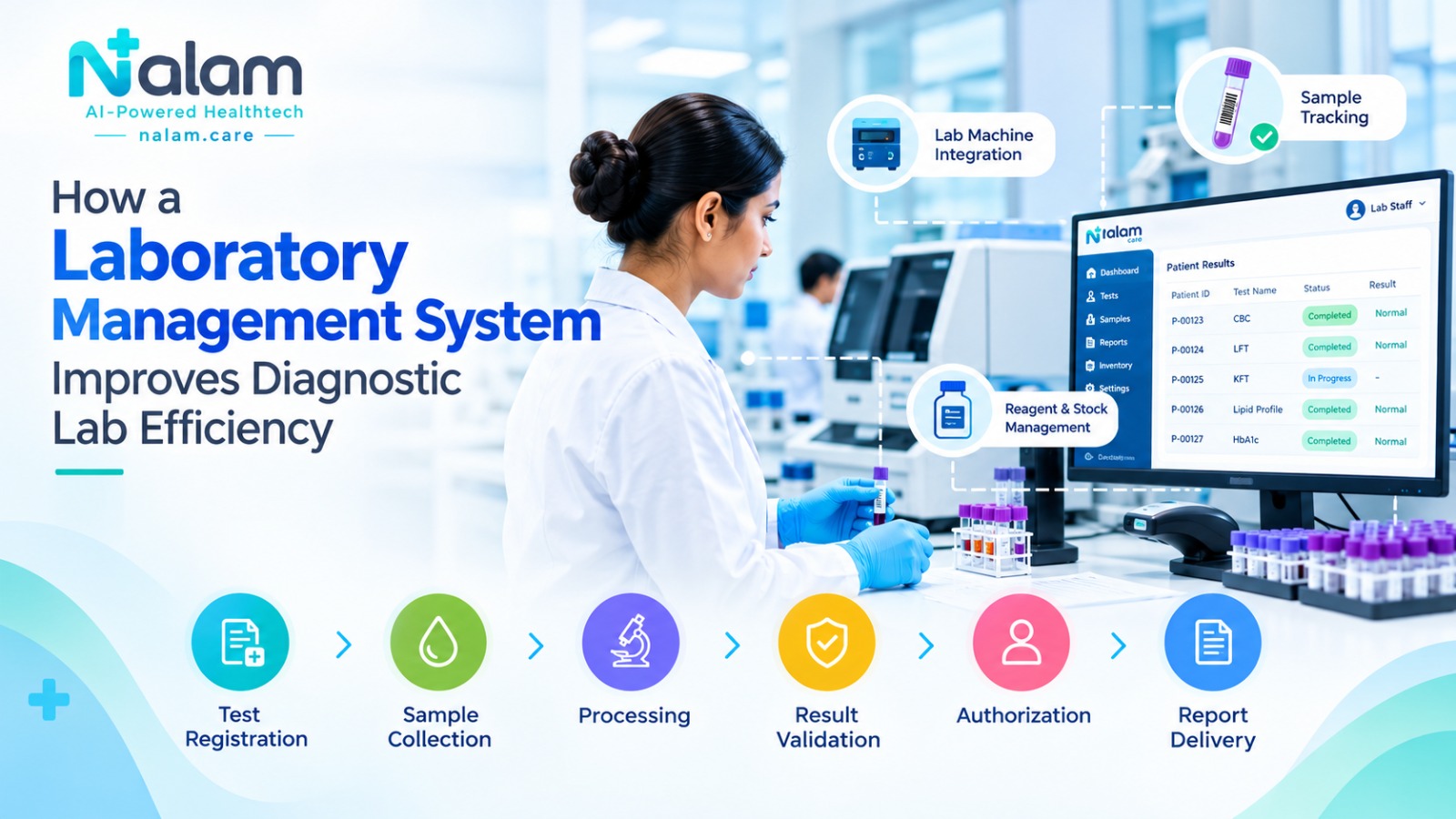
Modern diagnostic laboratories handle hundreds or even thousands of tests every day. From test registration and sample collection to processing, result validation and report delivery, every step needs to be accurate and well coordinated.
When these processes depend heavily on manual data entry, paper records and disconnected systems, laboratories may face delays, repeated work and difficulties in tracking samples and reports.
This is where a Laboratory Management System (LMS) can make a significant difference.
A Laboratory Management System is software designed to manage and connect the complete workflow of a diagnostic laboratory.
Instead of handling test registration, sample tracking, result processing, reporting and inventory through separate systems, an LMS brings these activities together on a single platform.
A modern laboratory management system software can help laboratories manage the complete journey of a test — from registration and sample collection to processing, validation, authorization and final report delivery.
For laboratories looking to digitize their operations, a connected platform such as the Nalam Laboratory Management System can help streamline these workflows.
Laboratory operations involve multiple teams, processes and data points. A single test may pass through registration, sample collection, laboratory processing, result validation and report delivery.
Managing all these steps manually can make it difficult to know the current status of a test or sample.
Common challenges include:
Repeated manual data entry
Difficulty tracking samples
Delayed report generation
Manual result entry
Lack of real-time workflow visibility
Difficulty managing reagents and consumables
Scattered patient test records
Increased administrative workload
A laboratory management system helps bring these activities into one connected workflow, allowing laboratory teams to work with better visibility and fewer repetitive tasks.
One of the biggest advantages of laboratory management software is workflow automation.
A test can move through a structured process:
Test Registration → Sample Collection → Processing → Result Validation → Authorization → Report Delivery
Instead of maintaining separate records at every stage, the information can move through one connected system.
This makes it easier for laboratory staff and managers to understand the status of every test.
Sample identification is one of the most important parts of laboratory operations.
A laboratory may handle numerous patient samples every day. Manually identifying and tracking these samples can increase the possibility of mix-ups and unnecessary delays.
With barcode-based sample management, each sample can be identified and tracked from collection through processing.
This helps laboratory teams quickly determine:
Which patient the sample belongs to
Which test has been ordered
Where the sample is in the workflow
Whether the sample has been processed
Whether the result is ready for validation
Better sample tracking can contribute to a more organized and efficient laboratory workflow.
Manual result entry can consume significant staff time, especially in laboratories processing a high volume of tests.
A modern laboratory management system can integrate with laboratory instruments so that test results can be captured directly from connected machines.
This reduces the need to repeatedly type results into the system and helps laboratory staff spend less time on repetitive data entry.
Nalam’s Laboratory Management System supports direct laboratory machine integration, helping results move from connected instruments into the laboratory workflow.
Laboratory results should go through appropriate review before a report is released.
A connected LMS can provide a structured validation and authorization process.
Results can be reviewed and validated before they are authorized for final report delivery.
This creates a controlled workflow where laboratory teams have a clear review step between result processing and report release.
Laboratory efficiency is not only about test processing. Inventory management is also an important part of daily operations.
Laboratories need to monitor:
Reagents
Consumables
Available stock
Expiry dates
Usage
Items that need replenishment
Laboratory management software can provide better visibility into reagent and stock levels.
With expiry visibility and centralized stock information, laboratory managers can identify items that need attention before they affect testing operations.
Patients and doctors often depend on laboratory reports to make informed healthcare decisions.
When test processing involves multiple manual steps, report delivery can take longer.
A connected laboratory workflow helps reduce unnecessary delays by moving test information from registration through processing, validation and authorization in one system.
When results are captured from connected instruments and move through a structured workflow, laboratories can work towards faster report delivery.
A laboratory handles patient information and test results that may need to be referenced later.
Instead of maintaining scattered records, a laboratory management system can keep test results and patient history within a centralized platform.
This makes it easier for authorized users to refer to previous tests and results when required.
Centralized data also gives laboratory managers better visibility into overall laboratory activity.
A large amount of laboratory administrative work can involve repetitive tasks such as:
Entering patient details
Updating test status
Tracking samples
Entering results
Checking report status
Monitoring stock
Searching for previous records
By connecting these workflows, laboratory management software can reduce repetitive administrative work.
This allows laboratory staff to spend more time focusing on laboratory operations rather than repeatedly updating separate records.
Many diagnostic laboratories work closely with hospitals and clinics.
When laboratory and hospital systems operate independently, test orders and results may need to be transferred manually.
A connected healthcare platform can help bridge this gap.
For example, Nalam’s Laboratory Management System can connect with the Nalam Hospital Management System, allowing hospital doctors to order laboratory tests and laboratory results to flow back into the patient’s hospital record.
This creates a more connected workflow between the hospital and laboratory.
Every laboratory has its own processes, departments and operational requirements.
Therefore, choosing laboratory software should not be based only on the number of features available.
Laboratories should consider whether the system can support:
Their existing workflow
Sample and barcode tracking
Laboratory machine integration
Result validation
Report management
Reagent and stock management
User roles and permissions
Patient history
Hospital or clinic integration
Custom reports and dashboards
Nalam Software’s healthcare platform is designed to be customizable around the workflow of hospitals, laboratories and clinics, including custom screens, reports, fields, roles, permissions, integrations and dashboards.
Before choosing an LMS, ask these questions:
The software should support the journey from test registration to final report delivery.
Barcode and sample tracking can help laboratories maintain better control over sample movement.
Machine integration can reduce manual result entry and improve workflow efficiency.
A proper validation and authorization process is important before releasing reports.
Reagent, consumable, stock and expiry management can help maintain smooth laboratory operations.
Integration becomes especially valuable for laboratories working with hospitals and healthcare facilities.
A modern diagnostic laboratory needs more than basic record-keeping. It needs a connected system that can manage samples, tests, results, reports, inventory and patient information efficiently.
A Laboratory Management System can help reduce repetitive manual work, improve sample tracking, streamline result processing and provide better visibility across laboratory operations.
With features such as lab machine integration, barcode-based sample management, result validation, report management and reagent stock tracking, Nalam’s Laboratory Management System is designed to connect the complete laboratory workflow from sample to report.
If your laboratory is looking to move away from disconnected processes and build a more organized digital workflow, explore the Nalam Laboratory Management System and see how it can fit your laboratory operations.




