Physical Address
304 North Cardinal St.
Dorchester Center, MA 02124
Physical Address
304 North Cardinal St.
Dorchester Center, MA 02124

Introduction
The thyroid gland plays an important role in regulating many essential body functions, including metabolism, energy production, body temperature, and hormone balance. When this small butterfly-shaped gland located in the neck becomes enlarged, the condition is known as a goitre. Although some goitres are harmless and may not cause noticeable symptoms, others can indicate an underlying thyroid disorder that requires medical attention.
An enlarged thyroid can develop due to several reasons, including iodine deficiency, thyroid hormone imbalance, autoimmune conditions, thyroid nodules, or other medical concerns. Some people may notice only a swelling in the neck, while others may experience difficulty swallowing, breathing problems, voice changes, or discomfort.
Understanding the symptoms of goitre and knowing when to seek professional care can help prevent complications and ensure timely treatment. An ENT specialist or thyroid expert can evaluate the condition, identify the cause, and recommend the most suitable management approach.
What Is Goitre and Why Does the Thyroid Become Enlarged
A goitre refers to abnormal enlargement of the thyroid gland. The thyroid is located at the front of the neck and produces hormones that help control the body’s metabolism and energy use.
When the thyroid gland works harder than normal or experiences structural changes, it may increase in size. A goitre does not always mean that the thyroid is producing too much or too little hormone. Some people with goitre have normal thyroid function, while others may have conditions such as hypothyroidism or hyperthyroidism.
Common causes of goitre include:
Identifying the cause is important because treatment depends on the underlying thyroid problem.
Common Symptoms of Goitre
The symptoms of goitre can vary depending on the size of the thyroid enlargement and whether it affects surrounding structures in the neck.
Some people may not notice any symptoms, while others may experience visible or uncomfortable changes.
Common symptoms include:
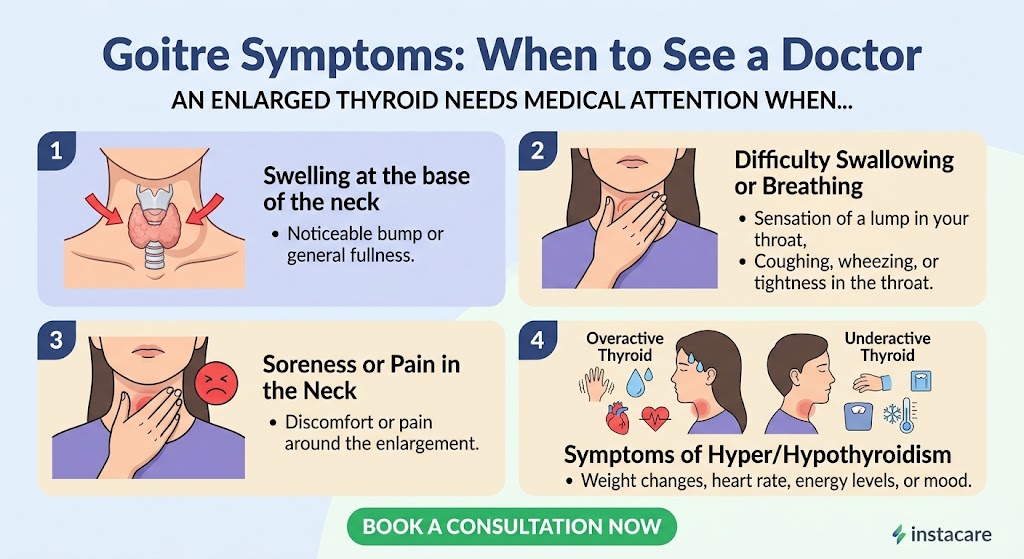
Visible Swelling in the Neck
The most noticeable sign of goitre is swelling or a lump at the front of the neck. The enlargement may be small and barely visible or large enough to affect the appearance of the neck.
Some people notice the swelling while looking in the mirror, shaving, applying makeup, or wearing tight clothing around the neck.
Difficulty Swallowing
As the thyroid gland enlarges, it may press against the food pipe (esophagus), causing difficulty swallowing. Some individuals may feel as though food is stuck in their throat or experience discomfort while eating.
Breathing Problems
A large goitre may put pressure on the windpipe (trachea), leading to breathing difficulties. Patients may experience shortness of breath, especially when lying down or during physical activity.
Hoarseness or Voice Changes
Pressure from an enlarged thyroid can affect nearby nerves that control the voice. This may result in hoarseness, a deeper voice, or changes in voice quality.
Persistent voice changes should always be evaluated by a healthcare professional.
Tightness or Pressure in the Neck
Some people with goitre experience a feeling of fullness, pressure, or tightness in the neck area. This sensation may become more noticeable when wearing collars or necklaces.
Symptoms Related to Thyroid Hormone Imbalance
A goitre may occur along with abnormal thyroid hormone levels. In these cases, patients may experience symptoms related to an overactive or underactive thyroid.
Symptoms of Hypothyroidism
When the thyroid produces fewer hormones than required, symptoms may include:
Symptoms of Hyperthyroidism
When the thyroid produces excessive hormones, symptoms may include:
These symptoms indicate the need for thyroid evaluation and appropriate medical guidance.
When Should an Enlarged Thyroid Receive Medical Attention
Not every goitre requires immediate treatment, but certain signs should not be ignored.
You should consult an ENT specialist or thyroid doctor if you notice:
Early evaluation helps determine whether the enlargement is harmless or requires treatment.
How Doctors Diagnose Goitre
Diagnosis begins with a physical examination of the neck and a review of symptoms and medical history. The doctor checks the size, texture, and movement of the thyroid gland.
Additional tests may include:
Thyroid Blood Tests
Blood tests measure thyroid hormone levels, including thyroid-stimulating hormone (TSH), T3, and T4. These tests help determine whether the thyroid is underactive, overactive, or functioning normally.
Thyroid Ultrasound
An ultrasound uses sound waves to create images of the thyroid gland. It helps identify:
Fine Needle Aspiration Biopsy
If a thyroid nodule appears suspicious, doctors may recommend a fine needle aspiration biopsy. This procedure collects a small sample of thyroid tissue to check for abnormal cells.
Thyroid Scan
A thyroid scan may be used to understand how the thyroid is functioning and identify areas producing too much or too little hormone.
Treatment Options for Goitre
Treatment depends on the cause, size, symptoms, and thyroid function.
Monitoring and Regular Checkups
Small goitres that do not cause symptoms may only require regular monitoring through examinations, blood tests, and imaging.
Medication
If goitre is related to thyroid hormone imbalance, medications may help restore normal hormone levels and control symptoms.
Radioactive Iodine Therapy
In some cases of overactive thyroid, radioactive iodine therapy may reduce thyroid size and improve hormone production.
Surgery
Surgery may be recommended when:
A thyroid surgery procedure may involve removing part or all of the thyroid gland depending on the condition.
Lifestyle Measures That Support Thyroid Health
While lifestyle changes cannot always prevent goitre, maintaining overall thyroid health can be beneficial.
Helpful habits include:
Patients with thyroid conditions should always discuss dietary changes or supplements with their healthcare provider.
Book Online Appointment With Best ENT Specialist Via InstaCare
If you notice neck swelling, difficulty swallowing, breathing concerns, or symptoms linked to thyroid imbalance, professional evaluation is important. You can book an online appointment with the best ENT specialist via InstaCare for expert consultation, accurate diagnosis, and personalized treatment recommendations for thyroid and neck-related concerns.
Conclusion
Goitre is a common thyroid condition that can range from a harmless enlargement to a sign of an underlying thyroid disorder. Recognizing symptoms such as neck swelling, swallowing difficulties, breathing issues, and voice changes can help patients seek timely medical care.
Proper diagnosis through blood tests, ultrasound, and other evaluations allows doctors to identify the cause and recommend effective treatment. Whether through monitoring, medication, or surgery, early management can help maintain thyroid health and prevent complications.
If you notice any changes in your neck or thyroid-related symptoms, consulting an ENT specialist is an important step toward protecting your health.
Frequently Asked Questions
No, many goitres are harmless and may not require immediate treatment. However, evaluation is important to determine the cause and rule out serious conditions.
Some small goitres may remain stable, but others may require treatment depending on the underlying cause and thyroid hormone levels.
No, most goitres are not cancerous. However, certain thyroid nodules or rapidly growing enlargements may need further testing.
An ENT specialist, endocrinologist, or thyroid specialist can evaluate and manage goitre depending on the symptoms and cause.
Yes, a large goitre can put pressure on the windpipe and may cause breathing difficulty, coughing, or a feeling of pressure in the neck.




