Physical Address
304 North Cardinal St.
Dorchester Center, MA 02124
Physical Address
304 North Cardinal St.
Dorchester Center, MA 02124

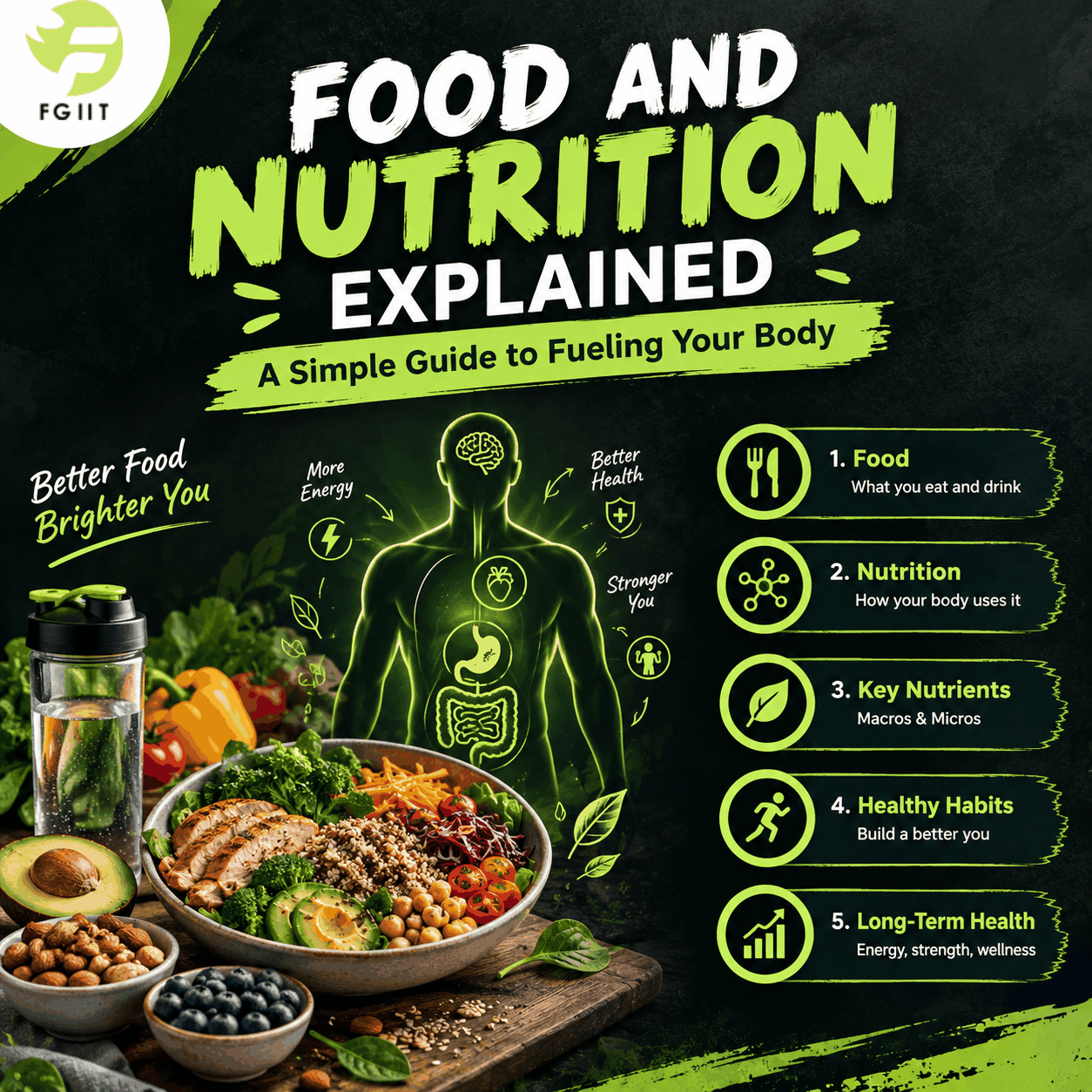
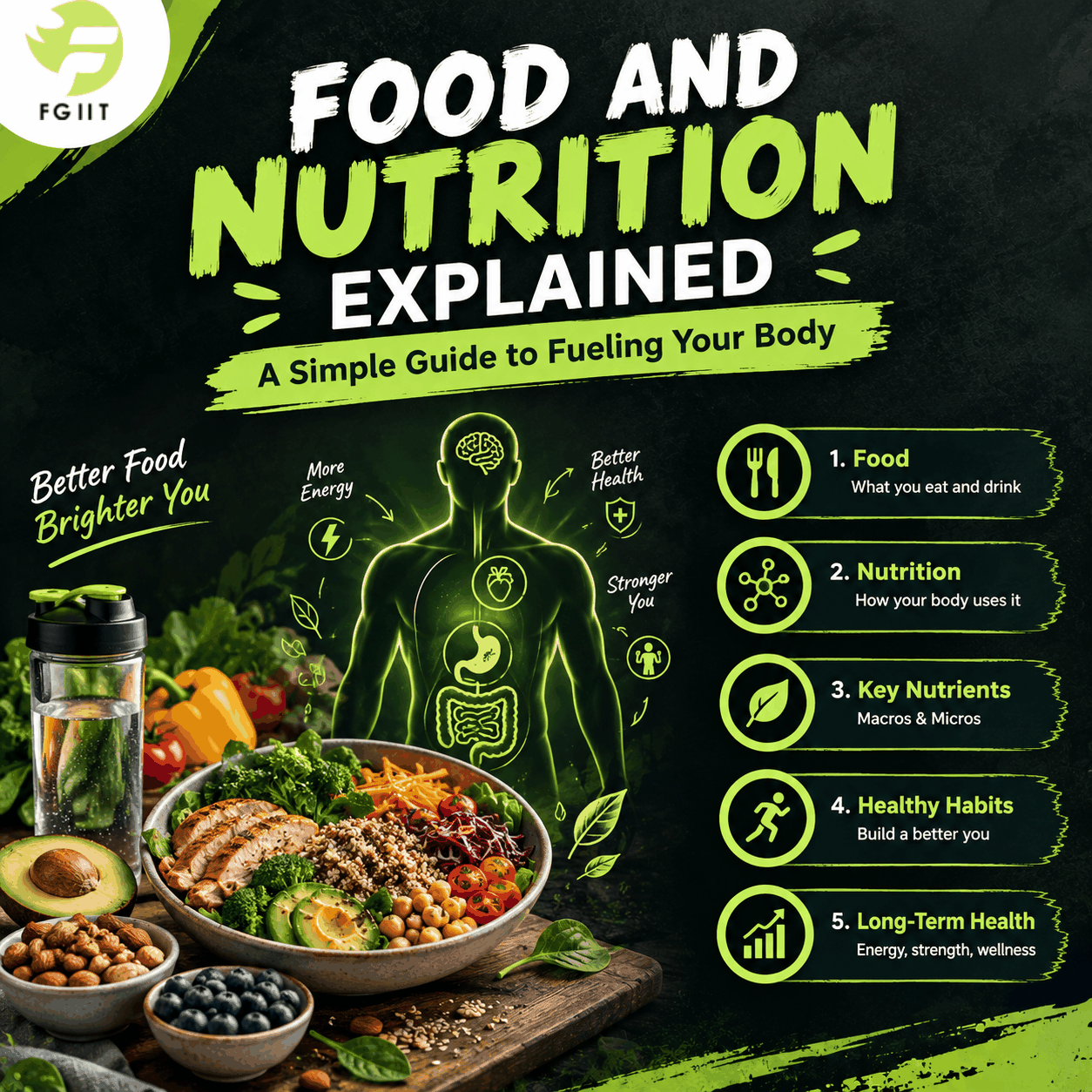
Ever noticed how a heavy lunch leaves you sleepy, while a fresh, balanced meal keeps you sharp for hours? That is food and nutrition working in real time inside your body. Most of us eat several times a day, yet very few people understand what actually happens after the first bite. This guide breaks the topic into five simple parts: food, nutrition, key nutrients, healthy habits, and long term health. By the end, you will also see how a food and nutrition online course can turn everyday curiosity into real knowledge, and maybe even a career.
Not quite, and this small difference clears up a lot of confusion. Food is whatever you eat and drink during the day. It covers your morning chai, the dal and rice at lunch, a handful of nuts, and the shake you carry to the gym. Nutrition is the story that begins after you swallow. It describes how your body breaks that food down, absorbs what is useful, and sends it where it is needed.
Two people can eat the same number of meals and still feel very different. One may feel light and energetic, while the other feels drained by mid afternoon. The reason usually sits in the quality of the food and in how well the body can use it. When you start looking at meals through this lens, you stop asking only “how much did I eat?” and begin asking “what did my body gain from it?”
Not everything, and that is the interesting part. Digestion begins in the mouth, continues in the stomach, and finishes mostly in the small intestine, where nutrients slip into the bloodstream. From there, your blood carries them to the muscles, the brain, the heart, and every other organ. Fibre and waste move on and leave the body.
Several things decide how much you actually absorb. Chewing properly, drinking enough water, sleeping well, and managing stress all play a part. Even food combinations matter. Pairing iron rich greens with something sour like lemon, for example, helps the body pick up more iron. Small details like these are exactly what a good food and nutrition online course explains in a clear, step by step way.
Nutrients fall into two broad families. Macronutrients are needed in larger amounts, while micronutrients are needed in tiny amounts but are just as important.
Carbohydrates are the main source of quick energy for your brain and muscles. Protein repairs tissue, builds muscle, and supports hormones and enzymes. Fats protect your organs, support brain function, and help you absorb vitamins A, D, E, and K. Water is not a macronutrient in the strict sense, but without it nothing else works properly.
Then come vitamins and minerals. Vitamin C supports immunity, calcium and vitamin D look after your bones, iron carries oxygen in your blood, and magnesium helps muscles relax after effort. A varied plate with colourful vegetables, whole grains, pulses, nuts, seeds, fruit, and a good protein source covers most of these needs naturally. If your plate looks dull and beige, something is probably missing. Try adding one new colour today.
They begin with ordinary choices repeated often enough to feel natural. You do not need a perfect diet or an expensive meal plan. A few steady habits go a long way:
Habits stick when they are easy. Pick one, practise it for two weeks, then add another. People who try to change everything overnight usually give up by the weekend.
Sooner than most people expect, and for much longer than they imagine. Within a few weeks of eating more balanced meals, many people notice steadier energy, better digestion, and fewer cravings. Over months and years, the benefits go deeper: stronger bones, a healthier weight, better immunity, a calmer mood, and a lower risk of lifestyle problems such as type 2 diabetes, high blood pressure, and heart disease.
Strength and recovery depend on this too. Athletes, gym goers, and office workers all perform better when the body is properly fuelled. Wellness is rarely one big decision. It is thousands of small meals adding up quietly in the background.
If you find yourself reading labels, helping friends plan diets, or wondering why some eating plans work while others fail, then structured learning can help. Random videos and social media tips often contradict each other. A well designed food and nutrition online course gives you the full picture in the right order, from the basics of the human body to diet planning for different age groups and goals.
Online learning also removes common barriers. You can study from home, revisit a lesson when something feels unclear, and balance learning with work or college. Many learners start with an online nutrition course to build confidence, then move toward advanced topics once the foundation feels solid. Others go straight to an online dietetics course because they already know they want a clinical or counselling path.
Typical topics include macro and micronutrients, calorie calculation, meal planning, weight management, sports nutrition, hydration, food safety, and reading nutrition labels. A good food and nutrition online course also trains you to prepare diet charts and understand client needs, so the knowledge becomes practical and not just theoretical.
Almost anyone with an interest in health. Students who have just finished school and are exploring careers find it a smart starting point. Fitness trainers use it to guide clients beyond workouts, because training and food go hand in hand. Gym owners can offer better support to their members. Homemakers learn to plan healthier meals for the whole family. Even working professionals who simply want to eat better find the lessons useful.
If you are comparing options, a food and nutrition course builds the broad foundation, while an online nutrition course adds flexibility of time and place. Both lead to the same destination: confidence about what goes on your plate and on your clients’ plates.
They overlap, but the focus differs slightly. A nutrition and dietetics course usually goes deeper into diet planning for health conditions, therapeutic nutrition, and counselling skills. It suits learners who see themselves guiding people with special dietary needs. A nutritionist course online often leans toward general wellness, fitness nutrition, weight management, and lifestyle coaching, which makes it popular among trainers and wellness enthusiasts.
Neither path is better than the other. The right choice depends on where you want to work. Ask yourself whether you picture yourself in a clinic, a gym, a corporate wellness team, or your own online practice. Once that picture is clear, choosing becomes far easier. Many people begin with a food and nutrition online course and specialise later, which is a perfectly sensible route.
Yes, and demand keeps growing. People are more aware of lifestyle disorders, fitness goals, and healthy ageing than ever before, so qualified guidance is valued. After completing a nutritionist course online, you can work as a nutrition consultant, diet planner, wellness coach, or fitness nutrition advisor. Gyms, health clubs, wellness centres, and online coaching platforms all look for people who understand food science in a practical way. You can also start your own consultation practice and serve clients from anywhere.
Skills matter more than titles here. Clients trust people who can assess a person, build a realistic plan, and explain it in simple language. That is why practical assignments, case studies, and assessments inside a program carry so much weight, whether you choose a broad food and nutrition course or an online dietetics course.
FGIIT designs its programs for students, fitness trainers, and health enthusiasts who want practical knowledge without leaving home. Its food and nutrition online course covers balanced diets, weight management, sports nutrition, meal planning, supplements, and client guidance, backed by expert faculty and a recognised certification. The flexible format lets you learn at your own pace while building job ready skills. If your goal is to move from curiosity to a career in nutrition coaching, fitness training, or health consulting, a food and nutrition online course from FGIIT gives you a clear place to begin.
Food and nutrition do not have to feel complicated. Food is what you eat, nutrition is how your body uses it, key nutrients keep every system running, healthy habits make it sustainable, and long term health is the reward. Start with one small change on your plate today. Then, when you feel ready to go deeper, consider a food and nutrition online course and turn what you know into something that can help others too.




