Physical Address
304 North Cardinal St.
Dorchester Center, MA 02124
Physical Address
304 North Cardinal St.
Dorchester Center, MA 02124

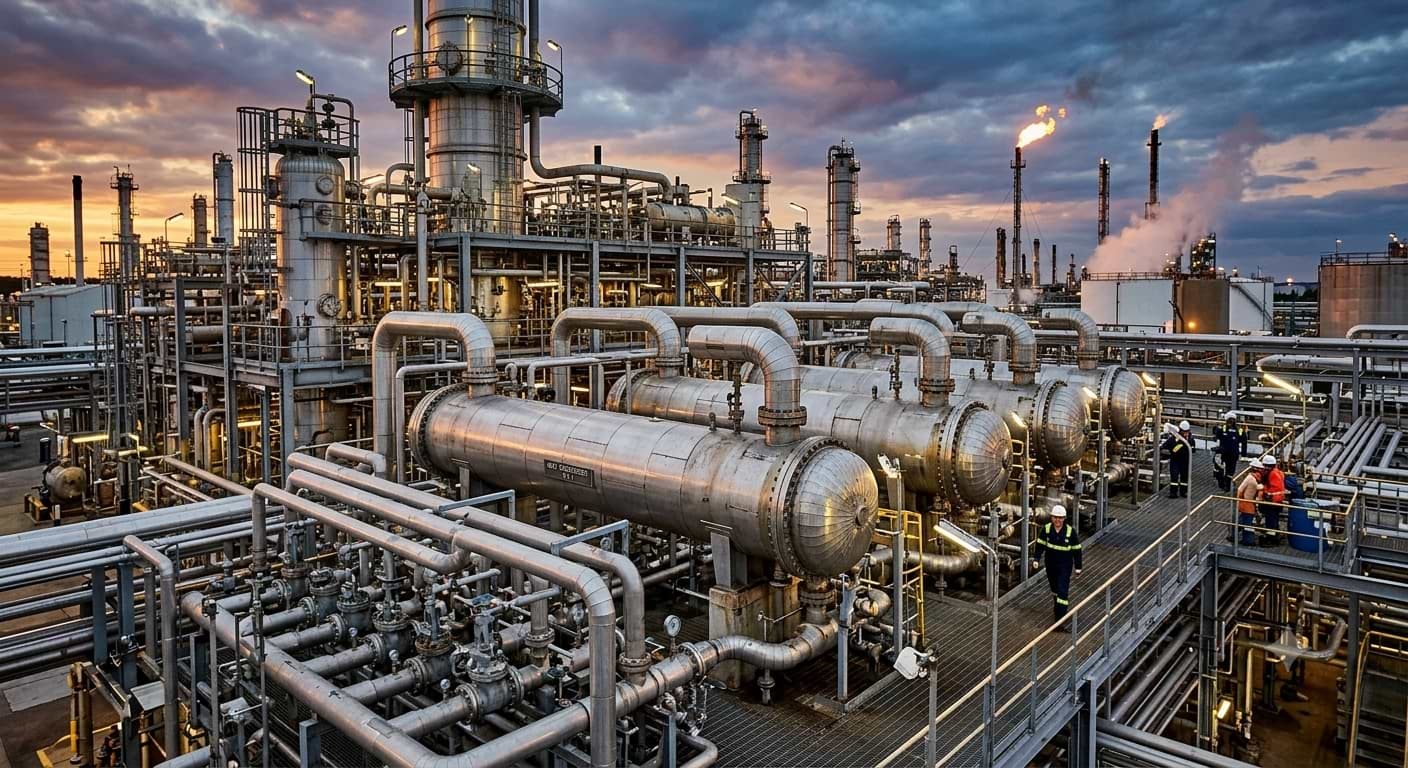
The chemical industry depends on precise temperature control to maintain product quality, improve process efficiency, and ensure safe plant operations. From chemical reactions and distillation to cooling and heating processes, controlling heat transfer is a critical part of manufacturing. Among the different types of heat exchangers used today, shell and tube heat exchangers remain one of the most widely used solutions in chemical processing plants due to their reliability, durability, and ability to handle extreme operating conditions.
A shell and tube heat exchanger works by transferring heat between two fluids through a series of tubes enclosed inside a shell. One fluid flows through the tubes, while another flows around the tubes inside the shell. Since the two fluids do not mix directly, heat can be transferred efficiently while maintaining process safety. Their strong construction and flexibility make them suitable for applications involving high temperatures, high pressures, and corrosive chemicals.
The growing demand for chemicals, specialty materials, pharmaceuticals, and petrochemical products has increased the need for efficient heat transfer equipment. Chemical manufacturers are continuously looking for systems that can improve energy efficiency, reduce production costs, and operate reliably for longer periods. This has made shell and tube heat exchangers an essential part of modern chemical processing facilities.
In chemical plants, these heat exchangers are used in a wide range of processes. They play an important role in heating raw materials before chemical reactions, cooling products after processing, condensing vapors, and recovering waste heat from industrial operations. In processes such as distillation, evaporation, and reaction control, maintaining the correct temperature is necessary to achieve consistent product quality.
One of the major advantages of shell and tube heat exchangers is their ability to handle demanding industrial conditions. Chemical processes often involve aggressive fluids, extreme temperatures, and high pressures that can damage ordinary equipment. Shell and tube designs can be manufactured using specialized materials such as stainless steel, titanium, and nickel alloys, allowing them to withstand corrosive environments and extend equipment life.
Another important application is in chemical reactors where temperature control directly affects reaction efficiency. Some chemical reactions release large amounts of heat, while others require continuous heating to proceed properly. Shell and tube heat exchangers help maintain stable operating temperatures, preventing overheating, improving safety, and increasing production efficiency.
However, operating shell and tube heat exchangers in the chemical industry also comes with several challenges. One of the most common issues is fouling, where deposits accumulate on tube surfaces over time. Chemical residues, solid particles, and unwanted reactions can create a layer that reduces heat transfer efficiency. As fouling increases, the equipment requires more energy to achieve the same performance and may require frequent cleaning.
Corrosion is another major concern in chemical applications. Many chemical fluids contain acids, solvents, salts, and other aggressive substances that can gradually damage heat exchanger components. If the wrong material is selected, corrosion can lead to leakage, equipment failure, and unexpected production shutdowns. Proper material selection and regular inspection are therefore essential for maintaining long-term reliability.
Maintenance can also become a challenge because shell and tube heat exchangers contain multiple tubes that may require inspection and cleaning. Any reduction in performance can affect the entire production process, resulting in increased downtime and operational costs. Chemical industries are now adopting preventive maintenance strategies and advanced monitoring systems to identify problems before they become serious.
Modern shell and tube heat exchanger designs are also evolving with improved technology. Manufacturers are focusing on better tube arrangements, enhanced heat transfer surfaces, and corrosion-resistant materials to improve efficiency and reliability. Digital monitoring systems are being introduced to track temperature, pressure, and performance changes in real time, helping operators optimize equipment performance.
Energy efficiency is becoming another major factor driving innovation in heat exchanger technology. Chemical plants consume large amounts of energy, and recovering waste heat has become an important strategy for reducing costs and environmental impact. Shell and tube heat exchangers are widely used in heat recovery systems where unused thermal energy from one process is reused in another.
As the chemical industry continues to expand, the demand for reliable heat transfer equipment will continue to grow. Shell and tube heat exchangers will remain a preferred choice because of their proven performance, adaptability, and ability to operate under challenging industrial conditions.
With advancements in materials, design improvements, and smarter monitoring technologies, shell and tube heat exchangers will continue supporting chemical manufacturers in achieving safer operations, higher efficiency, and more sustainable production processes.




