Physical Address
304 North Cardinal St.
Dorchester Center, MA 02124
Physical Address
304 North Cardinal St.
Dorchester Center, MA 02124

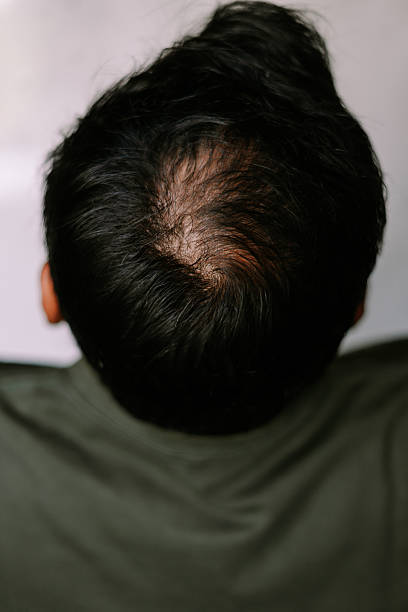
A Crown Hair Transplant in Dubai may improve coverage when thinning at the vertex is caused by permanent hair loss and the patient has an adequate supply of suitable donor follicles. Whether surgery is the right option depends on how much hair remains, why the thinning is occurring, and whether the loss is stable enough to plan treatment responsibly.
The crown can be difficult to assess because early thinning may appear subtle in a mirror but become more noticeable in photographs or under overhead lighting. The first step is to distinguish a transplantable area of permanent loss from hair shedding that may need a different form of treatment.
One common cause is androgenetic alopecia, or pattern hair loss. In susceptible individuals, affected follicles gradually produce finer, shorter hairs, reducing the amount of scalp coverage over time.
Other factors can also contribute to visible thinning. Diffuse shedding, certain medical conditions, nutritional issues, medication effects, and inflammatory scalp disorders may require investigation before surgery is considered.
Miniaturisation occurs when follicles produce progressively finer hairs. A crown that looks thin may still contain many follicles, but their reduced hair calibre can make the scalp more visible.
This distinction matters because a transplant does not need to be the first response to every area of thinning. Depending on the diagnosis, medical management may help preserve or improve existing hair, while surgery may be considered for areas where lasting density loss has occurred.
A small, clearly defined area of crown loss may require a different approach from broad thinning across the top of the scalp. The clinician also needs to assess the hairline, mid-scalp, and donor area to understand the overall pattern.
Planning only around the visible crown can overlook the possibility that untreated areas may continue to thin. A long-term plan should consider the likely progression of hair loss, not just the patient’s current photographs.
A transplant may be appropriate when the cause of hair loss is understood, the recipient area is suitable, and the donor supply can support the intended result. It can add follicles to areas with significant density loss, but the outcome is not the same as restoring every strand that was present before hair loss.
The clinical assessment may consider:
People with sudden, unexplained shedding or active scalp disease may need investigation or treatment before transplantation is considered.
Choosing treatment requires identifying the problem that needs to be addressed. The options below serve different purposes and should be discussed with a qualified clinician.
| Approach | When it may be considered | What to understand |
|---|---|---|
| Hair transplant | Permanent density loss with suitable donor hair | Adds follicles but does not prevent all future hair loss |
| Medical treatment | Certain diagnosed forms of ongoing hair loss | Suitability, benefits, and risks depend on the treatment and patient |
| PRP therapy | As an adjunct in selected cases | Response varies and it does not replace absent follicles |
| Further diagnostic assessment | Unexplained, sudden, or diffuse shedding | Helps identify causes that may need treatment before surgery |
A consultation should clarify whether the priority is to preserve existing hair, address a permanently thin area, investigate an underlying condition, or combine approaches where appropriate.
During a consultation, the clinician reviews the scalp, the donor region, the history of hair loss, and any previous treatment. The proposed recipient area and graft distribution are then considered in light of the patient’s natural hair pattern.
You can read more about the procedure on the Crown Hair Transplant in Dubai treatment page.
When some native hair remains, it can contribute to coverage and influence where grafts are placed. The surgeon must consider the relationship between existing follicles and transplanted ones while avoiding an unnecessarily aggressive use of donor hair.
The crown’s growth pattern also needs to be respected. Hair direction changes across the vertex, so the design must be adapted to the individual rather than copied from a standard template.
The amount of visual coverage achieved depends on several factors, including the size of the area, donor supply, hair calibre, and scalp-to-hair contrast. A person with thick, wavy hair may experience a different visual result from someone with fine, straight hair, even if the graft counts are similar.
In some cases, staged planning may be more appropriate than attempting to cover a large area in a single session. The recommendation should be based on clinical findings rather than a fixed graft number.
The early recovery phase may include temporary redness, swelling, tenderness, and small crusts around the treated area. Patients should follow the clinic’s instructions for washing, sleeping, exercise, and protecting the scalp.
Transplanted hairs often shed initially before new growth begins. Visible improvement develops over subsequent months, and the crown may take around 12 months or longer to mature fully. Individual timelines vary.
Patients in Dubai should also plan around outdoor heat, strong sunlight, swimming, and travel during recovery. The treating team can advise when these activities can be resumed safely.
“If I can see my scalp, does that mean I need a transplant?”
Not necessarily. Visible scalp can result from miniaturisation, temporary shedding, lighting, or permanent density loss. An assessment helps determine the cause and appropriate next step.
“Can a transplant restore the original thickness of my crown?”
Not always. The realistic outcome depends on donor hair, the area being treated, existing hair, and the characteristics of the transplanted follicles.
“Should I wait until the crown is completely bald?”
Not necessarily. Waiting for complete baldness is not a universal requirement, but operating too early or without considering ongoing hair loss can complicate planning. A clinician should assess the timing individually.
A crown transplant can be a useful option for selected patients, but it is not the answer to every form of thinning. The decision should follow a clear understanding of the cause, the stability of hair loss, the available donor supply, and the coverage that can realistically be achieved.
At Tajmeels Clinic, a consultation can help you understand the options for crown thinning and determine whether transplantation is suitable for your individual hair-restoration goals.




