Physical Address
304 North Cardinal St.
Dorchester Center, MA 02124
Physical Address
304 North Cardinal St.
Dorchester Center, MA 02124

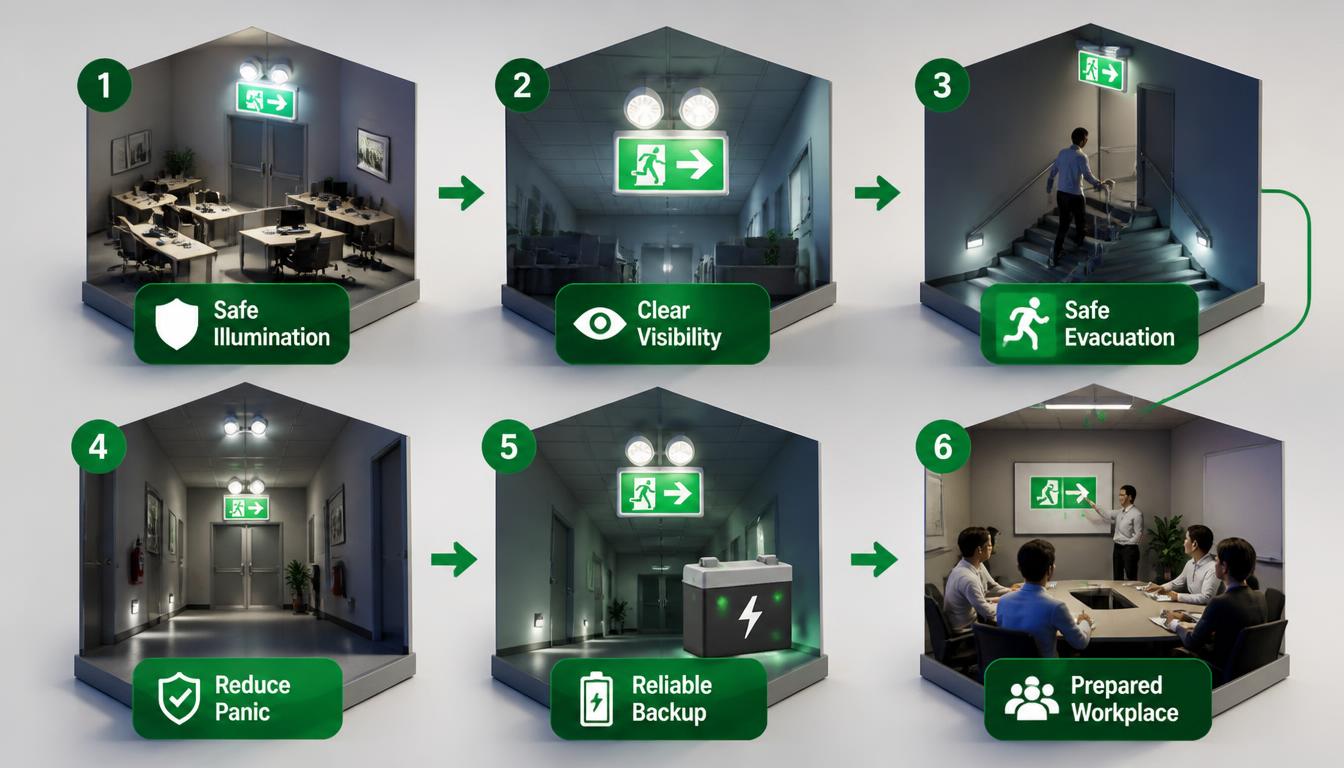
Currently, emergency lights are a necessity in buildings that have people inside. In case of a power loss, having visibility makes it easier for someone to locate pathways out of an issue, such as the nearest exit or exit stair.
This explains the importance of using an exceptional emergency light system at the workplace.
When people are in darkness, they tend to behave differently. In case there is no light source, the usual decision-making process is disturbed, as sight is obstructed.
Good illumination is therefore an important part of practical emergency preparedness. As required by OSHA, exit routes must be lit properly.
The emergency lighting system typically operates in conjunction with the alarms and illuminated exit signs. This ensures that the people present in the building are well informed about the incident.
Different occupied spaces create different movement patterns. Lighting should support the routes people actually need during a power failure.
|
Building Area |
Lighting Purpose |
Practical Benefit |
|
Offices |
Illuminate corridors, stairs, and exits |
Helps staff follow marked routes |
|
Retail stores |
Keep aisles and exit paths visible |
Supports orderly customer movement |
|
Hotels |
Light corridors, stairs, and exit doors |
Helps unfamiliar guests move safely |
|
Warehouses |
Highlight travel paths and hazards |
Supports safer movement around equipment |
|
Schools |
Illuminate corridors and stairs |
Helps occupants follow evacuation procedures |
Visibility plays a key role when the lights go out unexpectedly. Properly placed fixtures help people see passageways, steps, routes, and potential hazards.
Therefore, the system should illuminate required routes used during evacuation. It should also help occupants recognize changes in floor levels, doorways, and corridor directions.
In offices and other occupied buildings, these areas deserve particular attention:
OSHA requires exit routes to be adequately lighted so employees with normal vision can see along them.
This visibility becomes especially important when occupants are unfamiliar with alternative routes or building operations stop suddenly.
A well-planned system therefore supports faster recognition of safe pathways without depending on portable lighting or individual phone flashlights.
Offices need clearly marked corridors and stairs. Retail shops should also maintain clear aisles and exit routes. Hotels should take into account guests who may not be fully aware of the building and its layout.
Warehouses and industrial sites need to mark equipment and shelves, loading areas, and differences in floor levels. LED work lights can support temporary tasks, but they should not replace required exit lighting.
People need enough visibility to recognize the safest route and keep moving.
A useful plan connects equipment with actual building use. It should identify power-loss routes, critical exit points, high-risk areas, and inspection responsibilities.
Building evacuation safety also relies on properly marked exits and a clear path to safety. OSHA requires exit routes to remain free and unobstructed, with directional signs where the exit direction is not immediately apparent.
CIRC Lighting can support planning by considering the building layout, fixture locations, visibility needs, and applicable requirements.
Emergency lighting systems should then be tested within the wider safety routine. Only checking them post-failure puts so much at risk.
Start with the route. Then verify the equipment supporting it.
A practical review can include:
Buildings that are prepared for disasters require more than just emergency planning on paper. Functional and reliable emergency lights help occupants inside to locate their way through their surroundings, even without electricity. This provides a stronger connection between lighting and safety.




