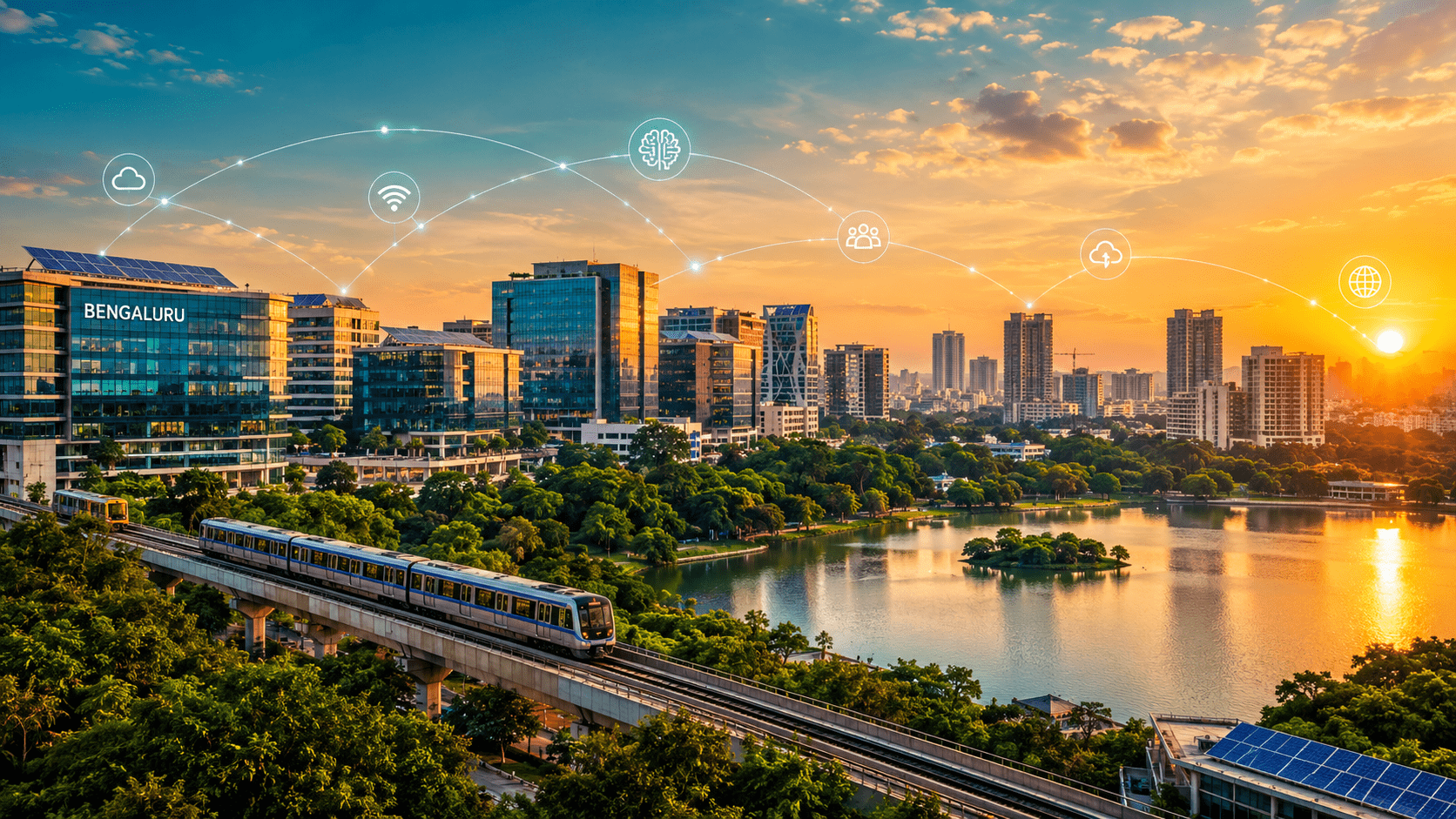

Few cities have reshaped their identity as dramatically as Bengaluru. Once known as the quiet “Garden City,” it is now the beating heart of India’s technology economy. Home to global corporations, thousands of startups, and respected research institutions, Bengaluru attracts engineers, designers, and founders from around the world. Here you can know how the city built its technology revolution, why creativity drives it, and how sustainability is shaping its next chapter.
How Bengaluru Became India’s Technology Capital
The city’s rise did not happen overnight. Its foundation was laid in the mid-twentieth century, when institutions such as the Indian Institute of Science, ISRO, HAL, and BEL established a deep base of scientific and engineering talent. This gave Bengaluru something rare: a workforce trained in research, aerospace, and electronics long before the software boom.
In the 1980s and 1990s, global companies noticed. Texas Instruments set up operations in the city in 1985, and homegrown firms like Infosys and Wipro grew into global IT service providers. When the outsourcing wave arrived around the turn of the millennium, Bengaluru was ready with English-speaking graduates, a pleasant climate, and a growing network of colleges. The label “Silicon Valley of India” soon followed.
A Startup Ecosystem Like No Other
Today, Bengaluru is widely regarded as India’s startup capital. Companies such as Flipkart, Swiggy, Zerodha, and Razorpay began here and grew into household names. Neighbourhoods like Koramangala, HSR Layout, and Indiranagar have become informal innovation districts, filled with co-working spaces, incubators, and late-night brainstorming sessions over filter coffee.
What makes this ecosystem special is its connected nature. Founders find mentors easily, investors are nearby, and talent moves quickly between ventures. Accelerators and angel networks provide early funding, while global capability centres run by multinational firms bring advanced engineering work to the city. Failure is treated as a lesson rather than a stigma, which encourages people to take bold risks.
Creativity: The Human Engine Behind the Code
Technology alone does not explain Bengaluru’s success. Creativity does. The city’s strength lies in the people who combine technical skill with imagination: product designers, UX researchers, game developers, animators, content creators, and open-source contributors.
Regular meetups, hackathons, and developer conferences keep ideas flowing. Cafés double as meeting rooms, and conversations between strangers often turn into partnerships. The city’s cosmopolitan character, shaped by people from every Indian state and many countries, brings varied perspectives to problem-solving. Local culture adds to this, from Kannada theatre and live music to a thriving food and craft-brewing scene that gives the tech workforce a lively social life.
Deep Tech, AI, and the Next Wave
The first wave of Bengaluru’s growth was about services. The current wave is about deep technology. Artificial intelligence and machine learning labs are expanding rapidly, and startups are working in robotics, space technology, semiconductors, biotechnology, and electric mobility.
Satellite imaging company Pixxel and electric scooter maker Ather Energy show how local ventures are competing on global stages. Research partnerships between universities, government bodies, and private companies are also helping turn academic ideas into market-ready products. This shift from software support to original product innovation marks the city’s maturity as a technology hub.
Sustainable Growth: Challenges and Solutions
Rapid growth brings real pressure. Traffic congestion, water scarcity, pollution, and strained infrastructure are among the biggest concerns for residents and policymakers. A technology revolution that ignores these problems cannot last, and Bengaluru is increasingly aware of this.
Several efforts are moving in the right direction:
-
Public transport: The expansion of Namma Metro and feeder bus services aims to reduce dependence on private vehicles.
-
Clean mobility: Electric two-wheelers, e-buses, and charging networks are growing quickly.
-
Renewable energy: Solar rooftops on offices, campuses, and homes are becoming common.
-
Water and lakes: Community-led lake rejuvenation and rainwater harvesting projects help restore the city’s ecological balance.
-
Climate tech: Startups focused on waste management, energy efficiency, and green building materials are finding eager customers.
Many companies are also setting sustainability targets, designing energy-efficient campuses, and encouraging remote or hybrid work to reduce commuting. The challenge is scale, but the willingness to experiment is strong.
Global Connectivity Fuels Collaboration
Bengaluru’s growth is closely tied to its links with other innovation centres. Founders, investors, and engineers regularly travel between Bengaluru and Silicon Valley, and searches for sfo to blr flights reflect just how strong that corridor has become. This constant exchange of people and ideas helps local startups access global markets, funding, and expertise, while also bringing international talent to the city.
What the Future Holds
Looking ahead, Bengaluru’s strengths are clear: deep talent, a mature startup culture, strong research institutions, and a growing commitment to responsible development. Its future success will depend on how well it balances ambition with livability. Better urban planning, cleaner energy, inclusive job creation, and investment in public infrastructure will decide whether the city continues to thrive.
If it gets this balance right, Bengaluru can serve as a model for other emerging technology cities around the world, proving that innovation and sustainability can grow together.
Bengaluru’s technology revolution is more than a story of software and startups. It is a story of curiosity, collaboration, and constant reinvention. From its early scientific institutions to today’s AI labs and climate-tech ventures, the city has repeatedly adapted to change. By pairing innovation with creativity and a stronger focus on sustainability, Bengaluru is building a future that is not only technologically advanced but also resilient and people-centred.
If you are planning to visit Bengaluru from the USA soon then explore Indian Eagle deals. You can find the best fares on international flights and have a budget-friendly trip.