
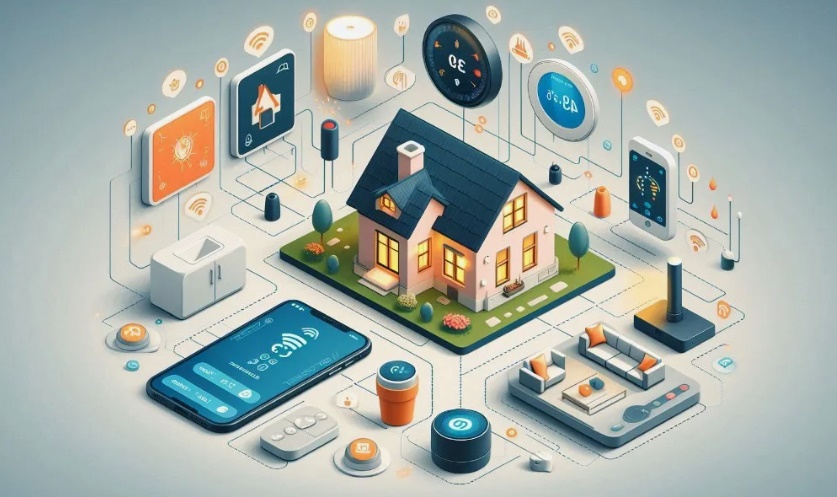

The smart home market is transforming modern living by connecting household devices, security systems, lighting, entertainment equipment, and energy management solutions through intelligent technologies. Consumers are increasingly interested in homes that offer convenience, improved safety, energy efficiency, and personalized control. As digital connectivity becomes an essential part of everyday life, smart home solutions are gaining attention from homeowners, property developers, technology providers, and businesses across residential construction and home improvement sectors.
Research into this market helps identify changing consumer expectations, technological advancements, purchasing behavior, and emerging business opportunities. Understanding these factors is important for companies seeking to develop relevant products, improve customer experiences, and establish a competitive position in an evolving industry.
Understanding the Smart Home Market
The smart home market includes connected devices and systems that allow users to monitor, automate, and remotely control different household functions. Common applications include smart thermostats, intelligent lighting, connected appliances, video doorbells, automated locks, indoor cameras, and voice-controlled assistants.
These products use technologies such as wireless communication, artificial intelligence, cloud computing, sensors, and mobile applications. Their integration enables households to create automated routines, monitor energy consumption, receive security notifications, and manage devices from a centralized interface.
Market research examines how these solutions perform across different consumer segments, housing types, geographic regions, and price categories. It also evaluates the factors influencing adoption, including affordability, ease of installation, compatibility, privacy, and perceived usefulness.
Key Areas of Market Research
Consumer Preferences and Purchasing Behavior
Consumer research is a central part of understanding demand. Buyers may prioritize different features depending on their lifestyles, household sizes, budgets, and security concerns. Some consumers prefer affordable devices that can be installed independently, while others seek comprehensive automation systems that connect multiple rooms and household functions.
Research can identify which product categories attract the greatest interest and what motivates purchasing decisions. Price sensitivity, product reliability, brand reputation, ease of use, and after-sales support are important considerations. Understanding these preferences helps manufacturers develop products that address practical household needs rather than relying exclusively on advanced technical features.
Technology Adoption and Innovation
Technological progress continues to influence smart home product development. Artificial intelligence can support personalized automation, predictive maintenance, and more responsive voice interactions. Improved sensors can help devices detect occupancy, temperature changes, unusual activity, and energy consumption patterns.
Research into these technologies helps businesses evaluate their commercial relevance and implementation challenges. Companies must determine whether a new feature delivers measurable benefits, works reliably in different home environments, and justifies its additional cost.
Interoperability is another important research area. Consumers increasingly expect devices from different manufacturers to function together without complicated configuration. Businesses that prioritize compatibility and straightforward setup may improve customer satisfaction and encourage broader adoption.
Security, Privacy, and Data Management
Connected household devices collect and transmit information that may include usage patterns, device activity, and security-related data. Consequently, privacy and cybersecurity have become important considerations for consumers and product developers.
Market research can assess consumer concerns about unauthorized access, weak passwords, data collection, and software vulnerabilities. It can also examine how security features influence purchasing decisions and customer trust.
Manufacturers can use these findings to improve authentication systems, provide timely software updates, communicate privacy policies clearly, and develop products with stronger default security settings. Transparent data practices may become an important differentiator as connected devices become more widespread.
Factors Influencing Market Development
Several factors influence the direction of the smart home market. Growing interest in energy efficiency encourages consumers to consider intelligent thermostats, automated lighting, and connected energy monitoring systems. These technologies can help households understand their consumption patterns and make informed adjustments.
The expansion of internet connectivity and smartphone use also supports adoption. Mobile applications allow consumers to control devices remotely, while voice assistants simplify everyday interactions. In addition, residential construction and renovation projects create opportunities to incorporate connected systems during the planning and installation stages.
However, affordability remains a consideration, particularly for households evaluating multiple devices at once. Installation complexity, inconsistent connectivity, limited product compatibility, and concerns about long-term software support can also affect purchasing decisions.
Research into these factors enables companies to identify barriers to adoption and develop practical responses. Flexible product ranges, clear installation instructions, reliable customer support, and scalable automation packages can make smart home technology more accessible.
Competitive Landscape and Business Strategies
Competition within the smart home industry involves established electronics manufacturers, specialist security companies, software developers, appliance brands, and emerging technology providers. Businesses compete through product performance, design, connectivity, pricing, ecosystem integration, and customer service.
Market research helps companies understand competitors’ strengths, identify underserved customer groups, and evaluate opportunities for differentiation. For example, one segment may prioritize affordable security products, while another may value integrated energy management or premium home automation.
Partnerships between device manufacturers, internet service providers, construction companies, and technology platforms can also influence market development. These collaborations may simplify installation, improve compatibility, and introduce connected products to new customer groups.
Businesses can strengthen their strategies by examining customer feedback, product reviews, purchasing patterns, and changing expectations. Such insights support better product positioning, targeted communication, and more informed investment decisions.
Regional Opportunities and Adoption Patterns
Smart home adoption can vary considerably between regions because of differences in purchasing power, infrastructure, housing design, climate, and consumer awareness. Markets with strong digital connectivity and established technology ecosystems may support integrated automation systems, while price-sensitive regions may show greater interest in individual devices with straightforward installation.
Urban households may prioritize security, convenience, and efficient use of limited living space. In suburban and larger residential properties, consumers may be more interested in comprehensive lighting, climate, entertainment, and outdoor security systems.
Regional research allows companies to adapt product specifications, distribution methods, pricing structures, and marketing strategies to local requirements. It also helps identify opportunities to expand through online retail, electronics stores, installation specialists, and partnerships with residential developers.
Future Research Priorities
Future research in the smart home market will likely place greater emphasis on artificial intelligence, energy optimization, connected appliances, cybersecurity, and interoperability. Researchers will need to assess how consumers respond to increasingly autonomous systems and whether these technologies deliver practical benefits over time.
Another important area is the relationship between connected homes and sustainability. Intelligent energy controls may help households monitor consumption, coordinate devices, and reduce unnecessary usage. However, actual results depend on equipment performance, household behavior, local energy conditions, and correct configuration.
Long-term customer satisfaction will also require attention. Businesses should investigate device reliability, software update policies, subscription costs, replacement cycles, and compatibility with future products. These factors can influence whether consumers continue investing in connected home ecosystems.
Conclusion
Research is essential for understanding the opportunities and challenges shaping the smart home market. By evaluating consumer preferences, technological developments, security concerns, competitive strategies, and regional adoption patterns, businesses can make more informed decisions about product development and expansion.
The industry’s continued progress will depend not only on technological sophistication but also on affordability, reliability, compatibility, and consumer trust. Companies that translate research findings into practical, secure, and accessible solutions will be better positioned to meet changing household expectations and support the next phase of connected living.



