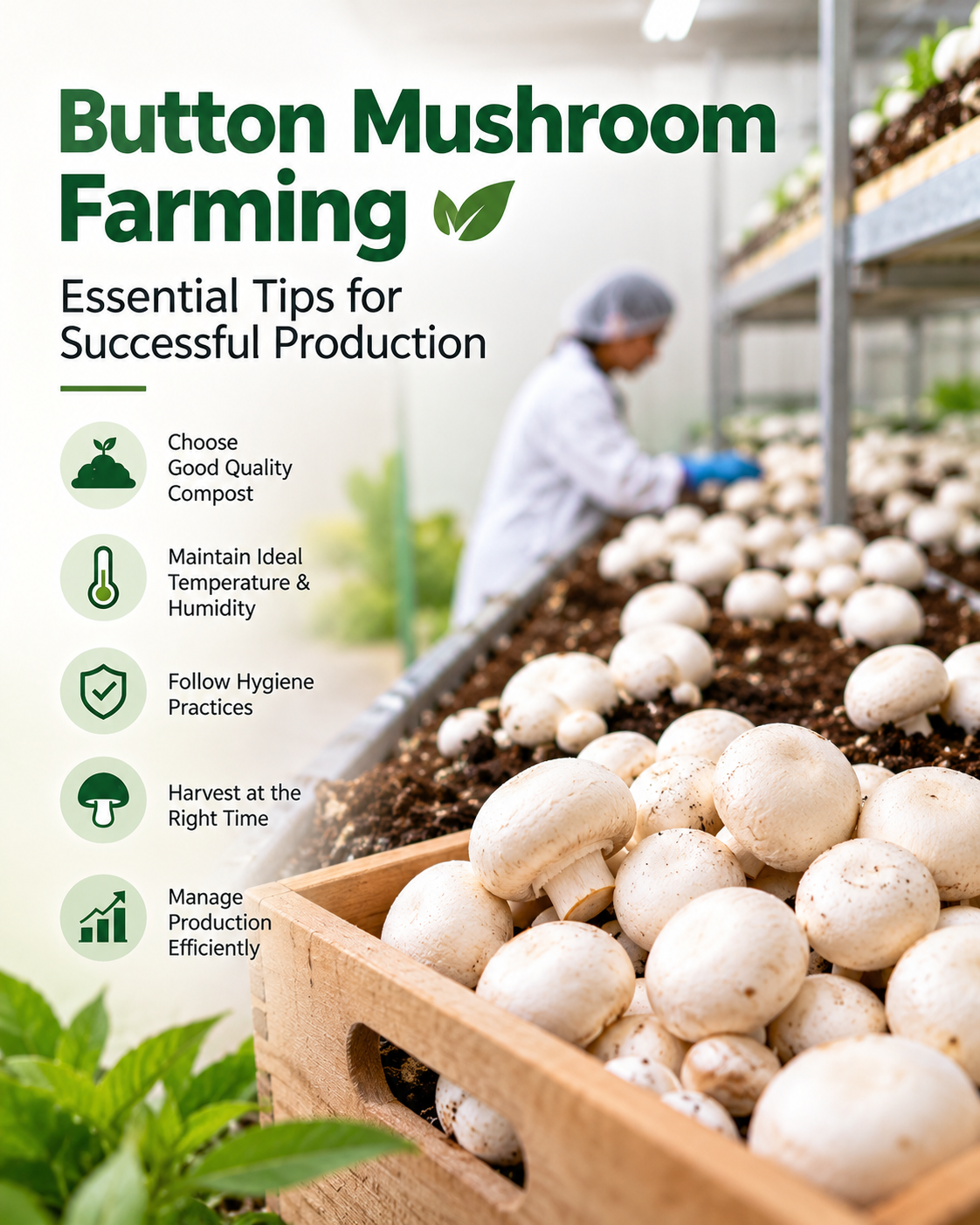

Growing button mushrooms successfully requires careful attention to the growing environment, production materials, cleanliness, and crop development. Unlike many outdoor crops, button mushrooms are cultivated using prepared compost under conditions suited to their different growth stages. Small management mistakes can affect crop uniformity, harvest quality, and the amount of produce that can be sold.
For growers exploring button mushroom farming, understanding these factors is an important starting point. Instead of focusing only on the expected harvest, it is useful to understand how each stage contributes to the final quality of the mushrooms.
Why Does Proper Mushroom Cultivation Matter?
Button mushrooms are delicate agricultural produce that need appropriate growing conditions and careful handling. Their development depends on the quality of the compost, the condition of the growing room, moisture management, and the grower’s ability to recognise changes during production.
A well-managed crop can help reduce avoidable losses and produce mushrooms that meet buyers’ quality expectations. However, results vary with the cultivation system, input quality, strain, season, and management practices.
1. Start With Suitable Compost
Compost provides the growing medium for button mushrooms. Its preparation and condition influence how well the crop develops, making compost selection an important part of cultivation.
Growers should obtain compost from a reliable supplier or follow a technically appropriate preparation method. Poorly prepared or unsuitable compost can create production problems that are difficult to correct later.
Before using a batch, understand its preparation history, handling requirements, and suitability for button mushroom production. Keeping supplier and batch records also helps growers compare crop performance over time.
2. Understand the Different Growth Stages
Button mushroom production involves several stages rather than a single planting activity. These commonly include compost preparation, spawning, mycelial growth, casing, fruit-body development, harvesting, and room preparation for the next cycle.
Each stage has different requirements. Conditions that support early mycelial development may not be suitable for fruiting, so growers should follow a reliable production protocol rather than maintaining the same settings throughout the cycle.
Learning the purpose of each stage helps growers identify what needs attention and when changes in the growing environment are appropriate.
3. Maintain Suitable Temperature and Humidity
Environmental management is one of the central considerations in button mushroom farming. Temperature, humidity, ventilation, and carbon dioxide levels interact with one another and influence crop development.
The correct settings depend on the growth stage and the production system. A seasonal growing room may operate differently from a professionally controlled commercial facility.
Growers should use suitable monitoring instruments, record conditions regularly, and follow technical guidance for their specific system. Avoid changing several environmental settings at once without understanding the cause of a problem, as this can make the results harder to evaluate.
4. Follow Good Hygiene Practices
Cleanliness helps reduce the risk of contamination and crop losses. Growing rooms, tools, containers, and handling areas should be maintained according to appropriate hygiene procedures.
Useful practices include:
- Cleaning equipment and work areas regularly.
- Following suitable sanitation procedures between crop cycles.
- Keeping unnecessary visitors and outside materials away from production areas.
- Inspecting the crop regularly for unusual changes.
- Separating questionable material and seeking qualified advice when contamination is suspected.
Hygiene should be part of daily farm management rather than something addressed only after a problem appears.
5. Manage the Casing Layer Correctly
Casing is a layer placed over colonised compost during button mushroom production. It helps provide the moisture conditions and surface environment needed for fruiting.
Its preparation, moisture, cleanliness, and application matter. A casing material that is unsuitable or poorly handled can interfere with crop development.
Growers should use materials appropriate for button mushroom production and follow reliable guidance on preparation and application. The method should suit the growing system rather than being copied from a farm operating under different conditions.
6. Harvest Carefully and Protect Quality
Harvesting is not simply the final step in production. The way mushrooms are picked, sorted, packed, and transported can affect their appearance and saleability.
Growers should understand the maturity and grading requirements expected by their buyers. Mushrooms should be handled carefully to limit physical damage, and harvested produce should be moved into suitable storage and distribution arrangements without unnecessary delay.
Record the harvested quantity, rejected produce, saleable weight, and customer feedback. These records help identify whether problems arise during cultivation, harvesting, or handling.
7. Prepare for the Next Growing Cycle
A productive growing unit needs a plan for what happens after harvesting. The room and equipment must be prepared for the next cycle according to the cultivation system and appropriate sanitation procedures.
Review the previous crop before starting again. Note any uneven development, quality issues, unexpected expenses, or problems with environmental control.
These observations can help growers identify patterns and make better decisions during future cycles. Reliable records are often more useful than relying on memory alone.
How Can Beginners Learn Button Mushroom Farming?
Beginners should learn the complete crop cycle before investing heavily in equipment or production infrastructure. Practical training, reliable technical publications, and advice from experienced cultivation specialists can help clarify the requirements of each stage.
Start by understanding the growing medium, the environmental conditions needed at different stages, hygiene procedures, harvesting requirements, and the local market for fresh mushrooms.
Conclusion
Successful button mushroom farming depends on several connected factors, including compost quality, stage-specific environmental management, casing preparation, hygiene, and careful post-harvest handling. Paying attention to these details helps growers understand how production decisions influence the quality of the final crop.
Before starting a growing cycle, learn the technical requirements of your cultivation system and establish a routine for monitoring and record-keeping. A consistent, informed approach can help growers improve their management practices over time.
Frequently Asked Questions (FAQs)
1. What is the most important factor in button mushroom farming?
There is no single factor that guarantees success. Compost quality, appropriate growing conditions, hygiene, casing management, and careful handling all contribute to crop performance.
2. Why do button mushrooms require controlled growing conditions?
Button mushrooms need suitable environmental conditions for different stages of development. Temperature, humidity, ventilation, and carbon dioxide management help create an appropriate growing environment.
3. What is the purpose of casing in button mushroom production?
Casing is applied over colonised compost to help create the surface conditions and moisture environment required for fruiting.
4. How can growers reduce contamination risks?
Growers can follow appropriate cleaning and sanitation procedures, maintain organised handling areas, inspect crops regularly, and seek qualified guidance when contamination is suspected.
5. Why is post-harvest handling important?
Fresh mushrooms can be damaged during picking, packing, storage, and transport. Careful handling and timely distribution help preserve quality and meet buyer requirements.