Physical Address
304 North Cardinal St.
Dorchester Center, MA 02124
Physical Address
304 North Cardinal St.
Dorchester Center, MA 02124

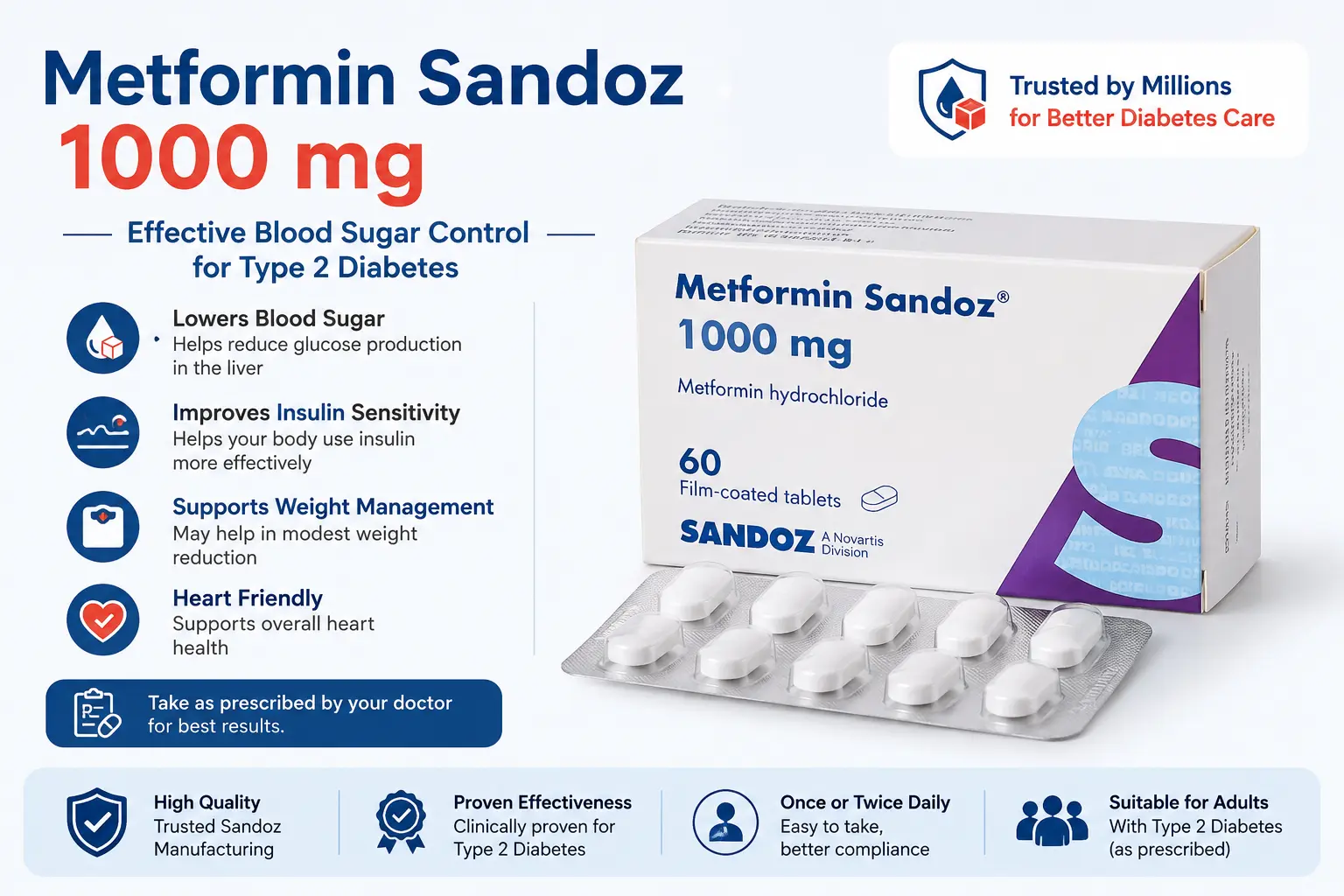
Metformin Sandoz 1000 mg is a commonly prescribed diabetes medication containing metformin hydrochloride, used to help control blood sugar levels in people with Type 2 diabetes. It works by reducing glucose production in the liver, improving insulin sensitivity, and helping the body use sugar more effectively. Learn about its uses, benefits, dosage, possible side effects, precautions, and how it supports long-term diabetes management.
Metformin Sandoz 1000 mg contains metformin hydrochloride, a widely prescribed oral medication used to help manage Type 2 diabetes mellitus. It belongs to the biguanide class of medicines and works by lowering glucose production in the liver, improving the body’s response to insulin, and reducing the amount of sugar absorbed from food.
When used alongside a healthy diet and regular exercise, Metformin Sandoz 1000 mg helps maintain stable blood sugar levels and supports long-term diabetes management.
Metformin Sandoz 1000 mg is commonly prescribed to:
Metformin works through multiple mechanisms to help control blood glucose:
Unlike some diabetes medications, metformin generally has a low risk of causing low blood sugar (hypoglycemia) when taken alone.
Take Metformin Sandoz 1000 mg exactly as prescribed by your healthcare provider.
Common side effects may include:
These effects are often temporary and improve as your body adjusts to treatment.
Seek immediate medical attention if you experience symptoms of a serious allergic reaction or signs of lactic acidosis, such as severe weakness, unusual muscle pain, trouble breathing, or persistent vomiting.
Before taking Metformin Sandoz 1000 mg, tell your healthcare provider if you:
Regular monitoring of kidney function may be recommended during treatment.
Store Metformin Sandoz 1000 mg at room temperature in a dry place, away from heat, moisture, and direct sunlight. Keep it out of the reach of children and pets.
Can Metformin Sandoz 1000 mg be taken with food?
Yes. Taking it with meals can help reduce stomach-related side effects.
Can it cause weight gain?
Metformin is generally weight-neutral and may contribute to modest weight loss in some individuals.
What should I do if I miss a dose?
Take the missed dose as soon as you remember unless it is almost time for your next dose. Do not take two doses together.
This content is for informational purposes only and should not replace professional medical advice. Always take Metformin Sandoz 1000 mg exactly as prescribed by your healthcare provider and consult them before making any changes to your treatment.




