
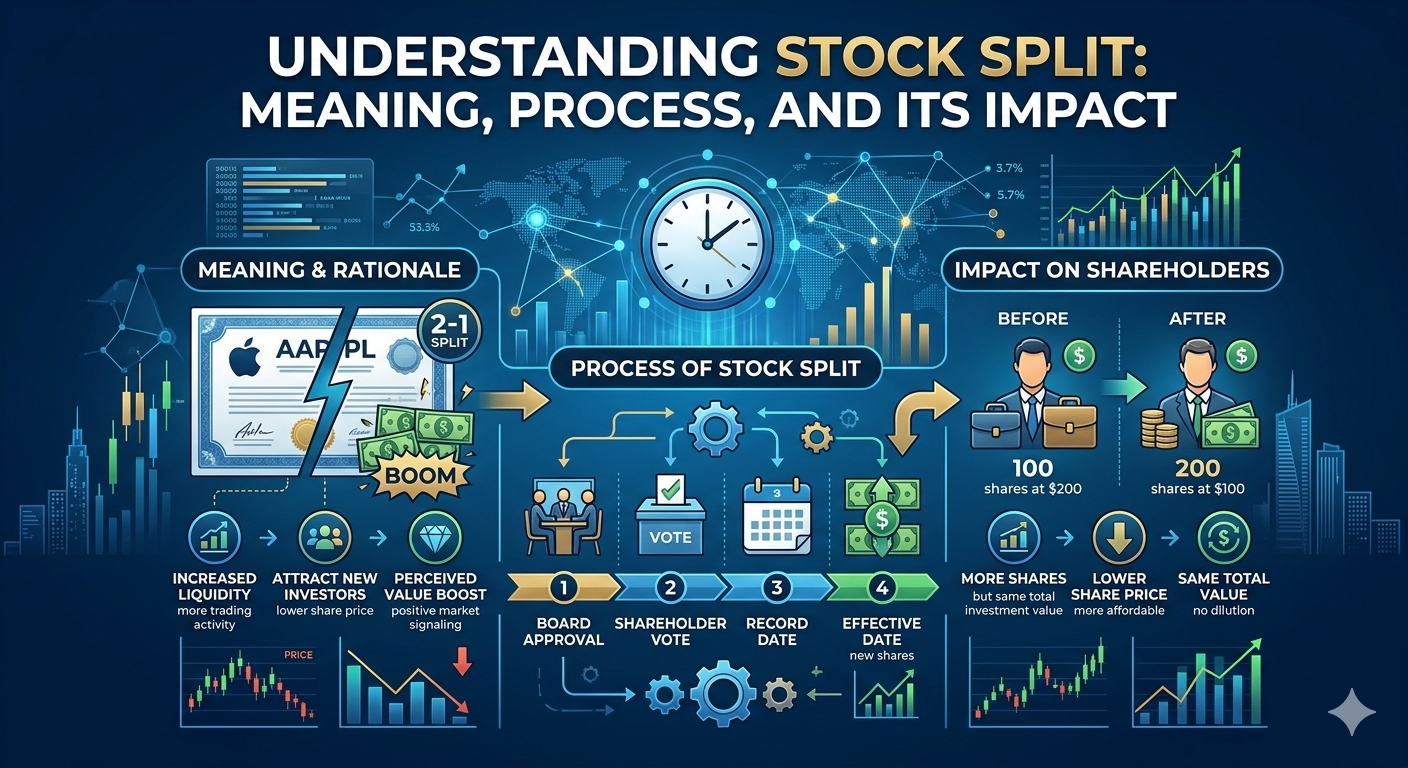

In the ever-changing world of investments, stock splits often stir up both excitement and confusion. If you’ve heard the term “stock split” and are unsure about its meaning, process, and implications, you’re not alone. In this article, we will walk you through everything you need to know about stock splits, focusing on the recent stock split. Moreover, if you still don’t have a trading experience, you’ll also learn how to open a demat and trading account. So grab a cup of chai, and let’s dive in!
What is a Stock Split?
To put it simply, a stock split is when a company increases the number of its outstanding shares while decreasing the share price proportionately. Imagine you have a delicious chocolate cake. If you cut it into smaller slices, you now have more pieces, but each slice is smaller than the whole cake. Similarly, if the company decides on a stock split, it means they’ll be breaking their existing shares into more chunks.
For example, in a 2-for-1 stock split, if you owned one share priced at Rs.100, post-split, you would have two shares, each worth Rs.50. The total value remains the same – you still own Rs.100 in shares!
Why Do Companies Opt for Stock Splits?
Companies often choose to undergo a stock split for various reasons:
1. Increased Liquidity
When a company splits its stock, it increases the number of shares available in the market. This usually results in better liquidity, making it easier for investors to buy and sell shares without causing a significant impact on the stock price. If more people can afford to buy shares at lower prices, the overall market engagement will be heightened.
2. Psychological Factors
The price of a share can sometimes affect investors’ perception. A share priced at Rs.1000 might seem too expensive for many potential investors, even if the company is solid. However, if that same company undergoes a stock split and its share price drops to Rs.250, it seems more attractive to smaller or new investors. This can create a positive buzz around the stock.
3. Alignment with Industry Standards
Sometimes, companies feel the need to align their stock price with industry peers. If the company notices that their competitors have lower stock prices due to recent splits, they might choose to split their stock, too, to remain competitive and appealing to investors.
The Process of a Stock Split
Let’s break down the nuts and bolts of how a stock split works:
1. Decision-making
The journey begins when the company’s board of directors approves the stock split. This decision will consider various financial metrics and market conditions. Companies may also discuss the potential impact of the split on their share value and investor perception.
2. Announcement
Once the board decides, the company announces the split through press releases and official statements. For the company, they would communicate the split’s ratio (like 2-for-1 or 3-for-1) and the effective date when it will take place. This is essential information for current and prospective shareholders.
3. Execution Date
On the set date, the stock price gets adjusted, and the new shares become available. If you owned shares prior to the split, your new share count and values update automatically in your demat account.
4. Trading Begins
From the effective date, the newly adjusted shares start trading. This is where it gets exciting for investors who’ve kept an eye on the price. If you’re new to investing, understanding the process to open demat and trading account can help you get started with buying and selling shares. To ensure you’re part of this journey, remember that it might be a good idea to open a demat and trading account if you haven’t already done so.
How Does a Stock Split Affect Shareholders?
Let’s talk about the impact on shareholders, as this is where the rubber meets the road for anyone invested in the company.
1. No Immediate Financial Gain
It’s crucial to understand that a stock split does not change the market capitalization of the company. You still own the same percentage of the company, so while you may have more shares, the total value remains unchanged. It’s like having a bag full of candies; even if you pour them out into smaller bags, you still have the same number of sweets.
2. Potential for Price Appreciation
While there’s no immediate financial gain, splits can often lead to increased demand due to the lower share price attracting more investors. If the stock becomes more popular post-split, it may see an increase in price as more people wish to own a piece of the pie.
3. Increased Visibility
A company that decides to go through a stock split might generate buzz in financial news, leading to increased visibility. More eyes on the stock can also entice institutional investors, which may result in a rise in share prices as demand increases.
How to Prepare for a Stock Split
So, what can you do as a shareholder or as a prospective investor looking to open a demat and trading account?
1. Stay Informed
Stay updated with company announcements and financial news. Understanding the timing and purpose behind a stock split helps in making informed decisions regarding your investments.
2. Review Your Portfolio
If you own shares, review your current portfolio. Assess how the stock split aligns with your investment strategy and goals. It’s a good idea to analyze your risk appetite as well.
3. Get Your Demat Account Ready
If you’re still yet to invest and want to buy shares post-split, make sure to open a demat and trading account as soon as possible. This allows you to instantly step into the trading arena once shares become available at their new prices.
Conclusion
Understanding the concept of a stock split and how it works can greatly enhance your investment strategy. The recent stock split exemplifies how companies can adapt their stock structure in a bid to attract more investors and remain competitive in the market. Remember, while a stock split can create opportunities for growth, it is essential to stay informed and prepare yourself, whether you’re looking to invest or already own shares.
So, the next time you hear about a stock split, you’ll not only understand what it means but also how it impacts you directly as a shareholder. Happy investing!



