Physical Address
304 North Cardinal St.
Dorchester Center, MA 02124
Physical Address
304 North Cardinal St.
Dorchester Center, MA 02124

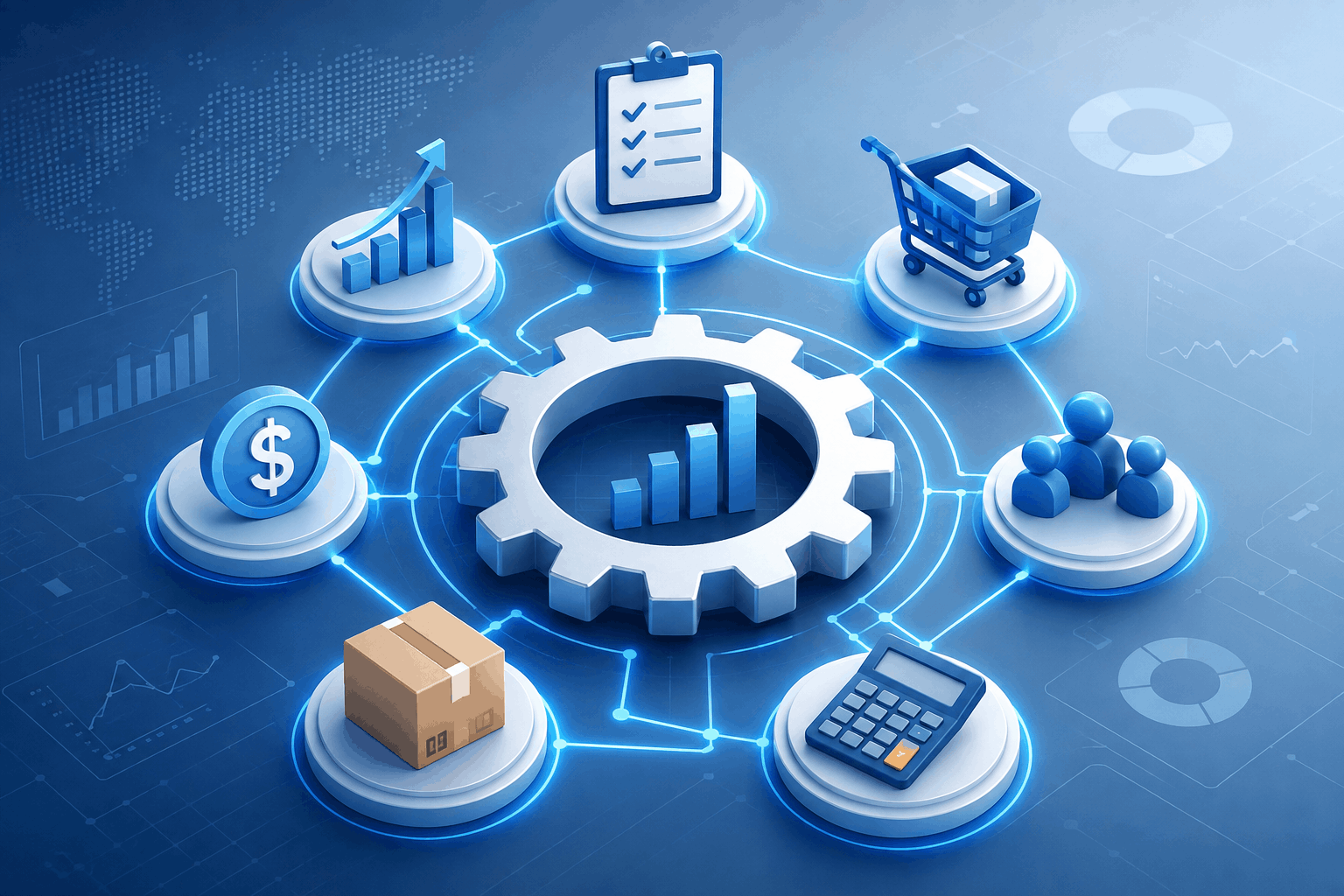
As businesses juggle more data, more tools, and higher customer expectations, fragmented systems are becoming a real liability. This piece looks at why connected operational strategies and thoughtful ERP implementation in particular are becoming essential rather than optional for companies that want to scale without chaos.
Running a business today looks nothing like it did even a decade ago. Customers expect faster service, teams work across multiple locations or time zones, and the sheer volume of data flowing through a company on any given day can be overwhelming. In this environment, relying on scattered spreadsheets, disconnected software, and manual processes is no longer a workable long-term strategy. Businesses that want to stay competitive need operations that are organized, connected, and easy to understand at a glance.
This is where the idea of a smarter operational strategy comes in, and for many companies, that strategy starts with rethinking how their core business functions talk to each other.
Most businesses don’t start with a single unified system. A sales team might use one tool to track leads; the finance department relies on separate accounting software; inventory is managed through a warehouse-specific platform; and HR keeps its own records entirely. Individually, each of these tools might work fine. Together, they create a patchwork that makes it hard to get a clear picture of the business as a whole.
When systems don’t talk to each other, small problems start to add up. Orders get delayed because inventory numbers weren’t updated in real time. Finance teams spend hours reconciling numbers that should have matched automatically. Managers end up making decisions based on outdated reports because pulling fresh data takes too long. None of these issues happen because people aren’t working hard. They happen because the tools aren’t working together.
This is exactly the gap that enterprise resource planning, or ERP, systems are designed to close. An ERP system brings functions such as finance, inventory, procurement, human resources, and customer management into a single, connected platform. Instead of five different tools holding five different versions of the truth, everyone works from the same data.
The value of this isn’t just convenience. It changes how quickly a business can respond to what’s actually happening. If a shipment is delayed, the sales team sees it immediately instead of finding out after a customer complains. If a department is going over budget, finance can flag it before the quarter closes rather than after. Decisions get made on current information instead of guesswork.
Choosing the right ERP system is only half the equation. How that system gets implemented often determines whether a business actually benefits from it. A rushed rollout with little planning can leave employees confused, data poorly migrated, and workflows more complicated than before the switch.
A thoughtful implementation process usually starts with understanding how the business actually operates day to day, not just how it’s supposed to operate on paper. It involves mapping out existing workflows, identifying where the current setup is causing friction, and making sure the new system is configured around real needs rather than a generic template. Training also plays a bigger role than most companies expect. A powerful system is only useful if the people using it understand how to work with it.
Businesses that invest the time to get their operational strategy right tend to see benefits that go well beyond efficiency. Teams spend less time on repetitive manual work and more time on tasks that actually move the business forward. Reporting becomes more reliable, which makes planning and forecasting easier. Customer experience often improves too, since employees can access accurate information faster when someone calls with a question or an issue.
There’s also a scalability factor worth mentioning. As a company grows, whether that means more employees, more locations, or more products, having a connected operational backbone makes that growth far less chaotic. Instead of adding more disconnected tools to patch new gaps, the existing system simply expands to cover new needs.
Smarter operational strategy isn’t about chasing the newest technology trend. It’s about giving a business the tools to operate with clarity instead of confusion. As companies continue to deal with more data, more moving parts, and higher customer expectations, having systems that are connected and easy to rely on stops being a nice extra and starts being a basic requirement for staying competitive.
For many businesses, that shift begins with a serious look at how their operations are structured today, and whether the tools they’re using are helping them move forward or quietly holding them back.