
Excerpt
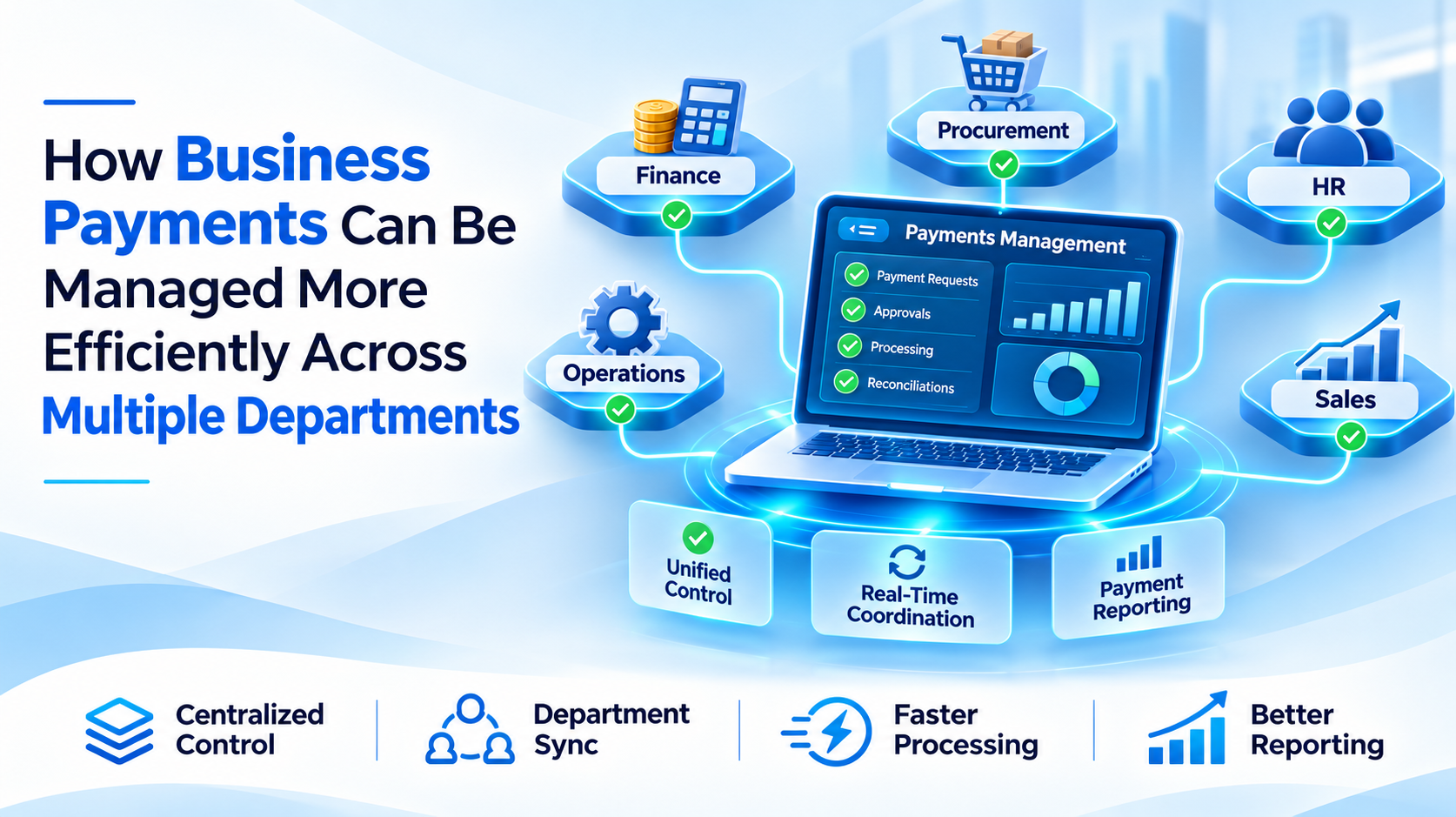
Payment management often involves finance, procurement, sales, operations, and other teams rather than a single department.
A structured approach to business payments can improve communication, reduce duplicated work, and provide better transaction visibility across the organization.
Modern payment solutions help businesses create more consistent workflows while supporting domestic and international financial operations.
Introduction
As businesses grow, payment management becomes increasingly collaborative.
Finance teams may process transactions, but other departments often provide the information or approvals required before a payment can be completed.
Procurement manages supplier relationships. Operations may confirm whether a service has been delivered. Sales teams monitor customer payments. Senior management may approve larger expenses. Customer support teams may need access to payment status when handling queries.
When every department follows separate processes, payment management can become fragmented.
Emails, spreadsheets, messaging platforms, and disconnected systems may all contain different pieces of payment information.
A structured business payment solution can help companies create clearer workflows between departments while improving financial visibility and control.
Why Multi-Department Payment Management Becomes Difficult
Payment processes often develop gradually.
A small company may begin with a simple system in which one employee manages most transactions. As the organization grows, new departments become involved without a formal redesign of the process.
This can create uncertainty.
Employees may not know who needs to approve an invoice, where payment information should be recorded, or which team is responsible for resolving a transaction issue.
The larger the organization becomes, the more difficult informal payment management becomes.
Establishing Clear Roles
Efficient business payments begin with clear responsibilities.
Businesses should define which teams are responsible for requesting, verifying, approving, processing, and reconciling payments.
For example, procurement may confirm supplier information while finance verifies payment details and processes the transaction.
Clear roles reduce unnecessary communication and prevent tasks from being duplicated.
Employees also become more accountable when they understand their part of the payment workflow.
Creating Standard Payment Workflows
Different departments may have different payment requirements, but the overall process should remain structured.
Businesses can establish standardized workflows for common transaction types.
A supplier invoice, customer refund, employee expense, or international payment may each follow a different approval path, but the stages should be clearly documented.
A modern business payment solution can support consistent workflows and make it easier for employees to follow internal procedures.
Improving Payment Visibility Across Teams
One of the biggest challenges in multi-department payment management is visibility.
A procurement employee may know that an invoice has been submitted without knowing whether finance has processed it.
A sales employee may know that a customer promised to pay without knowing whether the transaction has settled.
Centralized payment solutions can make payment status easier to monitor.
Appropriate teams can access the information they require without repeatedly requesting updates from finance.
This reduces communication overhead and improves internal efficiency.
Reducing Dependence on Email and Spreadsheets
Email and spreadsheets remain useful business tools, but they can become difficult to manage when they serve as the primary payment workflow.
Different employees may maintain separate spreadsheet versions. Approval emails can become buried in crowded inboxes. Transaction records may lack standardized references.
Businesses can reduce these problems by using more structured payment processes.
Centralization also makes it easier to maintain consistent records as transaction volumes increase.
Connecting Sales and Finance Teams
Sales and finance often need to coordinate around customer payments.
Sales teams may need to know whether an invoice has been paid before proceeding with an account. Finance teams may need information from sales when investigating an unidentified transaction.
Efficient Pay-in services can support better incoming payment visibility.
When customer transactions are recorded systematically, finance teams can reconcile payments more efficiently while sales teams gain clearer information about account status.
This can also improve customer communication.
Supporting Procurement and Supplier Payments
Procurement teams work closely with vendors and suppliers.
They may negotiate payment terms, verify invoices, or confirm delivery of goods and services.
Finance then needs accurate information to complete the transaction.
Clear workflows between procurement and finance can reduce payment delays.
Reliable business payments also strengthen supplier relationships because vendors gain greater confidence in the company’s payment processes.
Managing Online Transactions
Businesses that sell through digital channels generate payment information that may be relevant to several departments.
Finance needs transaction records for accounting. Customer support may need information about failed payments or refunds. Sales and marketing teams may review transaction performance.
Modern online payment solutions can support these requirements when transaction information flows into an organized internal process.
Businesses should avoid allowing digital payments to exist as a completely separate operational environment.
Coordinating Cross Border Payments
International transactions often require even more coordination.
Cross border payments may involve procurement teams, finance employees, regional offices, management, and international suppliers.
Companies may need additional checks before approving these transactions.
A clear workflow helps departments understand what information is required and who is responsible for each stage.
This reduces the risk of international transactions being delayed because employees are waiting for missing information.
Managing B2B Cross Border Payments
B2b cross border payments can involve higher transaction amounts, recurring supplier arrangements, and complex commercial relationships.
Businesses need accurate documentation and clear authorization procedures.
Centralized payment management helps teams follow a transaction from invoice submission through approval, processing, and reconciliation.
This creates greater control over international B2B transactions while reducing unnecessary administrative work.
Improving Reconciliation Between Departments
Reconciliation becomes more difficult when departments record payments differently.
For example, procurement may use an internal purchase order number while finance tracks a payment reference and operations uses a project code.
Businesses should develop consistent reference structures wherever practical.
Standardized data helps finance teams connect payments with the correct internal records.
More accurate reconciliation also supports reliable reporting.
Managing Exceptions More Efficiently
Not every payment will follow the standard process.
A transaction may fail, an invoice may contain incorrect information, or a customer payment may not match the expected amount.
Businesses should define how departments handle these exceptions.
Employees need to know who should investigate the problem and when it should be escalated.
Structured exception management prevents payment issues from remaining unresolved because ownership is unclear.
Using Automation Carefully
Automation can improve payment efficiency, but businesses should apply it to suitable tasks.
Routine activities such as transaction notifications, status updates, data transfers, and certain reconciliation steps may be automated.
Higher-risk payments may still require human review.
The goal should be to reduce repetitive work without weakening financial controls.
A good payment workflow combines automation with appropriate oversight.
Improving Management Reporting
Senior management needs more than individual transaction details.
Leaders may want to understand payment volumes, outstanding liabilities, collections, international transactions, or departmental spending.
Centralized payment solutions can improve the consistency of information used for financial reporting.
This allows management to make decisions based on a broader view of company payment activity.
Supporting Departmental Accountability
Clear payment processes improve accountability.
Businesses can determine which department requested a payment, who approved it, when it was processed, and how it was reconciled.
This reduces confusion when questions arise.
Accountability also encourages departments to follow internal policies consistently.
Preparing Payment Operations for Growth
Payment processes should evolve with the organization.
A workflow that works for five employees may become inefficient when hundreds of employees across several departments need to participate.
Companies should periodically review their payment processes and identify areas where manual work or unclear responsibilities are creating delays.
Scalable infrastructure allows businesses to add departments, markets, and transaction volumes without creating excessive administrative complexity.
Where Uniteller May Fit Into Payment Planning
Businesses evaluating their payment infrastructure may consider providers such as Uniteller depending on their payment and market requirements.
Organizations should assess how any provider fits into existing workflows, technical systems, international requirements, and internal financial controls.
Payment technology should support the company’s broader operational model rather than functioning as an isolated tool.
The most effective solution will be one that aligns payment processing with the way different departments actually work.
Conclusion
Managing payments efficiently across multiple departments requires clear roles, standardized processes, and reliable transaction information.
When finance, procurement, sales, operations, and management work through disconnected systems, payment workflows can become slow and difficult to control.
A structured business payment solution can help create a more consistent approach.
Modern payment solutions, efficient Pay-in services, integrated online payment solutions, and organized business payments workflows can improve communication and financial visibility.
Companies that manage cross border payments and b2b cross border payments should place additional emphasis on approvals, documentation, reconciliation, and departmental coordination.
By developing payment processes that connect teams rather than separating them, growing businesses can reduce administrative work and create a stronger foundation for scalable financial operations.