

A packaging manufacturer in Ahmedabad ships to the same five buyers every month. Some months the trucks arrive on time and the paperwork is clean. In other months, a vehicle falls through at the last minute, a quote changes after booking, and a buyer calls three times to ask where the goods are. The product is identical in both months. The difference is how the shipping is organized.
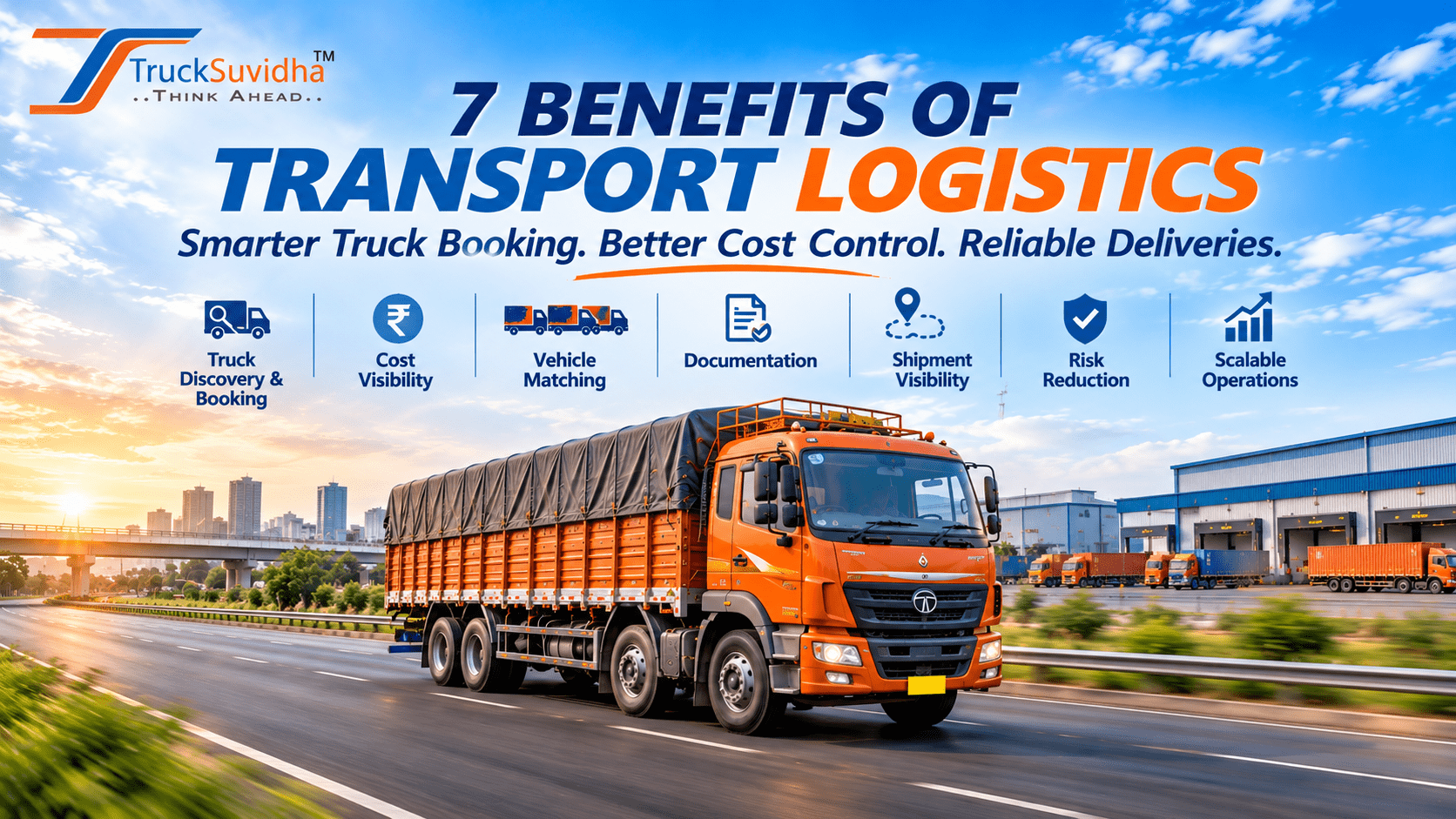
That difference is what good transport logistics provides. This article explains seven practical benefits of transport logistics for B2B shippers in India, what each one means in daily operations, and how to get the most from it. It also describes where TruckSuvidha fits in.
Key takeaways
- Transport logistics is the planning and coordination of moving goods, from vehicle selection to delivery.
- Its main benefits are faster booking, clearer costs, better vehicle matching, smoother paperwork, visibility, lower risk, and repeatable operations.
- Benefits depend on the provider, route, and cargo, so verify what each service includes.
- TruckSuvidha offers a load board, a truck board, a transporter directory, calculators, tracking options, verification, and e-way bill support on one platform.
What Is Transport Logistics for B2B Shippers?
Transport logistics is the planning and coordination of moving goods between locations, including vehicle selection, documentation, pickup, transit monitoring, and delivery.
For B2B shippers, the goods move between businesses: manufacturer to distributor, wholesaler to retailer, supplier to factory. These movements are larger and more regular than consumer deliveries, and they are tied to invoices, contracts, and tax documents. Some providers supply only a vehicle and driver, while others manage more of the chain, so the exact scope varies.
Benefit 1: Faster Truck Discovery and Booking
The first benefit of organized transport logistics is less time spent finding a vehicle. Without a system, a shipper phones contacts one by one and hopes someone has a suitable truck free on the right date.
A structured approach changes that. A shipper defines the load, route, and timing, then compares available vehicles in one place. Digital platforms support this through load posting and truck listings. The gain is shorter idle time between a confirmed order and a loaded vehicle.
Benefit 2: Clearer Cost Visibility
Transport logistics gives shippers a clearer picture of what a shipment will cost. Freight pricing is rarely one fixed number. Distance, route conditions, cargo weight and volume, vehicle type, fuel, tolls, loading and waiting time, return-load availability, and urgency all play a part.
When these factors are written into an itemized quotation, shippers can compare offers on equal terms. A low headline price that excludes tolls or waiting charges may cost more than a transparent quote. Calculators for freight and distance can give a starting reference, though the final price always comes from the transporter’s quotation.
Benefit 3: Better Matching of Vehicle to Cargo
Matching the vehicle to the load is a direct benefit of planning. An oversized vehicle raises cost for no gain, and an undersized one can force a second trip.
Transport logistics supports the right choice through accurate cargo details: weight, volume, dimensions, and handling needs. It also helps shippers choose between:
- Full truckload (FTL): one shipper books an entire vehicle, which suits large consignments, goods that should not share space, and direct routes.
- Part truckload (PTL): several shippers share one vehicle, which can suit smaller consignments. Goods may be consolidated or transferred, so transit times can differ, and availability depends on route and provider.
Benefit 4: Smoother Documentation and Compliance
Complete paperwork is one of the least visible and most valuable benefits. A loaded truck with missing documents can be delayed, which defeats the purpose of booking early.
Most commercial consignments move with these documents:
- A tax invoice or delivery challan with goods, value, and GST details.
- A consignment note (lorry receipt), which is the transporter’s contract of carriage.
- An e-way bill, generally required under GST when the consignment value exceeds ₹50,000 [VERIFY: current threshold, validity rules, and state-specific requirements on the official GST e-way bill portal].
- A packing list for mixed loads.
- Insurance papers, if the cargo is covered.
Preparing these before the vehicle arrives is a basic habit that organized transport logistics builds into every shipment.
Benefit 5: Greater Shipment Visibility
Visibility means knowing where a consignment is and when it should arrive. Without it, buyers and sellers keep calling each other for updates, and unloading, storage, and payment plans are guesswork.
Not every provider offers real-time tracking, so shippers should ask. Where tracking is unavailable, agreeing on check-in points with the transporter is a practical alternative. Visibility also helps businesses respond sooner when a delay occurs, since a problem found early is easier to manage than one discovered at the destination.
Benefit 6: Lower Operational Risk
Risk in road freight comes from unverified vehicles and drivers, undeclared cargo value, missing insurance, and verbal agreements that cannot be proven later. Transport logistics reduces these risks through routine safeguards:
- Verifying the vehicle and driver before dispatch.
- Confirming rate, vehicle number, driver contact, and pickup time in writing.
- Photographing cargo at loading and noting its condition on documents.
- Checking what insurance covers and excludes.
- Recording damage or shortage on the delivery receipt and informing the transporter promptly.
Liability for loss or damage depends on the contract and the carrier. In India, the Carriage by Road Act, 2007 applies to common carriers [VERIFY: current provisions on India Code or with a legal professional]. Declaring the value of high-value goods in advance is a sensible precaution.
Benefit 7: Repeatable, Scalable Operations
The seventh benefit shows up over time. A business that ships regularly gains from a repeatable process. The same checklist, the same document routine, and the same trusted transporters make every shipment faster than the last.
This also helps when volumes grow. A shipper that has already organized booking, paperwork, and tracking can add routes or buyers without rebuilding the process from zero. Regular routes can also be agreed in advance, which saves negotiation time on every trip.
How Does TruckSuvidha Support B2B Shippers?
TruckSuvidha is a road freight and truck-load matching platform in India, operated by Sarvodaya Infotech Pvt. Ltd. Its services line up with the benefits above:
- Load Board and Truck Board support truck discovery and booking.
- Transporter and fleet owner directory helps shippers find providers for a route.
- Freight and distance calculators give a reference for cost planning.
- GPS-based, toll-based, and mobile-number-based tracking offer different ways to monitor movement. Availability depends on the vehicle and the option used.
- Vehicle verification and driver verification support risk checks before dispatch.
- E-way bill generation supports the documentation step for eligible consignments.
- RTO and national permit resources provide reference information for permit questions on interstate movement.
Shippers who want to see how these services work together can explore the TruckSuvidha platform. As with any provider, confirm the services, coverage, and terms for your own route and cargo before booking.
How Can B2B Shippers Get More From Transport Logistics?
Benefits come from habits, not from a single tool. Use this checklist:
- Share accurate cargo details before asking for quotes.
- Request itemized quotations in writing.
- Match vehicle type and capacity to the load.
- Prepare the invoice, consignment note, and e-way bill before loading.
- Verify the vehicle and driver.
- Agree on how and when you will receive updates.
- Confirm insurance and claim procedures.
- Review each shipment afterward and note what slowed it down.
Frequently Asked Questions
What are the main benefits of transport logistics for B2B shippers?
The main benefits are faster truck booking, clearer cost comparison, better vehicle matching, smoother documentation, shipment visibility, lower operational risk, and repeatable processes. The size of each benefit depends on the provider, the route, and how carefully the shipper plans.
How does transport logistics reduce shipping delays?
It reduces idle time before dispatch and surprises during transit. Early vehicle booking, complete documents, itemized terms, and agreed update points remove the most common causes of delay. It cannot remove delays caused by weather, road conditions, or events outside anyone’s control.
Does transport logistics help lower freight costs?
It can help by improving vehicle matching, reducing waiting time, and making quotations easier to compare. Savings vary by route, cargo, and provider, so no outcome is guaranteed. Comparing itemized quotes is the most reliable way to judge value.
What documents do B2B shippers need to move goods by road?
Shippers typically need a tax invoice or delivery challan, a consignment note, and an e-way bill when the consignment value exceeds the GST threshold. A packing list and insurance papers are also useful. Confirm current requirements on official portals.
How can a shipper choose a transport logistics partner?
Check vehicle availability, written and itemized quotations, registration details, experience with similar cargo, communication and update arrangements, and insurance and documentation responsibilities. Verify what each provider offers instead of assuming tracking, insurance, or paperwork support is included.
Conclusion
The benefits of transport logistics for B2B shippers come down to control: faster booking, clearer costs, the right vehicle, complete paperwork, visible transit, lower risk, and a process that repeats well. Shippers who plan each consignment with these points in mind spend less time reacting to problems and more time running their business.



