Physical Address
304 North Cardinal St.
Dorchester Center, MA 02124
Physical Address
304 North Cardinal St.
Dorchester Center, MA 02124

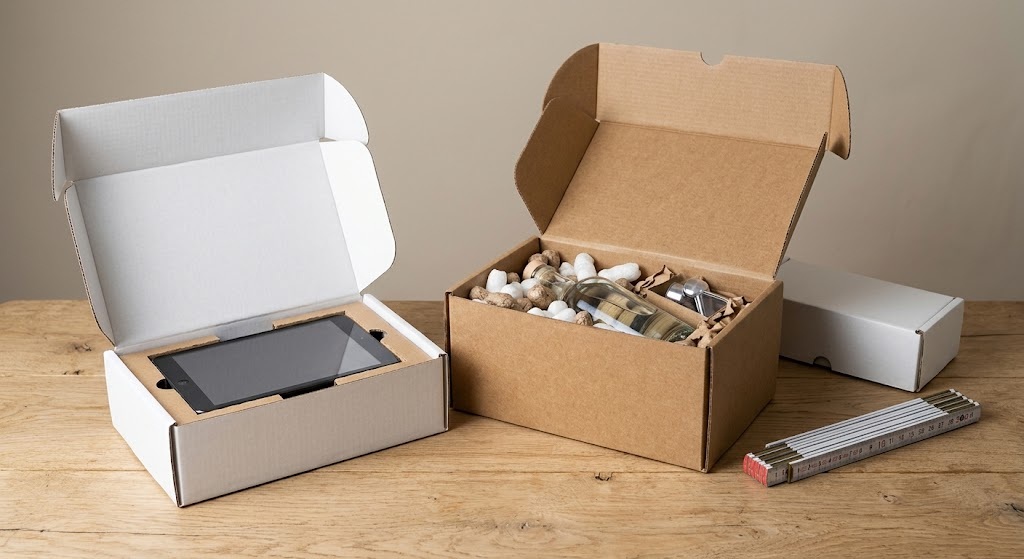
If you’re using a box that is half an inch smaller than needed it will squish your product. If it’s two inches larger than required then it can lead to damage, wasted filler and increased shipping costs. Both of these errors are common but can be avoided by using Custom Packaging Boxes. In this guide we will show you how to measure your boxes, what materials you’ll need to use based on the weight and what to look out for when ordering your boxes.
First, you’ll need to get hold of a measuring tap and a notepad, measure out the length (the longest part of the opening), width and height. Measure on the largest parts of your item. Often there will be additional parts such as a bottle top, handle or pump head. If the item will go into Custom Display Boxes then you should measure the item upright. This is because the front opening and depth of the shelf will depend on how tall and wide your base is.
Most paperboard boxes will need around 1/8 to 1/4 inch of extra space on each side to allow your item to be pushed in with ease. When ordering Custom Size Packaging Boxes be sure to provide the internal measurements. Many new customers make the mistake of providing the external measurements which can cause the box to be too tight.
Size tells you how big the box should be. Weight tells you how strong it must be. A six-ounce lip balm can ride on a thin paperboard. A three-pound set of ceramic mugs cannot.
Paperboard is measured by thickness in points, and 16 to 24 point covers most retail cartons. For shipping, corrugated board takes over. E-flute is thin and prints well. B-flute is a sturdier all-rounder, and C-flute adds cushioning for parcels. Heavy goods may need double-wall board.
Ask suppliers for the edge crush test rating. A 32 ECT single-wall box is commonly rated for gross loads up to about 65 pounds. Custom Cardboard Packaging Boxes with a higher rating cost more, so match the rating to the real load rather than the biggest number on the quote.
Shape often decides the style before anything else does. Tall bottles stand well in tuck-end cartons with a paperboard insert. Custom Product Boxes for flat items, such as scarves or T-shirts, are usually mailers with a lid that folds into the box. Heavy candles do better in a corrugated mailer with a snug divider. Sleeves work for light, already protected items like soap bars.
Retail counters call for Display Boxes, which hold products upright and open at the front for easy picking. These need a strong back panel, so weight matters here as well.
Good custom packaging boxes also respect how the weight sits. A top-heavy item, such as a tall jar with a thick lid, tips inside a wide box, so match the footprint to its base.
Padding eats room. A quarter-inch foam layer on every side adds half an inch to both length and width. Molded pulp trays, paperboard dividers, and tissue wrap all have thickness, so measure them as part of the product.
Sets need extra planning. Three scented candles side by side need dividers between them, or the jars will knock together. Add the divider thickness to your total, and test the set in a sample before approving the final size.
Carriers bill by dimensional weight when a package is large but light. In the US, the common formula is length times width times height, divided by 139 for commercial rates. A 12 by 12 by 12 inch box gives 1,728 cubic inches. That divides out to about 12.4, so you may be billed for 13 pounds even if the contents weigh four.
Cut that box down to 10 by 10 by 8 inches and the billed weight drops to six pounds. Check your carrier’s current divisor before you decide, since rates and rules change.
Custom Printed Boxes look best with full coverage, but heavy ink can crack along the folds of thin boards. A coating or a thicker stock reduces that risk. Aqueous coating adds mild moisture resistance at low cost. Lamination adds stiffness and a tougher surface, though it makes recycling harder.
For retail, keep barcodes and legal text on a flat panel so scanners read them cleanly. Printed Boxes meant for shelves benefit from this planning more than shipping cartons do.
Never approve a full run from a screen proof. Request a white sample or a printed prototype, load your real product, and test it. Shake it. Drop it from about three feet onto a hard floor. Stack several boxes for a day to see whether the bottom one bows. Packaging brands such as hot custom boxes can provide dielines and samples for this step.
The number of boxes. Ordering custom packaging boxes wholesale will reduce your cost per unit. However, only order more if you know your size will work. Many people will order a small amount to test it out and then place a large order. Check what the minimum order amount is and how long it will take to deliver (often a few weeks) so you know when you can launch.
Dimensions of the product can vary between batches. Candles poured by hand will vary slightly, so ensure that you’re using the largest size of your product when creating your box. Over time, humid environments will cause the corrugated cardboard to deteriorate.
If you have multiple sizes of product, it is best to not try to make 1 box fit all. Usually having a couple of different Custom Boxes will be more effective.