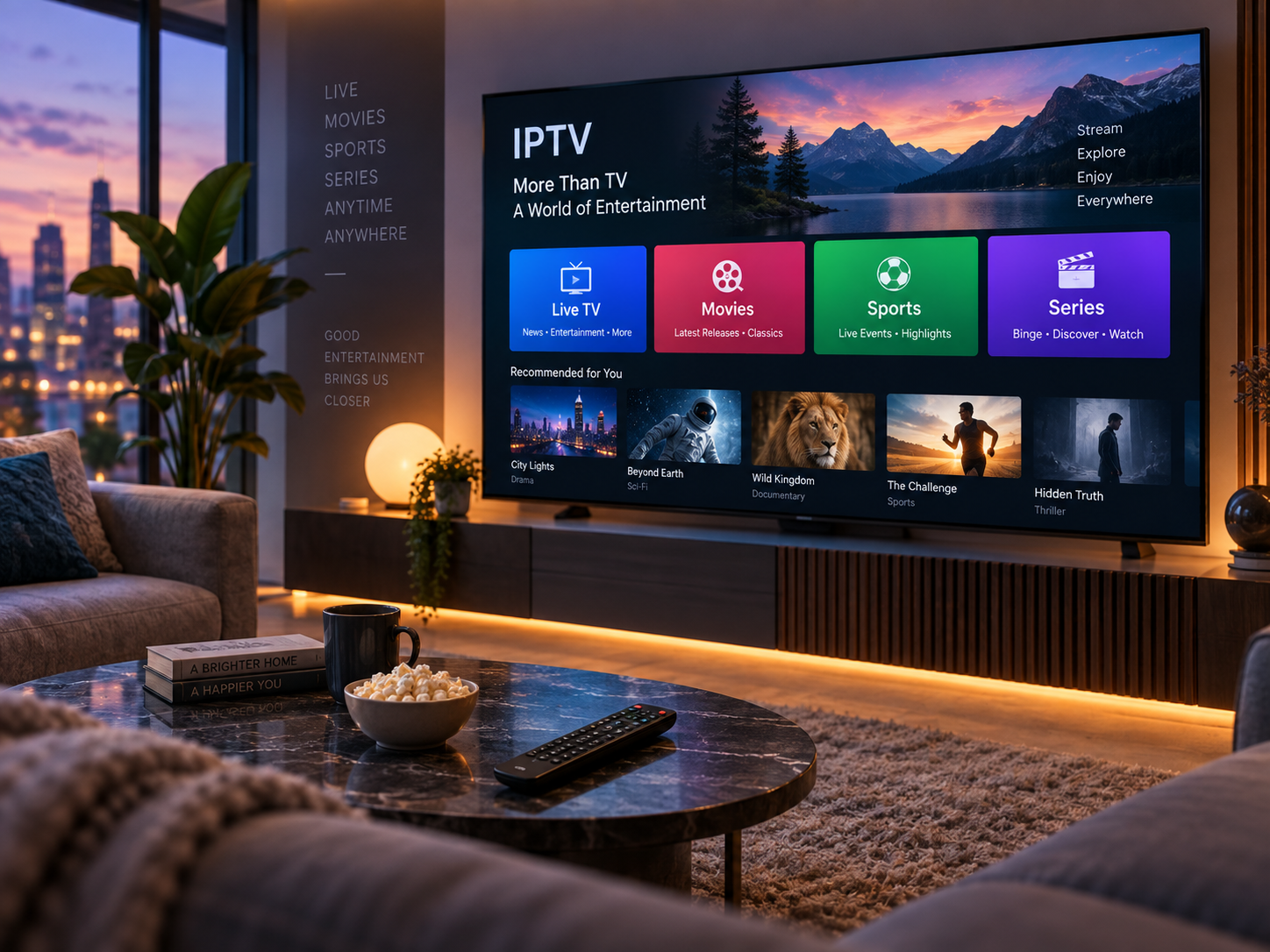

Television viewing habits across Northern Europe have changed significantly as broadband connectivity and internet-based entertainment become increasingly common. Viewers in Sweden, Norway, Denmark, Finland, and Iceland now have more ways to access television beyond traditional cable and satellite services.
Internet Protocol Television (IPTV) has become an important part of this shift, allowing television programming to reach compatible devices through IP-based networks. However, IPTV services designed for Nordic audiences often have different content priorities, language options, and regional requirements compared with services targeting other markets.
For viewers exploring IPTV Sweden options, understanding these differences can help identify suitable television packages without relying on exaggerated channel counts or promotional claims.
This article examines the characteristics of Nordic IPTV, including regional programming, multilingual content, streaming technology, device compatibility, and legal considerations that distinguish it from other television services.
Understanding IPTV in the Nordic Television Market
Internet Protocol Television delivers television programming through Internet Protocol networks instead of relying exclusively on conventional cable or satellite broadcasting infrastructure.
Depending on the provider, IPTV can include live television, video-on-demand libraries, catch-up programming, and electronic program guides.
Nordic countries have well-developed digital communications markets, making internet-delivered television a practical option for many households. However, broadband availability and service quality still vary by location.
Television providers in the region may combine scheduled broadcasting with streaming applications, allowing viewers to access entertainment through smart TVs, mobile devices, and dedicated receivers.
It is important to distinguish IPTV from general streaming platforms. Managed IPTV services often operate through controlled network environments, while over-the-top streaming platforms deliver content across the public internet.
Both approaches can provide convenient television access, but their technical requirements and subscription structures may differ.
Why Nordic IPTV Has Different Content Priorities
Regional television preferences are one of the main factors distinguishing Nordic-focused services from broader international television packages.
When comparing Nordic IPTV with other television services, viewers should consider whether the available channels reflect local languages, national broadcasters, and regional entertainment interests. A package designed for Nordic audiences may prioritize Scandinavian programming, while an international service may focus on a wider selection of global channels.
Swedish viewers may look for SVT1, SVT2, TV4, and other familiar channels. Norwegian audiences may prioritize NRK programming, while Danish viewers may prefer DR channels.
Finnish viewers often seek programming from Yle and commercial broadcasters, while Icelandic audiences may prioritize RÚV and locally relevant entertainment.
However, the availability of these channels depends on the provider’s distribution rights and subscription agreements.
A service advertising Nordic television coverage should therefore be evaluated according to its actual licensed channel selection rather than its marketing description.
Multilingual Programming and Regional Accessibility
Language support plays an important role in television services across the Nordic region.
Although Swedish, Norwegian, and Danish share certain linguistic similarities, they remain distinct languages with different pronunciation, vocabulary, and broadcasting traditions.
Finnish and Icelandic add further linguistic diversity to the region.
Nordic-focused television services may offer local-language programming, subtitles, and multilingual audio options to accommodate different audiences.
These features are especially useful for multilingual households, expatriates, and people who regularly watch television from neighboring countries.
Subtitles can also improve accessibility for viewers with hearing difficulties or those learning another Nordic language.
However, language availability varies by channel, program, and distribution platform.
Before purchasing a subscription, viewers should confirm whether the service includes their preferred audio languages, subtitle options, and program guide language.
Nordic Sports and Local Entertainment Preferences
Sports broadcasting is another important factor influencing television subscriptions in Northern Europe.
Football, ice hockey, winter sports, handball, and other competitions attract audiences across the region.
Swedish viewers may follow Allsvenskan football or SHL ice hockey, while Norwegian audiences may be interested in domestic football and winter sports.
Danish households may prioritize football and handball, while Finnish viewers often follow ice hockey competitions.
Broadcasting rights for these events are frequently divided between different television networks and streaming platforms.
As a result, one IPTV subscription may not include every competition a viewer wants to watch.
Regional entertainment also matters. Nordic television audiences may value locally produced dramas, documentaries, news, children’s programming, and cultural broadcasts.
A suitable service should provide relevant programming rather than simply advertising thousands of international channels.
IPTV vs Traditional Cable and Satellite Television
Nordic IPTV services differ from traditional television primarily through their delivery technology and supported viewing features.
Cable television distributes programming through dedicated cable infrastructure, while satellite services receive broadcasts through satellite transmission systems.
IPTV delivers video using IP-based networks, which can support interactive features and integration with connected devices.
Some IPTV platforms allow viewers to pause live television, restart selected programs, access on-demand libraries, or use electronic program guides.
However, these capabilities depend on the provider and subscription package.
Traditional cable and satellite services may remain practical in households where suitable infrastructure already exists or broadband connectivity is limited.
Internet-based television may offer greater flexibility for viewers who regularly switch between televisions, smartphones, and tablets.
Neither delivery method automatically guarantees better picture quality or reliability. Performance depends on infrastructure, equipment, and service management.
Internet Infrastructure and Streaming Performance
Broadband connectivity is central to the IPTV viewing experience.
Nordic countries have invested in digital infrastructure, including fiber networks and mobile broadband technologies. Nevertheless, connection speeds and coverage can vary between urban centers, rural communities, and individual properties.
IPTV streaming performance depends on available bandwidth, network stability, video compression, and the provider’s distribution infrastructure.
As a general guideline, HD streaming may require approximately 5 to 10 Mbps, while 4K streaming often needs 15 to 25 Mbps or more.
Actual requirements depend on the platform, video codec, and content quality.
For households using several devices simultaneously, additional bandwidth is necessary.
A wired Ethernet connection can improve stability for stationary televisions, while strong Wi-Fi coverage is important for mobile devices and wireless streaming boxes.
Even with high-speed broadband, network congestion or provider-side technical problems can occasionally affect playback.
Smart TV Compatibility and Multi-Device Viewing
Modern television audiences increasingly expect entertainment to work across multiple screens.
Nordic-focused IPTV platforms may support Samsung Smart TVs, LG Smart TVs, Android TV, Google TV, Apple TV, and compatible streaming devices.
Some services also provide mobile applications for Android and iOS.
However, device support varies between providers, and not every IPTV application includes television channels or subscription access.
Before subscribing, consumers should confirm whether the provider offers an official application for their device.
Simultaneous streaming limits are another important consideration.
A household with several family members may need access to multiple streams, while an individual viewer might only require one connection.
Additional features such as parental controls, subtitles, catch-up television, and electronic program guides can improve convenience.
Compatibility with existing devices should be considered alongside channel selection and subscription pricing.
Legal IPTV Services and Broadcasting Rights
One of the most important considerations when choosing IPTV in Nordic countries is content licensing.
IPTV technology itself is legal, but television providers must obtain the necessary rights to distribute copyrighted programming.
Broadcasting agreements may differ between Sweden, Norway, Denmark, Finland, and Iceland.
A channel legally available through one national subscription may not be authorized for distribution in another country.
These restrictions can affect international channel packages, sports broadcasts, and on-demand content.
Consumers should be cautious about services advertising extensive premium programming without explaining their licensing arrangements.
Transparent company information, clear subscription terms, secure payment procedures, and accessible customer support are useful indicators when evaluating providers.
Choosing authorized services helps reduce legal uncertainty and security risks associated with unverified applications and unauthorized content distribution.
How to Choose a Nordic IPTV Service
Selecting a suitable IPTV service requires evaluating both technical features and regional content requirements.
Start by identifying the channels and languages that matter most to your household.
Swedish viewers may prioritize domestic news and entertainment, while households with connections to several Nordic countries may prefer broader regional programming.
Next, confirm device compatibility and check whether the service supports the required number of simultaneous connections.
Review broadband requirements, available video resolutions, and customer support options.
Subscription terms should also be examined carefully. Monthly plans may offer greater flexibility, while longer commitments should only be considered after evaluating service reliability.
Finally, verify that the provider has appropriate content distribution rights.
A smaller, transparent television package that consistently delivers relevant programming may offer better value than an extensive channel collection with uncertain availability.
Conclusion
Nordic IPTV differs from many international television services because of its regional programming priorities, multilingual audiences, and country-specific broadcasting requirements.
Local channels, sports coverage, language support, and compatible streaming devices all influence the viewing experience.
Strong broadband infrastructure can support high-quality internet television, but reliable playback still depends on network conditions and provider performance.
For viewers in Sweden and neighboring Nordic countries, the most useful approach is to compare services according to licensed channel availability, technical compatibility, subscription transparency, and personal entertainment preferences.
Understanding these factors makes it easier to choose a television service that reflects the region’s diverse viewing habits without sacrificing reliability or security.