
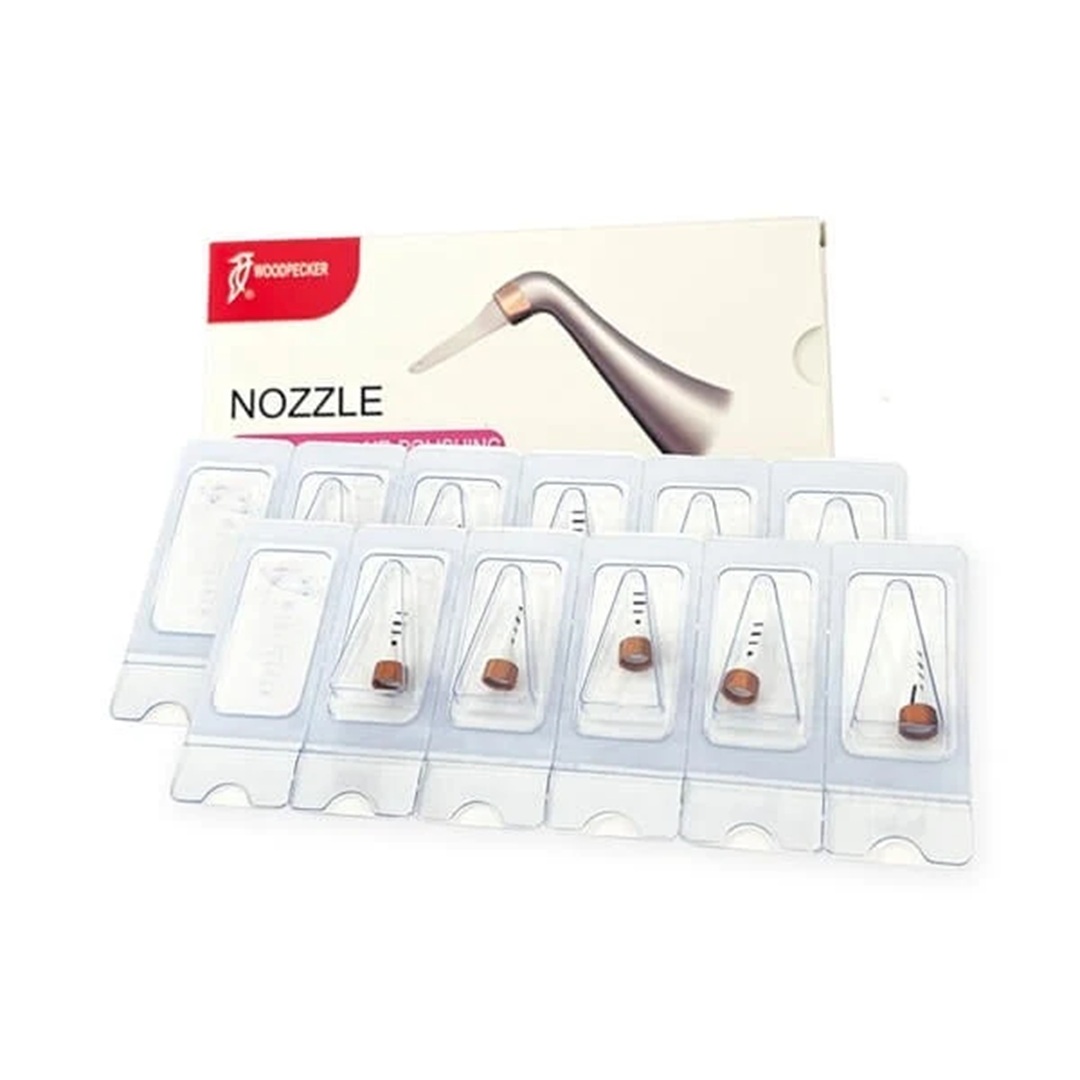

Subgingival air polishing is a professional dental cleaning technique used to manage biofilm in areas below the gumline. It uses a controlled combination of air, water, and specially formulated polishing powder delivered through a dedicated nozzle. Selecting suitable Subgingival Polishing Nozzles AP-A is one consideration for dental professionals who use compatible Woodpecker air polishing equipment in periodontal maintenance procedures.
For general dentists, periodontists, dental hygienists, and dental practice owners, understanding the equipment and its intended applications helps support informed clinical and purchasing decisions. Nozzle design, equipment compatibility, and manufacturer instructions all influence how an air polishing system should be used.
What Is Subgingival Air Polishing and How Does It Work?
Subgingival air polishing is a technique that delivers a mixture of air, water, and fine polishing powder into selected areas around and below the gingival margin. Unlike conventional polishing approaches that primarily focus on accessible tooth surfaces, specialised subgingival equipment is designed for use in selected periodontal areas.
The process involves a dental air polishing unit connected to a compatible handpiece and nozzle. The clinician positions the nozzle according to the manufacturer’s instructions and the patient’s clinical requirements.
A typical setup includes:
- Air polishing unit: Supplies the controlled air and water flow.
- Polishing powder: Provides the medium used during biofilm management. Powder selection must follow device recommendations.
- Specialised nozzle: Directs the air-water-powder mixture toward the intended treatment area.
- Compatible handpiece: Connects the nozzle to the air polishing system.
The complete setup must be compatible, and dental professionals should follow the equipment manufacturer’s instructions and applicable infection prevention protocols.
What Are the Benefits of Subgingival Air Polishing?
Subgingival air polishing can be a useful component of professional periodontal maintenance when selected for appropriate clinical situations. Its value depends on patient assessment, equipment selection, operator training, and the treatment protocol.
- Access to Selected Areas Below the Gumline
Specialised nozzles are designed to support access to selected subgingival areas. Their shape and construction help clinicians direct the air-water-powder mixture toward areas that may be difficult to reach using conventional polishing attachments.
- Support for Professional Biofilm Management
Dental biofilm can accumulate around teeth, gingival margins, and within periodontal pockets. Subgingival air polishing provides another instrument-based approach that trained dental professionals may incorporate into appropriate periodontal maintenance procedures.
- Specialised Equipment for Periodontal Care
Dedicated subgingival accessories offer an alternative to using general-purpose polishing attachments for every application. Selecting equipment designed for the intended procedure helps maintain an appropriate clinical workflow.
- Patient-Specific Treatment Considerations
Not every patient or periodontal condition requires the same cleaning approach. Dental professionals should evaluate periodontal health, pocket characteristics, restorations, implants, and other clinical factors before choosing an appropriate procedure.
How to Choose the Right Subgingival Air Polishing Nozzle?
Choosing a suitable subgingival air polishing nozzle involves more than comparing product prices. Dental professionals should consider compatibility, design, intended application, handling requirements, and replacement instructions.
Equipment Compatibility
Compatibility should be the first purchasing consideration. A nozzle designed for one air polishing system should not automatically be assumed to work with another manufacturer’s equipment.
Before ordering, check:
- Compatible air polishing unit models.
- Supported handpiece or subgingival head.
- Manufacturer-approved nozzle connections.
- Specific operating and maintenance instructions.
This is particularly relevant when purchasing Woodpecker Air Polisher Nozzles, as different equipment models may have different accessory requirements.
Dental professionals researching compatible products can also explore the Woodpecker dental equipment and accessories collection to review available equipment and related accessories.
Nozzle Design and Accessibility
Nozzle geometry and flexibility can influence how comfortably the clinician positions an accessory during a procedure. Dental professionals should review the product design and manufacturer guidance to determine whether it is appropriate for their intended applications.
Disposable or Reusable Construction
Some polishing accessories are designed for single use, while other equipment components have different processing requirements. Always check product labelling and instructions.
Disposable accessories should be replaced according to their intended use. They should not be cleaned, sterilised, or reused unless the manufacturer specifically permits it.
Packaging and Procurement Requirements
Dental practices, clinics, and larger healthcare organisations should also consider packaging quantities, individual packaging, product availability, and purchasing requirements.
These details help practice owners and procurement managers plan accessory inventory while following manufacturer-recommended usage practices.
Understanding Different Air Polishing Nozzles and Their Applications
Not all air polishing nozzles are intended for the same procedures. The appropriate accessory depends on the air polishing unit, handpiece design, clinical application, and manufacturer instructions.
Supragingival polishing attachments are generally designed for accessible tooth surfaces, whereas specialised subgingival accessories are intended for selected applications below the gingival margin.
Dental professionals should avoid treating these accessories as interchangeable. Using the wrong attachment may create compatibility issues or result in use outside the manufacturer’s intended application.
When comparing Subgingival Polishing Tips, consider their intended clinical use, equipment compatibility, flexibility, packaging, and replacement requirements rather than relying on appearance alone.
What Should Dental Professionals Know About Woodpecker AP-A Nozzles?
Woodpecker air polishing equipment includes different units and accessories, making model-specific compatibility checks essential.
The DTE Woodpecker Subgingival Polishing Nozzles AP-A are listed for use with the subgingival head on AP-A and AP-B air polisher units, the AP-H Plus polisher, and the AP-2 air polishing handpiece.
According to the product information, these accessories feature a flexible design intended to support access to subgingival areas. They are disposable, individually packaged, and supplied in a pack of 10 tips.
Dental professionals considering Woodpecker Air Polisher Nozzles should verify the exact equipment model and intended connection before purchasing. They should also follow the manufacturer’s instructions regarding application, handling, and single-use replacement.
For product-specific details, including listed compatibility and packaging information, review the DTE Woodpecker subgingival polishing nozzle product page.
Practical Considerations Before Using Subgingival Polishing Accessories
Choosing the correct accessory is only one part of an appropriate clinical workflow. Dental teams should also consider the following factors:
- Patient assessment: Evaluate periodontal condition, treatment requirements, and relevant clinical considerations before choosing an air polishing technique.
- Operator training: Ensure that the clinician understands the equipment, nozzle positioning, and manufacturer-recommended operating procedure.
- Powder selection: Use only powders approved for the specific device and intended application.
- Infection prevention: Follow applicable infection control procedures, including single-use accessory replacement and appropriate handling.
- Equipment inspection: Check the handpiece, connections, and accessories for visible damage or other issues before use.
- Manufacturer instructions: Follow the device’s instructions for use rather than assuming operating settings are the same across different models.
A common purchasing mistake is ordering an accessory based only on its product name or appearance. Checking actual model compatibility and intended use can help dental practices avoid unnecessary procurement issues.
Where Can Dental Practices Find Compatible Dental Equipment?
Dental clinics and equipment buyers often need reliable information when sourcing accessories for existing dental equipment. Comparing compatible products within a dedicated brand collection can make product research and procurement more convenient.
When additional information is needed about product availability, equipment compatibility, or purchasing requirements, dental professionals can use the VS Dent USA contact page to make an inquiry.
The wider VS Dent USA dental equipment website also provides access to dental equipment, instruments, and accessories for dental professionals and practices.
Frequently Asked Questions
- What is a subgingival polishing nozzle used for?
A subgingival polishing nozzle is a specialised dental accessory designed to deliver an air-water-powder mixture into selected areas below the gumline. Its use depends on the equipment, clinical indication, and manufacturer instructions.
- Are subgingival and supragingival polishing nozzles interchangeable?
No. These accessories may have different designs and intended applications. Dental professionals should use the attachment specified for their equipment and intended procedure.
- Which equipment is compatible with the DTE Woodpecker AP-A subgingival nozzles?
The listed product is designed for the subgingival head on AP-A and AP-B air polisher units, the AP-H Plus polisher, and the AP-2 air polishing handpiece. Always verify the exact model and manufacturer instructions before ordering.
- Are Woodpecker subgingival polishing nozzles reusable?
The listed DTE Woodpecker accessories are disposable, single-use tips. They should be replaced after use and should not be reused.
- What should dentists check before purchasing polishing nozzles?
Dentists should verify equipment compatibility, intended clinical application, nozzle design, disposable or reusable status, packaging details, and manufacturer instructions.
Conclusion
Subgingival air polishing is a specialised approach to professional biofilm management that requires suitable equipment, correct accessory selection, and appropriate clinical judgement. Dental professionals should consider equipment compatibility, nozzle design, intended applications, and manufacturer instructions before purchasing or using polishing accessories. Selecting the right products can help dental practices maintain an organised equipment procurement process and support their clinical workflows. VS Dent Inc. offers dental equipment and accessories for dental professionals seeking product options for their practice requirements.



