
EAPCET preparation can become a cycle of reading chapters, attempting questions and checking scores. You may spend several hours studying and still feel unsure about which topics need attention. A useful practice routine connects these activities so that each completed exercise helps you decide what to do next.
The starting point is understanding your present position. Some chapters may need a fresh explanation, while others need independent practice or occasional revision. Treating every topic in the same way can leave you repeating comfortable work and postponing difficult questions.
Start EAPCET Preparation With a Practical Chapter Review
Take your syllabus and review the chapters you have already studied. Instead of marking everything as either completed or incomplete, describe what you can currently do.
For one chapter, you may understand the theory but struggle to begin questions. In another, you may solve familiar examples but become uncertain when the wording changes. A third chapter might need only a brief review before mixed practice.
These distinctions help you choose an appropriate task. Reading the entire chapter again may be unnecessary if the actual difficulty is one calculation method.
Keep your assessment honest and temporary. Update it when practice shows that your understanding has changed.
Give Each Session One Main Purpose
Before opening a book, decide what the session should accomplish. You might revise a concept, practise a method, attempt a mixed question set or review a completed paper.
A specific target is easier to follow than a broad instruction such as “study Mathematics.” For example, you could work through selected examples and then attempt related questions without checking the solutions.
Leave enough time to review the attempt. If your schedule allows only a short session, reduce the number of questions rather than removing the review completely.
At the end, note whether the task is complete and what remains unclear.
Keep Solutions Aside During the First Attempt
Worked solutions are useful, but checking them too quickly can make a question feel easier than it actually is. Give yourself an opportunity to choose an approach and follow it.
Write down the information given, the quantity required and any relationship you think applies. Even an incomplete attempt can reveal where your reasoning stopped.
If you become stuck, mark the exact point of difficulty. You may understand the concept but struggle with rearranging an equation, interpreting a diagram or converting a unit.
That note makes your later review much more specific than simply recording an incorrect answer.
Review Questions Beyond the Final Score
After completing a practice set, separate the questions into groups: solved confidently, solved with uncertainty, answered incorrectly and left unanswered.
The uncertain group deserves attention even when the answers are correct. You may have guessed between options or used a method you cannot explain clearly.
For an incorrect answer, inspect your own working before reading the explanation. Try to identify the first step that went wrong.
Keep brief records of recurring mistakes. You do not need to copy every solution into a separate notebook. The question reference, topic and a short observation are usually enough.
Match Your Study Material to the Task
Different resources serve different purposes. A detailed explanation may help when a concept is unfamiliar, while a question collection may be more useful after you understand the basics.
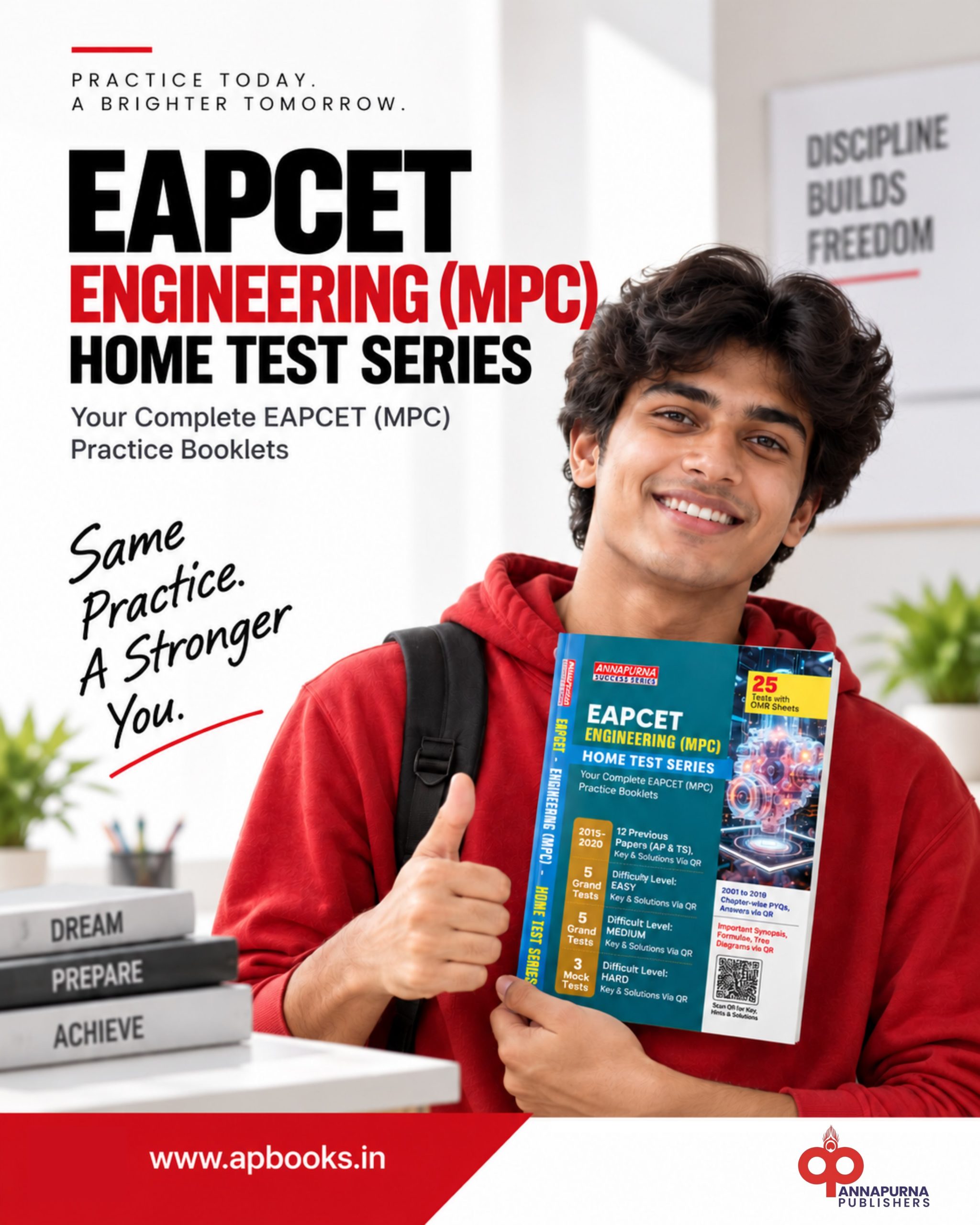
When exploring EAPCET practice material from Annapurna Publishers, compare the contents, edition and explanation style with your requirements. Check whether you need chapter exercises, previous papers or longer test practice.
Avoid adding a resource simply because someone else uses it. First identify what is missing from the material you already have.
The guide to choosing academic study material provides further considerations for making that comparison.
Use Mixed Practice to Check Recognition
Chapter exercises tell you the general topic before you begin. Mixed practice removes that clue and asks you to recognise the relevant concept yourself.
Introduce mixed sets alongside topic revision. If a question causes difficulty, return to the underlying chapter and identify whether the issue concerns knowledge, interpretation or calculation.
Do not judge the entire session by one difficult problem. Look for repeated patterns across several attempts.
Also keep current official exam information separate from assumptions based on older papers. Use the applicable syllabus and instructions to decide which material belongs in your preparation.
Plan Reattempts Instead of Only New Questions
Once you understand a solution, it is tempting to mark the question as finished. Return to selected questions after a gap and solve them without opening your earlier working.
Choose questions that exposed an important misunderstanding rather than collecting every difficult example you encounter.
After a successful reattempt, try a related problem with different values or wording. This helps you check whether you understand the method beyond one remembered answer.
If the same difficulty returns, keep the question open and discuss the specific step with a teacher.
Adjust the Routine at the End of the Week
Review your completed work before writing the next timetable. Notice which subjects received attention, which doubts remain and which tasks were repeatedly postponed.
Move a neglected subject into a time when you can concentrate. Break an oversized task into smaller sessions. Keep familiar topics active through shorter revision exercises.
Your timetable should respond to evidence from practice rather than remain fixed because it looked balanced when you first wrote it.
Before starting the next week, choose a few concrete priorities. A clear list of topics to revisit, questions to reattempt and doubts to resolve gives your study time a direction you can actually follow.