
Walk into any grocery store or look through online food shops, and you will see many different types of food packaging. Most food items come in plain cardboard boxes, glass jars, or standard square plastic bags. While these regular packages hold food, many food makers now choose different bag finishes and outlines to protect their items and make them easy to recognize.
Two common options in modern food packaging are the holographic Mylar bag for food and custom-shaped pouches, often called die cut Mylar bags or irregular shaped Mylar bags. Knowing how these pouches are made, how they keep food safe, and what details matter during production helps food businesses choose the right bag for their daily needs.
What Is a Holographic Mylar Bag For Food?
Mylar is a strong, flexible plastic film made from stretched polyester. In food packaging, factories bond Mylar film with thin foil layers and food-safe inner plastic linings. This multi-layer structure keeps air, water vapor, and outside smells away from the food inside.
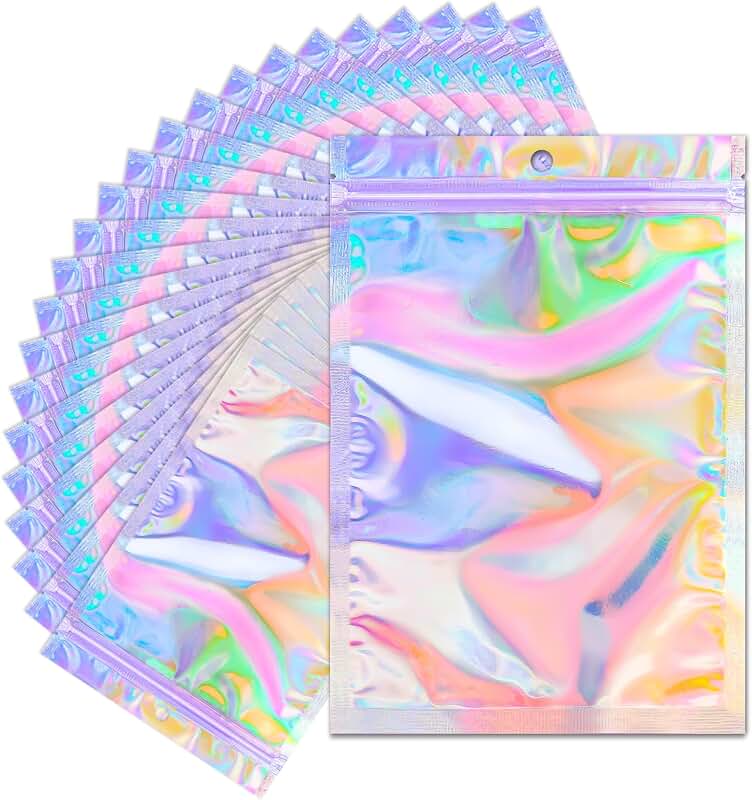
A holographic Mylar bag for food uses this same protective structure, with one visual difference. During manufacturing, tiny patterns are pressed onto the metalized layer of the film. When room light or sunlight hits these microscopic lines, the light bends and shows shifting rainbow colors across the surface of the bag.
How the Holographic Layer Stays Food Safe
People sometimes wonder if shiny or rainbow-colored bags use loose glitter or heavy paint that could touch their snacks. In properly made food pouches, the holographic effect does not touch the food at all.
- Inner Food-Grade Layer: The inside wall of the pouch uses plain, food-safe polyethylene (PE) film that meets food contact rules.
- Sealed Middle Layer: The rainbow film sits in the middle of the pouch wall, sealed between the inner lining and a clear outer protective coat.
- No Peeling or Flaking: Because the effect is pressed directly into the film layer, it does not rub off on hands, tables, or food pieces.
What Are Die Cut Mylar Bags and Irregular Shape Mylar Bags?
Most standard food bags have four straight sides and sharp 90-degree corners. Die cut Mylar bags are different because they are trimmed into custom outlines using shaped metal cutting blades or precision lasers. Since these bags do not follow a standard square or rectangle layout, they are also known as irregular shape Mylar bags.
Instead of relying only on printed pictures on a flat square, the bag itself takes a recognizable outline. For example, a pouch holding dried strawberries might be cut into the outline of a berry, while a pouch holding liquid drink mix might be cut to look like a small bottle.
Common Shapes Used for Food Items
Food makers choose custom outlines based on what is inside the pouch and how people hold it in the kitchen.
- Fruit and Vegetable Shapes: Bags cut like apples, peppers, lemons, or berries are common for dried fruit slices, spice mixes, and organic snacks.
- Bottle and Jar Outlines: Pouches shaped like milk bottles, honey jars, or juice pouches work well for pancake mixes, sauces, and drink powders.
- Rounded and Curved Sides: Some irregular shape Mylar bags keep a simple body but curve inward in the middle so a person can grip and pour dry goods like granola or seeds with one hand.
- Top-Edge Contour Cuts: Many bags keep a flat bottom so they sit upright on pantry shelves, while only the top edge is trimmed around a logo, mascot, or fruit stem.
Comparing Standard Pouches, Holographic Bags, and Die Cut Bags
Different food products need different bag structures. Looking at the practical differences between standard square pouches, holographic finishes, and custom shapes makes planning much easier.
|
Packaging Feature |
Standard Square Mylar Bag |
Holographic Mylar Bag For Food |
Die Cut / Irregular Shape Mylar Bags |
|
Bag Outline |
Straight rectangle or square |
Straight rectangle or square |
Custom curved or shaped outline |
|
Surface Look |
Solid matte, gloss, or plain foil |
Shifting rainbow light reflection |
Custom printed graphics on shaped film |
|
Air & Moisture Protection |
Strong multi-layer barrier |
Strong multi-layer barrier |
Strong barrier with wider edge seals |
|
Order Preparation |
Uses standard factory sizes |
Uses standard or custom sizes |
Requires a custom cutting mold (die) |
|
Best Food Uses |
Coffee, rice, spices, bulk nuts |
Candies, tea leaves, gummies, snacks |
Kids’ snacks, single-serve drinks, dried fruit |
How These Pouches Keep Food Fresh
Whether a pouch has a rainbow finish or a custom outline, its main job is to protect food from spoiling between the factory and the kitchen table. Multi-layer Mylar film blocks the main things that ruin dry and semi-moist foods.
- Blocks Outside Air: Oxygen causes fats and oils in nuts, chips, and baked goods to go stale. The tight polyester and foil layers slow down oxygen entry.
- Keeps Moisture Out: Humidity makes crackers soft and turns dry powders into hard lumps. A sealed Mylar pouch keeps moisture levels steady inside.
- Stops Light Damage: Bright store lights and sunlight can fade natural food colors and weaken flavors in dried herbs and teas. Metalized and holographic layers reflect light away from the food.
- Holds in Natural Aromas: Strong-smelling foods like roasted coffee beans, garlic powder, or fruit chews keep their smell inside the bag instead of spreading to other pantry items.
Practical Things to Check Before Ordering Custom Pouches
Making die cut Mylar bags or printing on shiny holographic film takes careful layout planning. Small mistakes in artwork or sizing can cause filling issues later on.
1. Keep the Zipper Area Straight
Even when the bottom and sides of irregular shape Mylar bags have curves or angles, the top opening still needs a straight press-to-close zipper track. Keeping the top section wide and flat lets people open and close the bag smoothly without the zipper jamming.
2. Check the Width of the Edge Seals
Heat seals hold the front and back layers of the bag together. On straight square bags, a narrow edge seal works fine. On curved outlines and sharp corners, heat seals face more pressure when the bag is filled with food. Good factories leave a slightly wider sealed border often 5mm to 8mmaround curved edges so the seams stay tight during shipping.
3. Make Text Easy to Read Over Holographic Film
Printing small black text directly over a holographic Mylar bag for food can make ingredient lists and expiration dates hard to read under bright lights. To keep text clear, printers place a layer of solid white ink underneath the text area before printing the letters. This gives nutrition facts and directions a clean, flat background while leaving the rest of the bag shiny.
4. Measure Inside Space After Cutting Corners
When you trim away corners to make die cut Mylar bags, the inside pocket holds less food than a square bag of the same height and width. Always test a physical sample with your actual food weight before placing a full production order, so you know the bag closes easily without overfilling.
5. Place Barcodes on Flat Areas
Store scanners need a smooth, flat surface to read UPC barcodes quickly. Keep the barcode on a flat section near the bottom back of the pouch, away from curved edges, deep folds, or heavy creases.
Choosing the Right Pouch for Your Food Product
Food packaging works best when the bag matches both the food inside and how people use it at home. A holographic Mylar bag for food adds a clean, light-reflecting finish while keeping air and moisture away from sensitive snacks. At the same time, die cut Mylar bags and irregular shape Mylar bags give food makers a way to match the pouch outline to the product inside. By checking seal widths, text clarity, and inside volume early, any food brand can pack its products safely and neatly.
For More Information:
ibexpackaging.com/irregular-shape-mylar-bags
ibexpackaging.com/die-cut-mylar-bags