
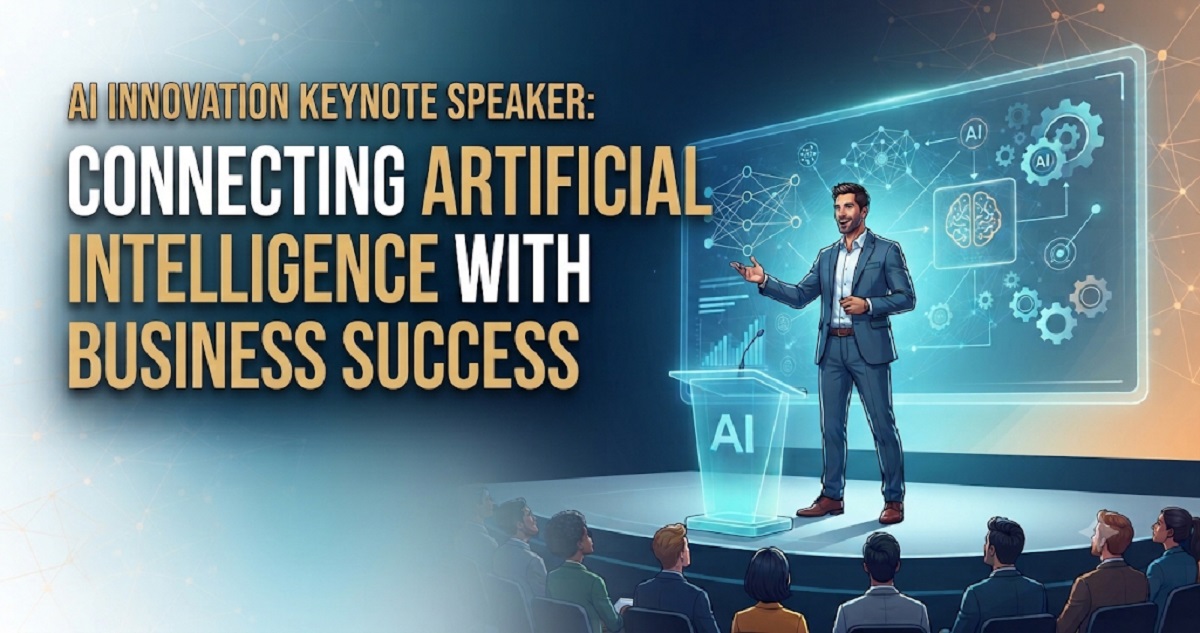


Integrating AI into business can be extremely beneficial. Intelligent automation, predictive analysis, and generative AI tools can increase efficiency, improve customer experience and enable new business opportunities. However, it is vital to have the correct strategy in place to ensure you are making the most out of AI.
An AI Innovation Keynote Speaker can help you develop this strategy. Listeners can understand how AI can help them achieve long term success within their business.
Understanding the Business Value of Artificial Intelligence
AI can greatly transform how business processes are executed. Along with improving data analysis, AI can give businesses greater insight into expectations from customers. Using automation, repetitive tasks can be reduced meaning employees can focus on creative tasks, strategic planning or building relationships with customers.
Using predictive analysis can give greater insights into patterns in data, consumer behaviour, and predictions for demand. This enables businesses to make more informed decisions. As a result, businesses can become more efficient and can create new products, services and models. With the right AI innovation keynote speech, people in the audience will understand how AI can do this. However, it is important to consider what real issues you are looking to solve within the business with AI.
Turning AI Innovation Into Practical Business Strategies
A common challenge faced by businesses using AI is translating AI innovations into meaningful benefits for the business. If companies don’t have a clear understanding of which issues they want AI to solve, they could simply be experimenting with tools without a clear purpose. It is key to have a strategic approach. Within your business, understand what your priorities are. Then, decide which areas within your business AI can improve. For example, improving processes, reducing costs, improving customer experience, or making better decisions.
Within your business, consider the value you expect to gain, data available, the requirements for AI, and risk involved in each initiative. Piloting manageable changes in AI can allow teams to see if they get the desired results, and improve where necessary. An AI Innovation Keynote Speaker can encourage leaders to think strategically. In addition, they will recognise that meaningful AI initiatives can directly benefit performance within the business.
Why Responsible AI and Leadership Matter
To successfully implement AI within organisations, you must carefully consider ethical concerns around data privacy, security, transparency, accountability and human oversight. Staff should be trained to understand how AI works, interpret its outputs and know when human decision making is required. Within leadership, it is important to clearly communicate the aims of AI initiatives and involve staff throughout. Creating trust within the organisation, along with promoting ongoing learning, can allow innovation and responsibility to be developed within the company effectively.
Preparing Businesses for the Future of AI
With AI becoming increasingly integrated across processes, and allowing businesses to personalise and become more flexible, businesses that regularly assess new technologies and how they can meet customer requirements may be well placed to adapt to market changes. To be successful in the long term, businesses must balance new tech capabilities, with human expertise, strong leadership and defined business goals.
Explore the Role of an AI Innovation Keynote Speaker
Businesses that plan conferences, corporate events, leadership meetings or innovation programs should think about an AI keynote speaker. The right speaker can spark ideas explain new technologies simply and give practical tips that people can use in their own teams.
Read the full blog here: AI Innovation Keynote Speaker: Bridging Artificial Intelligence and Business Success
Understand how strategically implementing AI in businesses can give businesses great opportunities in the future.
Conclusion
Implementing AI in business can allow innovation, increased efficiencies and sustainable growth. However, to truly make a difference in business, a clear business strategy, responsible implementation and strong leadership are important. An AI Innovation Keynote Speaker can allow businesses to understand new technologies and identify practical uses for them. They can also allow staff to be prepared to move forward in an AI-driven future. By aligning AI with business goals, companies can take AI beyond just experimentation, and develop meaningful innovation strategies. To understand how AI innovation can create an effective link between potential and business success, read our full blog.
Frequently Asked Questions (FAQs)
1. What is an AI Innovation Keynote Speaker?
An AI Innovation Keynote Speaker is an expert who helps business leaders and professionals understand artificial intelligence, emerging technologies, and their practical applications. They explain how organizations can use AI to improve efficiency, encourage innovation, and achieve business goals.
2. How can AI innovation contribute to business success?
AI innovation can support business success through intelligent automation, predictive analysis, and generative AI applications. These technologies can reduce repetitive tasks, improve customer experiences, support informed decision-making, and create opportunities for new products and services.
3. Why do businesses need an AI innovation strategy?
An AI innovation strategy helps organizations identify the business challenges they want to solve with artificial intelligence. It allows companies to prioritize initiatives, evaluate available data, understand implementation requirements, and focus on solutions that provide meaningful business value.
4. How can businesses turn AI innovation into practical results?
Businesses can begin by identifying areas where AI can improve processes, reduce costs, enhance customer experiences, or support better decisions. They can then evaluate potential benefits and risks and introduce manageable pilot projects to measure results before expanding implementation.
5. Why is responsible AI important for organizations?
Responsible AI helps organizations address important considerations such as data privacy, security, transparency, accountability, and human oversight. These practices help build trust and ensure that AI technologies are used carefully and appropriately.
6. What role does leadership play in successful AI adoption?
Leadership helps establish clear objectives for AI initiatives, communicate their purpose, and involve employees throughout the implementation process. Strong leadership also encourages employee training, continuous learning, and collaboration between people and AI technologies.
7. How can AI prepare businesses for the future?
AI can help businesses become more efficient, flexible, and responsive to customer requirements. Organizations that regularly assess emerging technologies and align them with business goals may be better prepared to adapt to changing market conditions.
8. Why should organizations consider an AI keynote speaker for corporate events?
An AI keynote speaker can introduce audiences to emerging technologies, explain complex AI concepts in accessible language, and share practical ideas for business applications. Such presentations can encourage fresh thinking during conferences, corporate events, leadership meetings, and innovation programs.
9. What should businesses consider before implementing AI?
Businesses should consider their strategic priorities, expected benefits, available data, implementation requirements, and potential risks. They should also provide employee training and maintain appropriate human oversight to support responsible AI adoption.
10. How can organizations connect AI innovation with long-term business growth?
Organizations can connect AI innovation with long-term growth by aligning technology investments with clear business objectives. Combining practical AI applications, responsible implementation, strong leadership, and human expertise can help companies develop meaningful and sustainable innovation strategies.



