
Your vehicle depends on regular care to remain safe, reliable, and ready for everyday journeys. Ignoring small maintenance issues can lead to expensive repairs, unexpected breakdowns, and reduced vehicle performance. Whether you use a car for daily commuting, family travel, or business activities, understanding basic maintenance requirements helps you make better decisions about vehicle care. Regular inspections also allow mechanics to identify problems before they affect important vehicle components. Knowing when to schedule a Vehicle Maintenance Service can help owners protect their vehicles and manage long-term maintenance expenses.
What Is a Vehicle Maintenance Service?
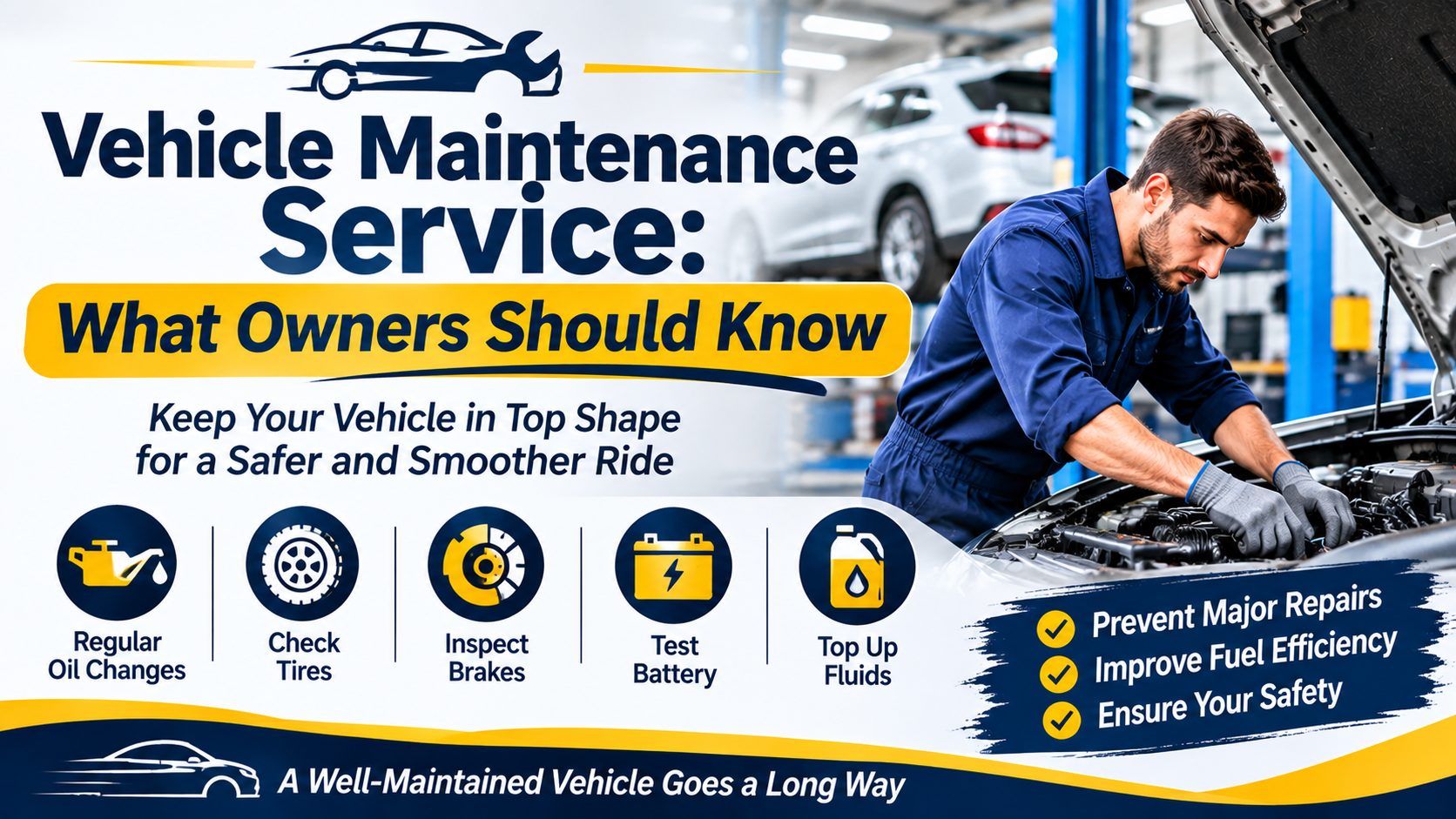
A vehicle maintenance service involves inspecting, cleaning, adjusting, and replacing different vehicle components to keep them working properly. It includes routine tasks such as changing engine oil, checking tire pressure, inspecting brakes, testing the battery, and monitoring essential fluids.
Maintenance requirements depend on the vehicle’s make, model, age, mileage, and driving conditions. Manufacturers provide recommended service schedules in the owner’s manual, which should be used as the main reference for maintenance intervals.
Regular servicing helps maintain vehicle performance and gives owners a better understanding of their vehicle’s condition.
1. Why Is Regular Vehicle Maintenance Important?
Vehicle maintenance is not only about keeping a car looking good. It also affects safety, reliability, and operating costs.
Prevents Unexpected Breakdowns
Small mechanical problems can become serious when ignored. For example, worn belts, damaged hoses, or low fluid levels may affect engine performance and lead to additional repairs.
Regular inspections help identify these issues before they cause major problems.
Improves Road Safety
Brakes, tires, steering systems, and lights play important roles in road safety. Checking these components regularly helps ensure that the vehicle responds properly during everyday driving.
Helps Control Repair Expenses
Scheduled servicing can help prevent some expensive mechanical failures. Replacing worn components at the appropriate time is often more practical than waiting until they stop working.
Supports Better Fuel Efficiency
Incorrect tire pressure, neglected filters, and certain engine problems can affect fuel consumption. Maintaining the vehicle according to manufacturer recommendations helps its systems operate as intended.
2. Essential Vehicle Maintenance Services Every Owner Should Know
Understanding the main maintenance tasks helps owners communicate more effectively with mechanics and recognize when their vehicles need attention.
Engine Oil and Filter Replacement
Engine oil lubricates moving engine components and helps control friction and heat. Over time, oil becomes contaminated and loses some of its effectiveness.
Changing engine oil and filters according to the manufacturer’s recommended schedule helps protect engine components and maintain proper performance.
Tire Inspection and Maintenance
Tires affect braking, handling, and vehicle stability. Owners should regularly check tire pressure, tread depth, and visible damage.
The National Highway Traffic Safety Administration recommends checking tire pressure at least once a month and before long road trips. It also advises checking tires when they are cold for more accurate readings.
Brake System Inspection
Brakes are among the most important safety components. Brake pads, rotors, discs, and brake fluid should be inspected according to the vehicle’s maintenance schedule.
If you notice unusual sounds, vibrations, or changes in braking performance, arrange a professional inspection.
Battery and Electrical System Checks
A weak battery can make starting the vehicle difficult. Battery terminals should be checked for corrosion, while the charging system and electrical connections should be inspected when necessary.
Headlights, indicators, brake lights, and dashboard warning systems should also work properly.
Fluid Level Checks
Vehicles use different fluids to support important mechanical systems. These include engine oil, coolant, brake fluid, transmission fluid, and windshield washer fluid.
Checking their levels and condition helps identify leaks and maintenance requirements. Always follow the owner’s manual when checking or replacing fluids.
3. How Often Should You Service Your Vehicle?
There is no single maintenance schedule that works for every vehicle. Service intervals depend on manufacturer recommendations, mileage, vehicle age, and driving conditions.
A practical maintenance routine can include:
- Weekly: Look for visible tire damage, fluid leaks, and unusual changes.
- Monthly: Check tire pressure, lights, and visible battery condition.
- At scheduled service intervals: Replace engine oil and inspect filters, brakes, and other components as recommended.
- Before long trips: Check tires, lights, fluids, wipers, and emergency equipment.
These are general checks rather than replacements for professional servicing. Always follow the maintenance schedule provided by your vehicle manufacturer.
4. Choose a Reliable Vehicle Maintenance Provider
Selecting the right service provider is important because maintenance quality directly affects vehicle reliability.
Before choosing a workshop, consider the following factors:
Technician Experience
Look for mechanics who have experience with your vehicle’s make and model. Modern vehicles often require specialized diagnostic equipment and technical knowledge.
Transparent Pricing
Ask for a clear estimate before approving repairs. The quotation should explain labor charges, replacement parts, inspection fees, and any additional costs.
Quality Replacement Parts
Ask whether the workshop uses manufacturer-approved or suitable replacement parts. Incorrect components can affect vehicle performance and may create additional problems.
Service History
Choose a provider that records completed maintenance and explains any repairs that may be needed in the future.
For additional business information and online resources, you can also explore bayanatss as part of your wider research.
5. Warning Signs Your Vehicle Needs Maintenance
Your vehicle may show several signs when something needs attention. Recognizing these warnings early can help prevent further damage.
Dashboard Warning Lights
Warning lights may indicate problems involving the engine, battery, brakes, tire pressure, or other systems. Check the owner’s manual to understand what each warning means.
Unusual Sounds
Grinding, knocking, squealing, or clicking sounds may indicate mechanical problems. Their source should be checked by a qualified technician.
Fluid Leaks
Puddles or unusual stains under a parked vehicle may indicate an oil, coolant, or other fluid leak. Identify the source before continuing normal use.
Changes in Vehicle Performance
Difficulty starting, unusual vibrations, reduced braking performance, or changes in steering response should not be ignored.
6. Common Vehicle Maintenance Mistakes to Avoid
Many vehicle problems develop because owners delay simple maintenance tasks. Avoid these common mistakes:
- Ignoring dashboard warning lights.
- Delaying scheduled oil changes.
- Driving with incorrect tire pressure.
- Using unsuitable replacement parts.
- Ignoring unusual sounds and fluid leaks.
- Missing recommended inspections.
- Keeping incomplete maintenance records.
Following a consistent maintenance routine makes it easier to identify problems and keep track of completed repairs.
Conclusion
Vehicle maintenance is an important responsibility for every vehicle owner. Regular inspections, timely servicing, and quality repairs help maintain performance, support road safety, and reduce avoidable expenses.
Understanding essential maintenance tasks also helps owners communicate with mechanics and make informed decisions about repairs. By following the manufacturer’s service schedule and addressing warning signs early, you can keep your vehicle in better condition and support its long-term reliability.
Frequently Asked Questions
1. What is included in a vehicle maintenance service?
It generally includes oil changes, filter replacement, tire inspections, brake checks, battery testing, and fluid inspections.
2. How often should I get my vehicle serviced?
Follow the manufacturer’s recommended maintenance schedule. Intervals vary depending on vehicle type, mileage, and driving conditions.
3. Why is regular vehicle maintenance necessary?
It helps maintain vehicle performance, improve safety, identify mechanical problems, and reduce unexpected repair expenses.
4. Can regular maintenance improve fuel efficiency?
Yes. Proper tire pressure, suitable engine oil, clean filters, and well-maintained components can support efficient vehicle operation.
5. What are the signs that my vehicle needs servicing?
Warning lights, unusual noises, fluid leaks, vibrations, starting problems, and reduced braking performance may indicate maintenance needs.