Physical Address
304 North Cardinal St.
Dorchester Center, MA 02124
Physical Address
304 North Cardinal St.
Dorchester Center, MA 02124

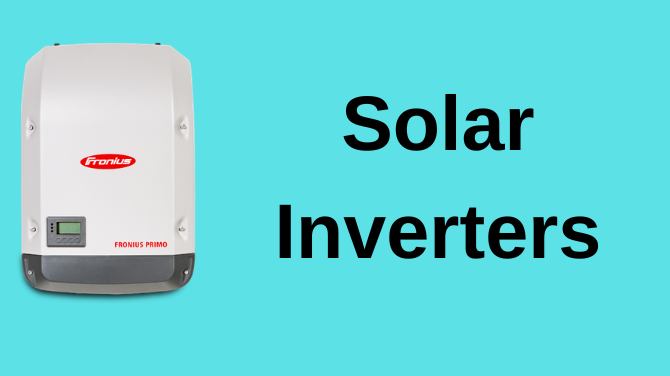
A solar inverters is the central engine of your renewable energy system, designed to convert the direct current (DC) electricity generated by your solar panels into usable alternating current (AC) for your household appliances and the grid. For safety, compliance, and government rebate eligibility in Australia, including local suburbs like Berwick, your installation must be completed by a Solar Accreditation Australia (SAA) accredited professional. Choosing the correct string, micro, or hybrid inverter dictates your system’s long-term efficiency, grid-export capabilities, and future battery-readiness.
To understand how different inverter technologies impact your long-term savings, use this interactive ROI explorer before diving into the technical details below:
While solar panels often get all the glory, solar inverters are the true unsung heroes of your renewable energy setup. Think of the inverter as the “brain” of your system. Solar panel generate raw DC power when exposed to sunlight, but your household appliances, factory equipment, and the national electricity grid run on AC power. Without a high-quality inverter, that solar energy is completely useless.
Beyond simple power conversion, modern solar inverters handle a complex array of tasks:
At The Solar King, we often see properties with premium panels severely underperforming simply because they were paired with a cheap, inefficient, or incorrectly sized inverter. Getting this component right is non-negotiable for long-term efficiency.
The Australian market primarily features three distinct inverter architectures. Your roof layout, budget, and future energy plans will dictate which technology is the smartest investment.
String inverters are the most common and cost-effective option. Your solar panels are wired together in a “string,” and the combined DC power is sent down to a single central inverter mounted on your wall.
A hybrid inverter does everything a standard string inverter does, but it includes a built-in battery management system and a dedicated DC battery port. For most new Australian solar installations today, a hybrid inverter is the recommended starting point.
Instead of one central box, microinverter systems feature tiny individual inverters mounted underneath each solar panel on your roof.
|
Feature |
String Inverter |
Hybrid Inverter |
Microinverter |
|
Upfront Cost |
Low |
Medium |
High |
|
Shade Tolerance |
Poor |
Poor to Moderate |
Excellent |
|
Direct Battery Ready |
No (Requires separate AC inverter) |
Yes (DC-Coupled) |
No (Requires AC-Coupled battery) |
|
Typical Brands |
Sungrow, GoodWe, Fronius |
Sungrow, Sigenergy, Fox ESS |
Enphase |
When you work with The Solar King, you aren’t just buying hardware off a shelf; you are investing in a heavily customized energy solution. We combine deep local industry expertise with a rigorous, data-driven approach to system design.
We prioritize solutions backed by proven case studies and our extensive track record of real-world projects across the region. We handle the strict compliance requirements, navigate the local state initiatives, and guarantee that your property remains safe, your grid connection remains active, and your investment yields maximum returns.
While solar panels often come with multi-decade performance warranties, standard string inverters typically last over a decade. Microinverters tend to have longer warranties because they process less power individually and are isolated from central heat build-up.
Yes, but it requires “AC-coupling.” This means installing a separate “battery inverter” alongside your existing string inverter. This is why we heavily recommend installing a hybrid inverter from day one if you plan on adding a battery, as it allows for a more efficient, direct “DC-coupled” connection.
By law, standard grid-tied string inverters must shut down immediately during a blackout (anti-islanding) to prevent electrocuting network repair crews. If you want backup power during a grid failure, you need a hybrid inverter paired with a battery and a correctly wired backup circuit.