Physical Address
304 North Cardinal St.
Dorchester Center, MA 02124
Physical Address
304 North Cardinal St.
Dorchester Center, MA 02124

Home healthcare has become an important option for families who want their loved ones to receive dependable support without leaving the comfort of home. Elderly people, patients recovering from illness or surgery, individuals with limited mobility, and those who need assistance with everyday activities may benefit from a well-planned home care arrangement.
Professional home healthcare focuses on the individual needs of each patient. Instead of following a fixed routine for everyone, care can be organized around the patient’s daily schedule, mobility, personal preferences, and level of assistance required.
Home healthcare can include a range of supportive services designed to make everyday living easier for patients and their families. Depending on the patient’s requirements, assistance may include personal hygiene, grooming, mobility support, feeding assistance, companionship, and routine caregiving.
The main advantage of receiving support at home is that patients can remain in a familiar environment. Their family members can also stay closely involved while receiving additional help with day-to-day responsibilities.
Ageing can gradually make some daily activities more difficult. A senior citizen may remain independent in many areas but still require assistance with bathing, dressing, walking, meals, or household routines.
Home caregiving can provide practical assistance while allowing elderly people to remain involved in activities they can safely manage. This balance can help maintain dignity, confidence, and a sense of independence.
Companionship can also be valuable for seniors who spend most of their time at home. Conversation, social interaction, and a familiar daily routine can make home life more comfortable and engaging.
After hospitalization or surgery, patients may temporarily experience weakness, tiredness, or difficulty moving around. Even simple activities such as getting dressed, preparing meals, walking, or maintaining personal hygiene can become challenging during recovery.
A caregiver can provide practical support with these non-clinical activities while the patient follows the treatment and recovery instructions provided by their healthcare professional.
Families should clearly communicate the patient’s routine and any relevant professional instructions before home care begins. Any medical treatment or clinical procedure should be performed only by an appropriately qualified healthcare professional.
Bedridden patients may require consistent assistance throughout their daily routine. Personal hygiene, feeding, positioning-related assistance, and general comfort can become important parts of everyday care.
A suitable caregiver can help with routine activities according to the agreed care plan. The home environment should also be kept clean, organized, and easy for the patient and caregiver to use.
Families should discuss the patient’s specific requirements in advance so that the caregiving arrangement is appropriate for the individual’s needs.
One of the biggest advantages of home care is continuity of the patient’s familiar environment. Patients can remain close to their family, personal belongings, and established routines.
Home care can also reduce the pressure on family members who have professional or household responsibilities. A caregiver can provide additional assistance while relatives continue to participate in important decisions and maintain regular contact with the patient.
No two patients have exactly the same requirements. A person recovering from surgery may need temporary mobility assistance, while an elderly individual may need long-term help with personal care and daily activities.
Personalized caregiving allows support to be adjusted according to the patient’s actual requirements. It can also encourage safe independence instead of unnecessarily taking over every activity.
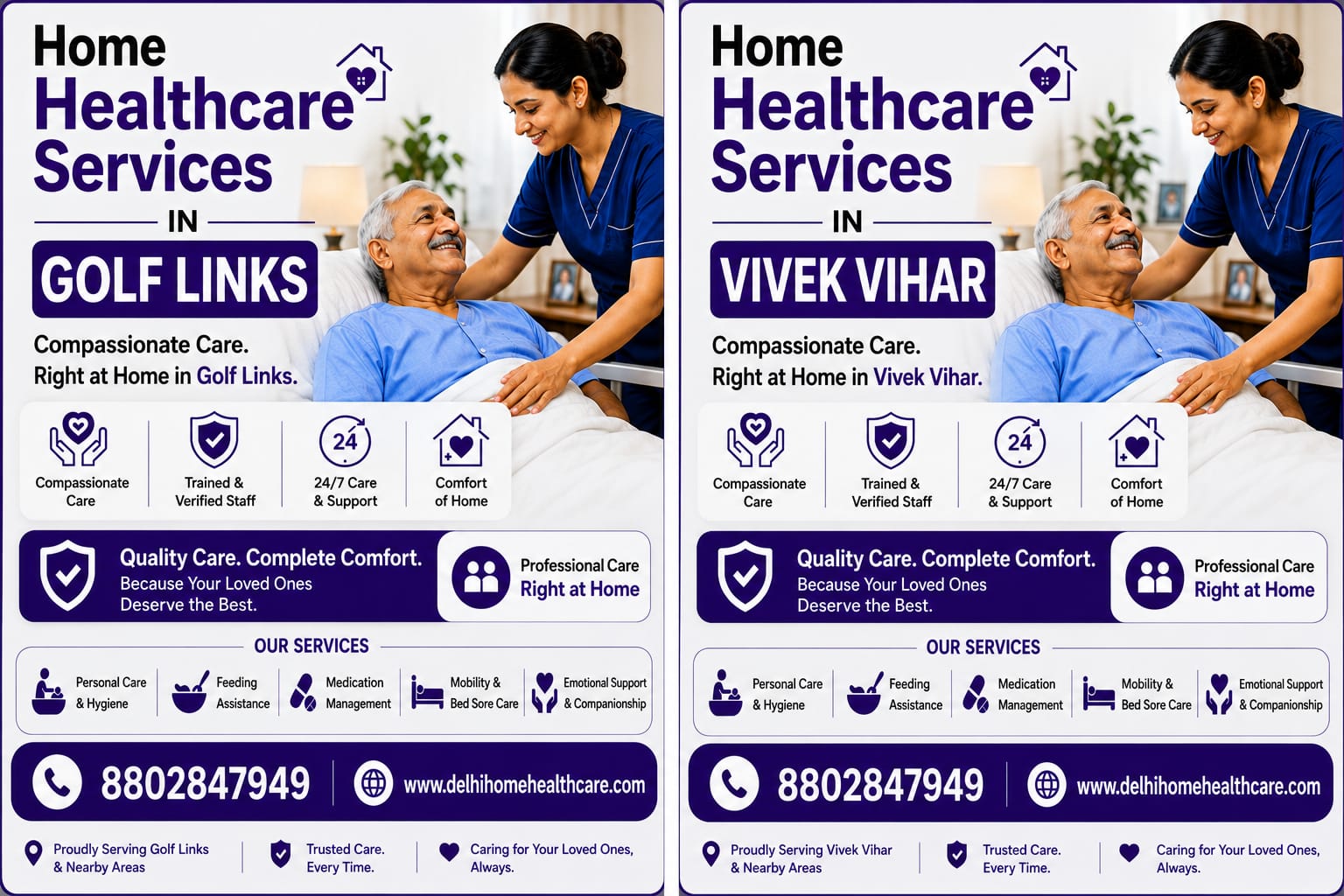
Families looking for dependable home-based support can explore Home healthcare services in Golf Links for assistance suited to elderly people, recovering patients, and individuals who need support with everyday activities.
Home-based caregiving can be especially convenient for families who want their loved ones to remain in their own surroundings while receiving regular assistance. The exact service requirements should be discussed according to the patient’s condition, routine, and level of independence.
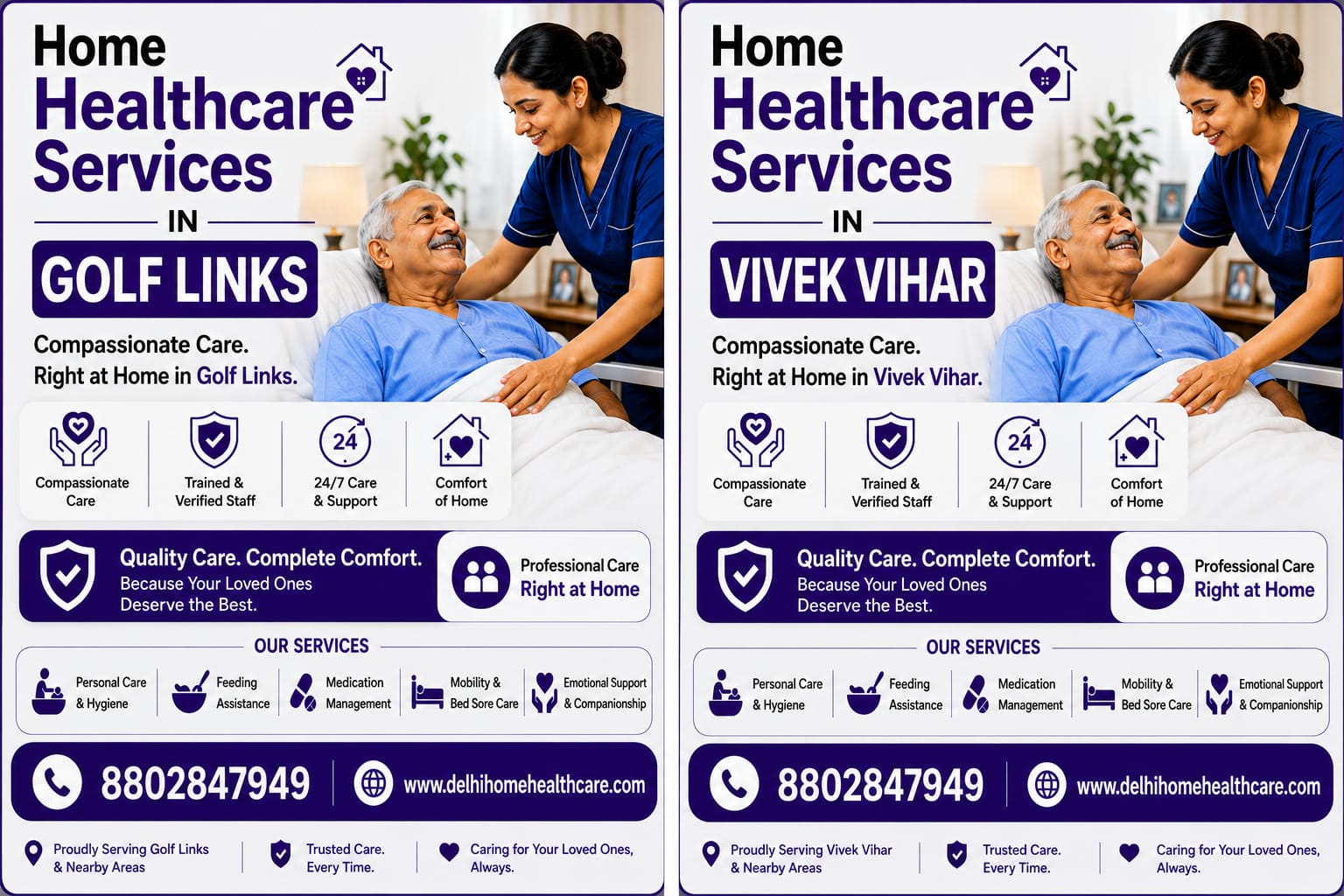
Residents searching for Home Healthcare Services in Vivek Vihar can consider personalized home support for elderly care, patient assistance, mobility needs, recovery support, and daily caregiving requirements.
A home caregiver can become an additional source of practical support for families when a patient needs help throughout the day or during specific hours. Care arrangements can be discussed according to the patient’s individual needs.
A safe and organized environment can make home caregiving easier. Families can keep walking areas clear, improve lighting, place frequently used belongings within easy reach, and organize the patient’s room according to their mobility.
Important healthcare instructions should also be kept accessible to the family and relevant caregivers. Clear communication can help everyone understand the patient’s routine and responsibilities.
Families should consider several factors before selecting a home healthcare provider. These may include the patient’s specific requirements, caregiver experience, service timings, communication process, flexibility, and overall reliability.
It is also important to clearly discuss which activities the caregiver will handle and which medical responsibilities require qualified healthcare professionals. Setting expectations in advance can help create a smoother caregiving experience.
Elderly people, recovering patients, individuals with limited mobility, bedridden patients, and people who need assistance with everyday activities may benefit from home-based support.
Yes. Home caregiving can provide assistance with personal care, mobility, meals, companionship, and daily routines according to the senior’s requirements.
It can provide practical assistance with everyday activities during recovery. The patient should continue following the treatment and recovery plan provided by their healthcare professional.
Depending on the provider and the patient’s requirements, caregiving may be arranged for specific hours or longer periods. The required schedule should be discussed before services begin.
Caregiver responsibilities depend on their qualifications and the agreed service. Medical diagnosis, treatment decisions, and clinical procedures should be handled by appropriately qualified healthcare professionals.
Home healthcare can provide valuable support for families caring for elderly people, recovering patients, bedridden individuals, and others who need assistance with daily living. A personalized approach allows patients to receive practical help while remaining connected to their familiar home environment.
Whether a family is exploring Home healthcare services in Golf Links or Home Healthcare Services in Vivek Vihar, the focus should remain on patient comfort, dignity, safety, clear communication, and appropriate support according to individual requirements.