Physical Address
304 North Cardinal St.
Dorchester Center, MA 02124
Physical Address
304 North Cardinal St.
Dorchester Center, MA 02124

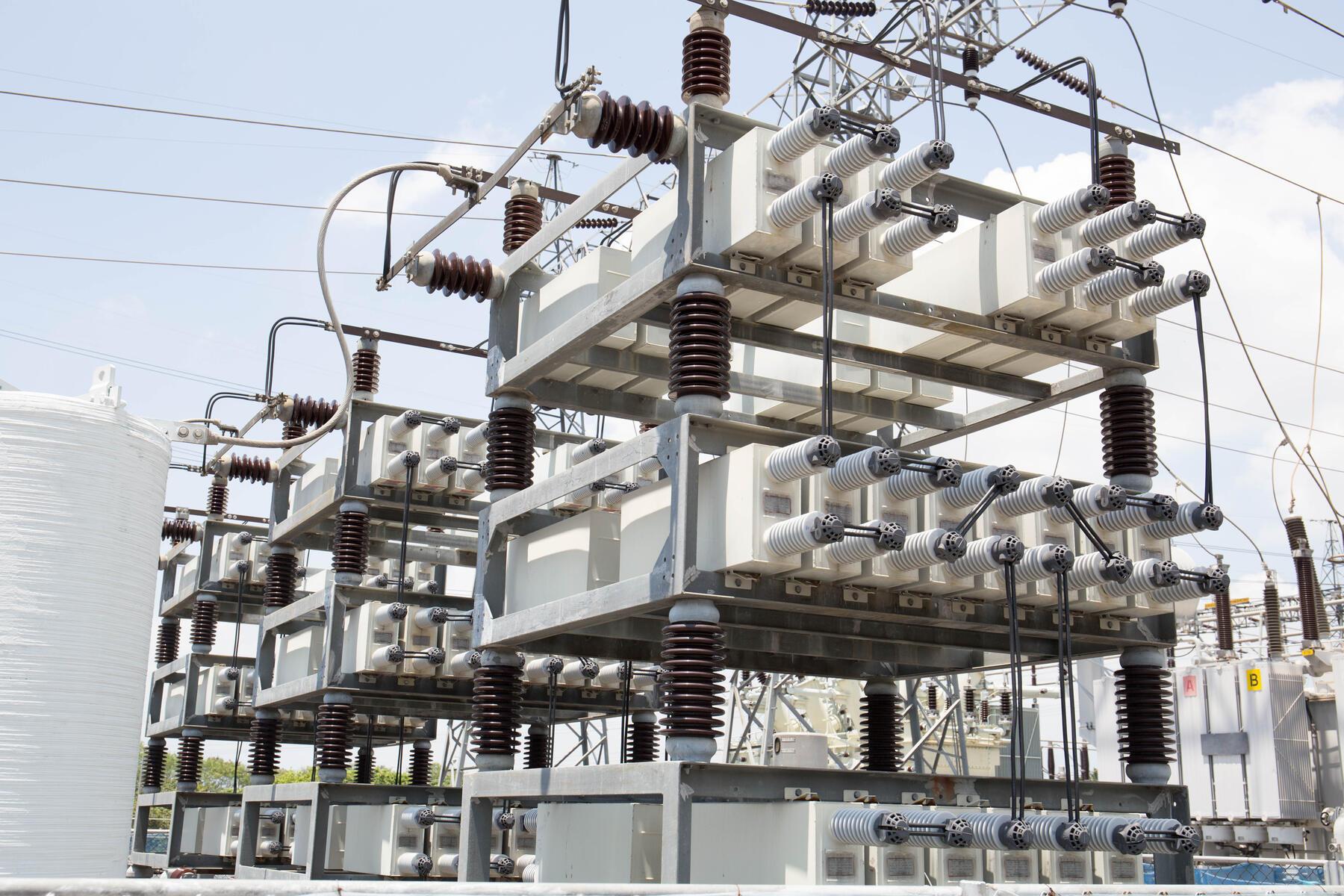
The High Voltage Capacitor market is evolving through advanced dielectric materials, compact designs, smart monitoring, improved thermal performance, and growing applications in renewable energy, HVDC systems, EV charging, data centers, and modern power infrastructure.
The High Voltage Capacitor market is undergoing steady technological and application-driven development as electricity networks become more complex. Increasing renewable power generation, electrification, high-power industrial equipment, electric mobility, data centers, and modern transmission infrastructure are creating stronger requirements for voltage regulation, reactive power compensation, filtering, and reliable energy management.
High voltage capacitors have traditionally been used in capacitor banks, substations, power factor correction systems, harmonic filters, and transmission equipment. Recent developments are expanding their role into advanced power electronics and high-efficiency electrical systems. Manufacturers are focusing on higher voltage capability, improved thermal performance, compact construction, longer operating life, lower losses, and better monitoring.
One of the most important developments in the High Voltage Capacitor market is the continued improvement of dielectric materials. Dielectrics directly influence a capacitor’s voltage withstand capability, energy density, temperature stability, and service life.
Modern film capacitors increasingly use advanced polypropylene and other engineered dielectric films that enable improved electrical performance while reducing physical size. Manufacturers are also working on dielectric structures that minimize losses and withstand demanding electrical stresses.
Research into polymer-based capacitor technologies is another area of development. Recent work on separatorless aluminum polymer capacitors has demonstrated potential for reducing equivalent series resistance while maintaining volumetric efficiency, particularly for high-frequency applications.
These developments are important because modern converters and power-electronic systems increasingly operate at higher switching frequencies and power densities.
Thermal management has become a central development area. Capacitors installed in industrial converters, renewable-energy equipment, traction systems, and power conversion equipment may experience substantial heat generated by electrical loading.
Newer designs are therefore being engineered to maintain electrical performance at higher operating temperatures. High-temperature dielectric materials, improved internal construction, optimized cooling, and better encapsulation techniques can increase reliability in demanding environments.
For example, recent high-performance DC-link capacitor developments have targeted operation at temperatures above conventional limits while supporting greater current density. Such advances demonstrate the broader industry movement toward capacitors that can operate reliably in compact, high-power electronic systems.
Space constraints are influencing capacitor development across industrial and transportation applications. Equipment manufacturers want smaller components without sacrificing capacitance, voltage rating, reliability, or thermal performance.
This requirement is particularly relevant to renewable-energy converters, electric transportation, industrial drives, charging infrastructure, and high-power semiconductor systems.
Manufacturers are responding with optimized winding structures, modular capacitor assemblies, improved dielectric utilization, and lower-inductance designs. Compact construction can help reduce the overall footprint of electrical equipment and simplify system integration.
The increasing use of silicon carbide and other advanced power semiconductors is reinforcing this trend. Faster switching creates demanding requirements for low parasitic inductance and strong high-frequency performance, encouraging capacitor manufacturers to redesign products around next-generation semiconductor architectures.
Another emerging direction is the integration of monitoring and diagnostic capabilities. Conventional capacitor installations generally depend on scheduled inspection and electrical measurements to identify deterioration. Modern systems are moving toward condition-based monitoring.
Sensors and digital monitoring technologies can help operators observe temperature, voltage, current, harmonic conditions, and other operating parameters. Data collected from capacitor banks can support early detection of abnormal behavior and potential component degradation.
Smart monitoring is particularly valuable for large substations and industrial facilities where unexpected capacitor failure can affect power quality or operational continuity. By identifying problems earlier, operators can plan maintenance instead of relying entirely on fixed replacement schedules.
Renewable energy integration is creating new opportunities for high voltage capacitor technologies. Solar and wind generation can introduce variable power flows and challenging voltage-control conditions, increasing the importance of reactive power management.
Capacitor banks and related compensation equipment can support voltage regulation and improve network performance. Transmission systems connected to large renewable projects may also require filtering and compensation solutions associated with high-voltage power conversion.
As renewable generation moves farther from major consumption centers, transmission networks require increasingly sophisticated voltage and power-quality management. This is encouraging continued development of capacitor technologies designed for utility-scale applications.
High-voltage direct-current infrastructure is another important development area. HVDC systems are increasingly relevant for long-distance transmission, interconnection projects, offshore renewable energy, and large-scale power transfer.
Such systems require specialized filtering and reactive power management equipment. Capacitors used in these applications must withstand significant electrical stress while delivering stable performance over long operating periods.
At the broader grid level, modernization programs are also increasing demand for reactive power compensation. The International Energy Agency has identified shunt capacitors as a mature technology for steady-state voltage control in feeders and substations, while newer grid technologies are being developed to complement their slower response characteristics.
This creates opportunities for manufacturers to combine conventional capacitor technology with faster electronic compensation and control systems.
Safety and environmental considerations are becoming more influential in product development. Manufacturers are exploring designs that reduce the risks associated with dielectric fluids, overheating, internal failures, and environmental exposure.
Self-healing technology remains important in film capacitor development. When localized dielectric breakdown occurs, the affected area can be isolated while allowing the component to continue functioning. This can improve operational reliability and reduce the likelihood of catastrophic failure.
New encapsulation methods and alternative insulation materials are also being considered for applications exposed to moisture, vibration, temperature variation, and harsh outdoor conditions.
Electric vehicle charging infrastructure is creating another application area. High-power charging systems place significant demands on electrical conversion equipment because they must manage large amounts of energy within short periods.
Capacitors perform important functions within power converters, DC-link circuits, filters, and power-conditioning equipment. As charging power increases, capacitor manufacturers must address higher current density, heat generation, switching frequency, and lifetime requirements.
This is encouraging development of capacitors with lower losses, improved thermal management, compact construction, and greater resistance to electrical stress.
Data center expansion is also influencing capacitor development. Artificial intelligence and high-performance computing facilities require dense electrical infrastructure and highly reliable power conversion systems.
Power quality becomes particularly important because sensitive computing equipment can be affected by voltage fluctuations, harmonics, and transient disturbances. Capacitors can contribute to power conditioning, filtering, voltage stabilization, and power factor management.
The development opportunity extends beyond conventional capacitor banks. Advanced capacitor technologies are increasingly being considered alongside sophisticated power-electronic architectures designed for high-density computing facilities.
The High Voltage Capacitor market is also seeing greater emphasis on application-specific engineering. Customers increasingly require products tailored to voltage class, frequency, temperature, environmental conditions, physical dimensions, current characteristics, and installation configuration.
Rather than relying solely on standardized products, manufacturers are developing modular and customized solutions for utilities, renewable projects, industrial plants, transportation systems, and specialized power-electronics applications.
This trend is increasing the importance of engineering capabilities, testing infrastructure, quality control, and lifecycle reliability.
Future developments in the High Voltage Capacitor market are likely to center on higher energy density, improved thermal performance, advanced dielectric materials, intelligent monitoring, compact designs, and longer service life.
The industry is moving toward capacitors that do more than simply store electrical energy or provide reactive power. They are becoming integrated components of increasingly sophisticated power-management systems.
As electricity demand rises and grids incorporate more renewable generation, energy storage, electric transportation, and high-power digital infrastructure, reliable voltage and power-quality management will become increasingly important. These structural changes should continue encouraging innovation across capacitor materials, manufacturing processes, monitoring technologies, and system integration.
The High Voltage Capacitor market is developing through a combination of material innovation, advanced manufacturing, digital monitoring, thermal improvements, and expanding applications. Renewable energy, HVDC transmission, electric mobility, industrial automation, and data centers are creating new technical requirements that conventional capacitor designs must address.
The next phase of development will likely favor products that deliver higher reliability in smaller packages while operating efficiently under demanding electrical and thermal conditions. Manufacturers that successfully combine advanced materials, intelligent monitoring, safety improvements, and application-specific engineering will be better positioned to serve the evolving requirements of modern power infrastructure.