Physical Address
304 North Cardinal St.
Dorchester Center, MA 02124
Physical Address
304 North Cardinal St.
Dorchester Center, MA 02124

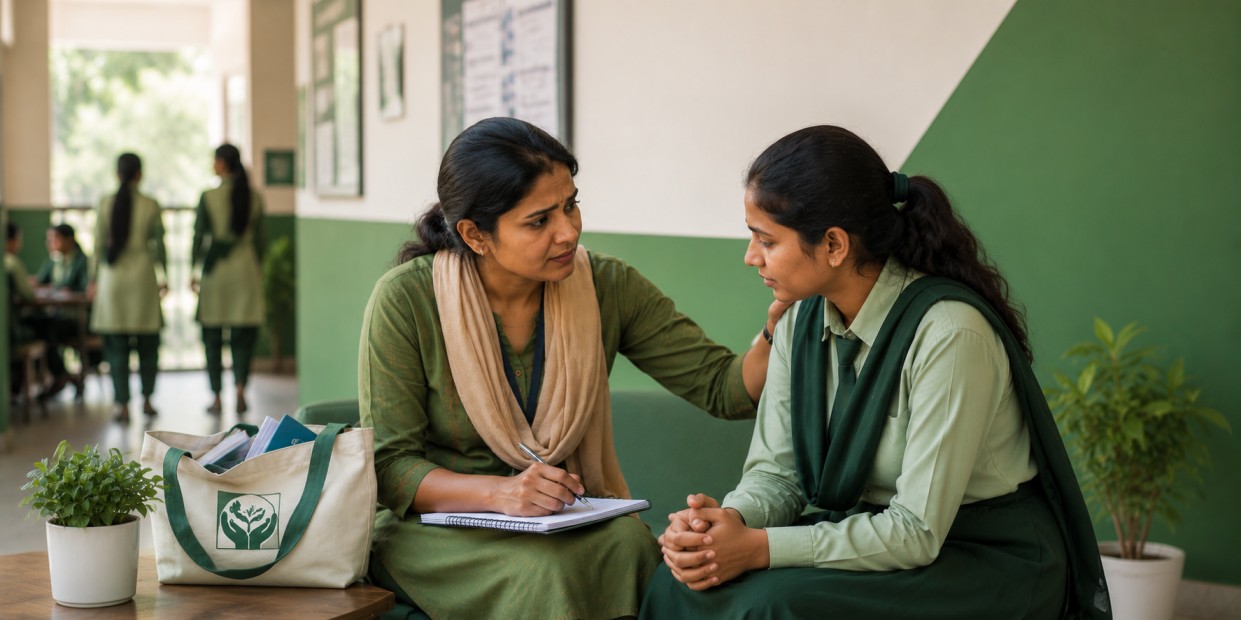
Raising a teenager anywhere in the world comes with challenges, but the specific Problems of Adolescence faced by Indian teenagers today come wrapped in pressures that many parents genuinely don’t see, or see but misread as something else entirely. A moody teenager isn’t always just being difficult. A quiet one isn’t always just shy.
Most Indian parents grew up in a very different world, without smartphones, without the same level of academic competition, without social media comparison happening every single hour of the day. That gap in experience means a lot of what teenagers are actually dealing with simply doesn’t register on their parents’ radar.
A teenager staying in their room a lot might get labelled as lazy or antisocial, when they could actually be dealing with anxiety or low mood. A drop in grades might get met with more pressure and stricter rules, when what’s actually needed is a conversation about what’s going on underneath.
Yes, exams have always been stressful in India. But today’s competition for limited seats in engineering, medical, and other sought after courses has intensified to a level many parents don’t fully grasp, especially if they didn’t personally go through something similar.
Teenagers today are constantly seeing curated, filtered versions of their peers’ lives. This creates a kind of comparison and self doubt that simply didn’t exist in the same way a generation ago. Parents who don’t spend much time online themselves often underestimate how heavy this weighs on a teenager’s mind.
Adolescence is naturally a time of figuring out who you are. Add in questions around individuality within a culture that often emphasises family expectation and conformity, and many Indian teenagers quietly wrestle with feeling caught between who they are and who they’re expected to be.
This affects teenagers of all genders, though it often gets discussed mainly around girls. Comments from relatives about weight or appearance, common at Indian family gatherings, can leave a much deeper mark than most adults realise.
These often get mistaken for typical teenage moodiness. But when low mood, irritability, or withdrawal lasts for weeks rather than days, it’s worth looking closer rather than assuming it will pass on its own.
Parents are busy, and many were raised in households where feelings simply weren’t discussed openly. There’s also a common belief that talking about problems makes them worse, so difficult topics get avoided altogether. And in many families, there’s still a strong instinct to compare a struggling teenager to a “well behaved” cousin or sibling, which usually shuts down honest conversation rather than opening it up.
Teenagers don’t need parents to have all the answers. They mostly need to feel heard without immediately being told they’re overreacting or being dramatic. That shift alone, from correcting to listening, can make an enormous difference in how a struggling teenager experiences their own home.
The Problems of Adolescence today look different from what most Indian parents themselves experienced growing up. Recognising that gap honestly is often the first, most important step toward genuinely helping.