

Capacitors are fundamental components in modern electronic systems, widely used in everything from simple circuits to complex industrial equipment. Their ability to store and release electrical energy makes them indispensable in power management, signal processing, and communication technologies. Whether you are an electronics beginner or an experienced engineer, understanding how capacitors work and where they are used is essential for designing efficient and reliable systems.
What Is a Capacitor?
Basic Definition → A passive component that stores electrical energy
A capacitor is a passive electronic component that stores electrical energy in the form of an electric field. Unlike active components such as transistors, capacitors do not amplify signals but instead manage energy flow within a circuit. They are crucial for stabilizing voltage, filtering signals, and supporting energy transfer in both analog and digital systems.
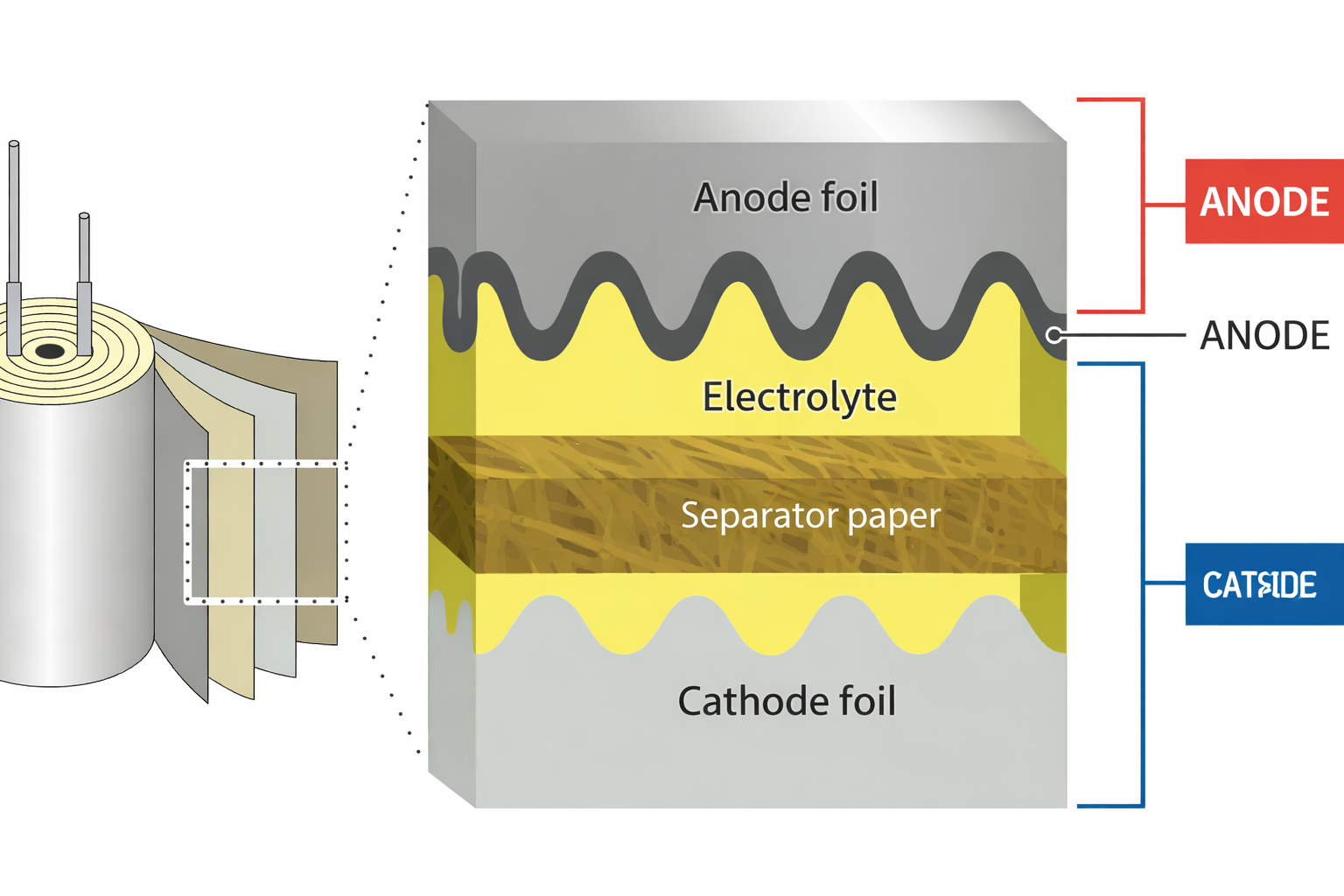
Structure → Two conductive plates + dielectric material
A typical capacitor consists of two conductive plates separated by a dielectric material such as ceramic, plastic, or electrolyte. The dielectric plays a key role in determining the capacitor's performance by influencing its capacitance, voltage rating, and efficiency. Different dielectric materials are chosen based on the application requirements, such as high frequency, high temperature, or high capacitance.
Working Principle → Charge accumulation and release
When a voltage is applied across the plates, positive and negative charges accumulate on opposite sides, creating an electric field. This stored energy can be released when the circuit requires it, enabling capacitors to smooth voltage fluctuations, supply short bursts of power, and filter unwanted signals. This charge-discharge cycle is what makes capacitors essential in timing circuits and power regulation.
Capacitance and Electrical Characteristics
Capacitance → Measured in Farads (F)
Capacitance is the primary property of a capacitor and represents its ability to store electric charge. It is measured in farads (F), although most practical capacitors are rated in microfarads (µF), nanofarads (nF), or picofarads (pF). The higher the capacitance, the more charge the capacitor can store at a given voltage.
Key Factors → Plate area / distance / dielectric permittivity
Several physical factors determine capacitance. Increasing the plate area allows more charge storage, while decreasing the distance between plates enhances the electric field strength. Additionally, materials with higher dielectric permittivity significantly improve capacitance, which is why advanced materials are used in modern capacitor design.
Voltage Rating → Maximum safe operating voltage
The voltage rating defines the maximum voltage a capacitor can safely handle. Exceeding this limit can cause dielectric breakdown, leading to failure or even safety hazards such as leakage or explosion. Choosing the correct voltage rating is critical in circuit design to ensure long-term reliability and performance.
Types of Capacitors
Ceramic Capacitor → Small size, low cost, high-frequency use
Ceramic capacitors are among the most widely used types due to their compact size, affordability, and excellent high-frequency performance. They are commonly found in RF circuits, microcontrollers, and digital systems, where they help filter noise and stabilize voltage. Their non-polarized nature also makes them easy to use in various circuit configurations.
Electrolytic Capacitor → High capacitance, polarized, power filtering
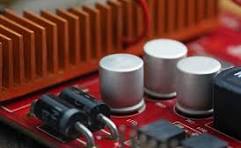
Electrolytic capacitors provide much higher capacitance values compared to ceramic types, making them ideal for power supply applications. They are polarized, meaning correct installation is essential to avoid damage. These capacitors are widely used for smoothing rectified DC signals, reducing ripple voltage, and supporting energy storage in power electronics.
Tantalum Capacitor → Compact, stable, higher cost
Tantalum capacitors offer a balance between size and performance, providing stable capacitance in a relatively small package. They are often used in compact electronic devices such as smartphones and medical equipment. Although more expensive, their reliability and consistency under varying conditions make them valuable in high-performance applications.
Applications of Capacitors
Power Supply → Filtering and voltage stabilization
In power supply circuits, capacitors are used to smooth out voltage fluctuations and reduce ripple after AC-to-DC conversion. They help maintain a stable output voltage, ensuring that sensitive electronic components receive consistent power. This is especially important in devices like computers, industrial equipment, and embedded systems.
Signal Processing → Coupling and noise filtering
Capacitors play a key role in signal processing by allowing AC signals to pass while blocking DC components. This makes them essential for coupling and decoupling circuits. Additionally, they filter out unwanted noise, improving signal clarity in audio systems, communication devices, and instrumentation.
Communication Systems → Frequency filtering and impedance matching
In communication systems, capacitors are used in filters to separate different frequency bands and ensure efficient signal transmission. They are also critical in impedance matching, which maximizes power transfer between components. This is particularly important in RF circuits, antennas, and wireless communication technologies.
Consumer Electronics → Smartphones, TVs, and embedded systems
Capacitors are found in nearly all consumer electronics, including smartphones, televisions, laptops, and gaming devices. They support stable operation, reduce interference, and enhance performance. Without capacitors, modern electronics would suffer from instability and poor signal quality.
Renewable Energy → Energy storage and grid stabilization
In renewable energy systems such as solar and wind power, capacitors help manage fluctuating energy output. They store excess energy and release it when needed, improving grid stability and efficiency. This makes them essential in modern energy infrastructure and smart grid technologies.
Key Performance Parameters
ESR → Equivalent Series Resistance
Equivalent Series Resistance (ESR) represents internal resistance within a capacitor. Lower ESR values result in higher efficiency and reduced heat generation, which is crucial in power electronics and high-frequency applications. High ESR can lead to energy loss and reduced performance.
ESL → Equivalent Series Inductance
Equivalent Series Inductance (ESL) affects how a capacitor behaves at high frequencies. Lower ESL is desirable in RF and high-speed circuits, where inductive effects can distort signals. Minimizing ESL ensures better performance in modern high-frequency designs.
Frequency Performance → Stability under high-speed signals
Capacitors must maintain stable performance across different frequencies. High-quality capacitors are designed to operate efficiently in high-speed circuits, ensuring minimal signal distortion and power loss. This is particularly important in communication systems and advanced computing devices.
Future Trends in Capacitor Technology
High Energy Density → Potential battery alternatives
Research into high-energy-density capacitors is opening the possibility of replacing batteries in certain applications. These advanced capacitors can charge and discharge rapidly, making them ideal for electric vehicles and high-performance energy systems.
Advanced Materials → High permittivity dielectrics
New dielectric materials with higher permittivity and lower losses are being developed to improve capacitor efficiency. These materials enable smaller, more powerful capacitors that meet the demands of modern electronics.
Miniaturization → Smaller size, higher performance
As electronic devices become more compact, capacitors must also shrink in size while maintaining performance. Advances in manufacturing and materials are enabling ultra-small capacitors with high reliability and efficiency.
Industry Challenges
Environmental Regulations → Eco-friendly manufacturing
Manufacturers must comply with strict environmental regulations, including restrictions on hazardous materials and requirements for sustainable production processes. This adds complexity and cost to capacitor manufacturing.
Cost Optimization → Reducing production expenses
Balancing performance with cost remains a major challenge. Companies are continuously seeking ways to optimize production processes while maintaining high quality and reliability.
High Performance Demand → Smaller and more powerful components
With the rise of technologies such as electric vehicles, AI, and IoT, there is increasing demand for capacitors that offer higher performance in smaller packages. Meeting these requirements requires ongoing innovation and investment in research and development.



kin games 4 d
yes.