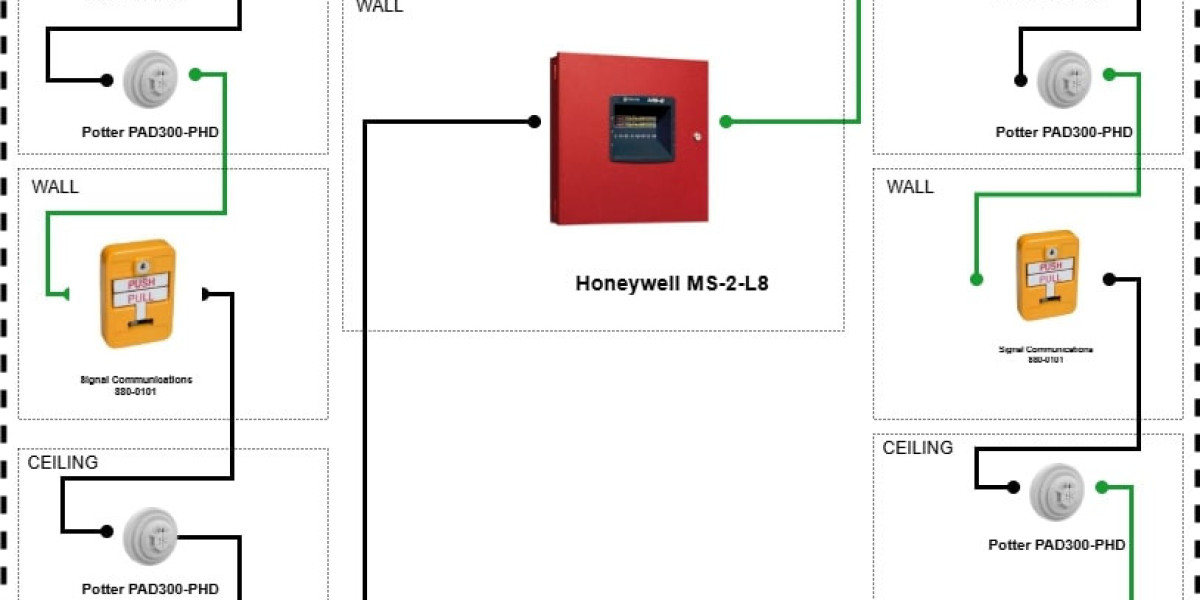

Designing fire alarm systems is a critical aspect of building safety and compliance. Engineers, designers, and facility managers rely on advanced software to create layouts, map circuits, validate code compliance, and streamline project workflows. Today, the choice between cloud-based and on-premise solutions is a key decision that affects collaboration, efficiency, and overall project success. Understanding the differences between these approaches can help organizations select the most suitable option for their workflow.
In this blog, we explore the pros and cons of cloud and on-premise fire alarm design solutions, and how a Fire Alarm Design Software Comparison can guide your decision-making process.
Understanding Cloud and On-Premise Fire Alarm Design Software
Cloud-Based Fire Alarm Design Software operates entirely over the internet. All design files, device libraries, and project data are stored on remote servers, accessible through a web browser or dedicated application. Users can collaborate in real time, access the latest project data, and benefit from automatic updates and backups.
On-Premise Fire Alarm Design Software is installed locally on individual computers or internal servers. Project files are stored within the organization’s infrastructure, and collaboration often relies on file sharing or local networks. Updates, backups, and maintenance are managed internally by the IT team.
Both approaches have unique benefits and limitations, and the right choice depends on project requirements, team structure, and organizational priorities.
Advantages of Cloud-Based Fire Alarm Design Software
Real-Time Collaboration
Cloud platforms enable multiple users to work on the same project simultaneously. Designers, engineers, and contractors can view changes instantly, reducing errors caused by outdated versions.Remote Accessibility
Cloud-based software can be accessed from anywhere using a secure internet connection. This is ideal for multi-site projects, remote engineers, or consultants who need to review designs without traveling.Automatic Updates and Maintenance
Software updates, patches, and backups are handled by the provider, ensuring users always have access to the latest features and security improvements.Scalability
Cloud platforms can easily accommodate projects of any size, from small residential buildings to large industrial complexes, without additional hardware investments.Cost Efficiency
Subscription-based pricing models reduce upfront costs, and organizations do not need to invest in dedicated servers or extensive IT support.
Advantages of On-Premise Fire Alarm Design Software
Data Control and Security
On-premise solutions allow organizations to retain full control over their data. This is particularly important for projects with sensitive information or strict internal security policies.Offline Access
On-premise software does not require an internet connection, ensuring uninterrupted work even in areas with limited connectivity.Customizability
Organizations can customize on-premise installations to integrate with other internal systems, configure security protocols, or implement proprietary workflows.Performance
Locally installed software can take full advantage of hardware capabilities, which can be important for complex designs, large project files, or 3D visualizations.One-Time Licensing
Some on-premise solutions offer perpetual licenses, which may be cost-effective for organizations with long-term project needs.
Challenges and Considerations
Both cloud and on-premise fire alarm design solutions come with potential challenges:
Cloud-Based Challenges
Dependence on internet connectivity can impact productivity during outages.
Data is stored off-site, raising concerns about security and compliance for some organizations.
Subscription fees may accumulate over time.
On-Premise Challenges
Requires IT resources for installation, maintenance, and updates.
Collaboration is less seamless, often requiring manual file sharing or VPN access.
Scaling for larger projects may require additional hardware investment.
How a Fire Alarm Design Software Comparison Helps
A Fire Alarm Design Software Comparison allows organizations to evaluate features, costs, performance, and usability across different platforms. Key factors to consider include:
Collaboration Features – Does the software support real-time editing and communication among multiple team members?
Accessibility – Can users access the platform remotely or only on-site?
Integration – Does it integrate with CAD, BIM, IoT devices, or other building management systems?
Compliance Tools – Does it provide automated checks for NFPA, BS, and local codes?
Scalability – Can the software handle large projects or multiple simultaneous projects efficiently?
Cost Structure – What is the total cost of ownership, including subscriptions, hardware, and IT resources?
Comparing these factors helps organizations select the solution that aligns with their workflow, team size, project complexity, and budget.
When Cloud-Based Software is Ideal
Cloud-based fire alarm design solutions are best suited for organizations that:
Have distributed teams or multiple project sites.
Require seamless real-time collaboration.
Prefer minimal IT management and automatic updates.
Handle projects with varying complexity and scale.
Cloud solutions excel in dynamic environments where flexibility, accessibility, and collaboration are top priorities.
When On-Premise Software is Ideal
On-premise fire alarm design software is suitable for organizations that:
Have strict internal data security requirements.
Operate in areas with unreliable internet connectivity.
Require full control over software customization and integration.
Prefer one-time licensing over recurring subscription costs.
On-premise solutions are ideal for organizations prioritizing data control, offline access, and hardware-driven performance.
How XTEN-AV Supports Both Approaches
XTEN-AV provides flexible Fire Alarm Design Solutions that accommodate both cloud-based and on-premise workflows:
Cloud Collaboration Tools – Real-time design updates, remote access, and centralized project dashboards.
On-Premise Deployment Options – Full offline functionality, data control, and integration with internal IT systems.
Compliance and Validation – Automated code checks for NFPA, BS, and local regulations.
Integration Capabilities – Connect with CAD, BIM, and IoT devices for optimized layouts and predictive maintenance.
User-Friendly Interface – Supports teams of all sizes, ensuring efficiency regardless of workflow preference.
By offering both deployment models, XTEN-AV allows organizations to choose the solution that best fits their workflow, team structure, and project requirements.
Conclusion
Choosing between cloud-based and on-premise fire alarm design software depends on your organization’s priorities, workflow, and project needs. Cloud solutions excel in collaboration, scalability, and accessibility, while on-premise options provide data control, offline access, and customizability.
A careful Fire Alarm Design Software Comparison helps determine the right platform for your workflow. XTEN-AV provides versatile solutions that support both approaches, enabling teams to design, validate, and manage fire alarm systems efficiently, accurately, and in compliance with regulations. By understanding the advantages and limitations of each deployment model, organizations can make informed decisions that enhance project outcomes and overall safety.
Read more: https://audiovisual.hashnode.dev/top-10-firecad-alternatives-for-fire-protection-design