Physical Address
304 North Cardinal St.
Dorchester Center, MA 02124
Physical Address
304 North Cardinal St.
Dorchester Center, MA 02124

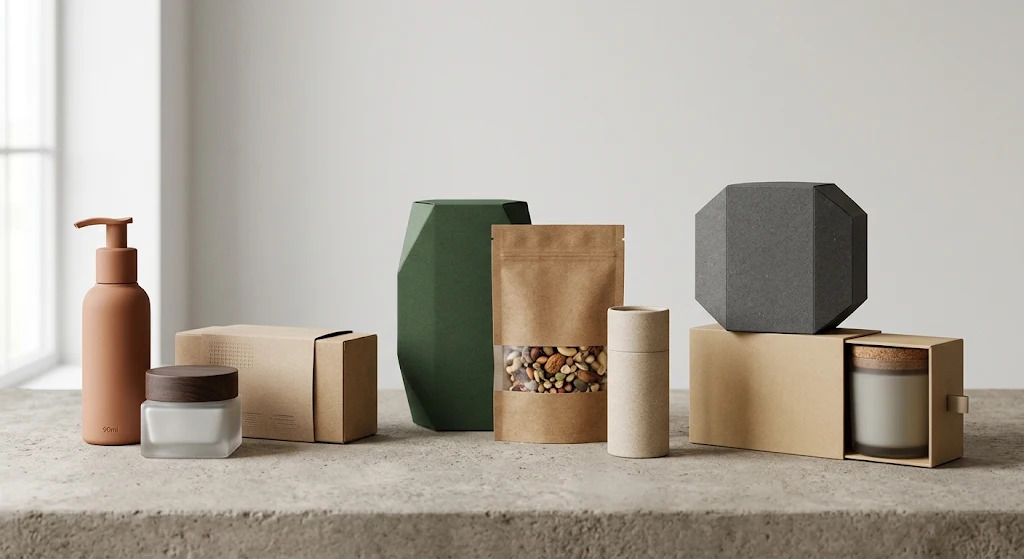
Packaging does more work than most brands give it credit for. It protects the product, but it also tells shoppers who you are before they read a single word. Whether you sell skincare, snacks, or hand-poured custom candle boxes for your latest scent line, keeping up with packaging trends for brands matters more every year. In 2026, buyers care about waste, speed, and touch as much as looks. Here are ten shifts worth your attention.
Sustainable packaging trends often start with simplicity. A box made from one material, such as all paper with no plastic window or foil lining, is far easier to recycle. Mixed materials usually end up in landfill because sorting centers cannot separate them. If your product needs a window, consider a die-cut opening or a paper-based alternative.
More brands now ask for recycled content or FSC-certified board, and shoppers have started looking for the logo. Specific claims work best. A line like “made with 80% recycled fiber” on a tuck flap earns more trust than a vague “eco-friendly” badge. Regulators in several markets are also tightening rules on unproven green claims, so accuracy protects you too.
Nobody enjoys opening a large box to find a small jar floating in paper filler. Oversized packaging annoys customers and raises shipping bills, since carriers often charge by dimensional weight rather than actual weight. Custom packaging trends now lean toward exact dimensions, with inserts cut from the same board so you can skip plastic cushioning entirely.
Crowded designs get lost on a busy shelf or a small phone screen. Many brands are moving to one or two colors, large lettering, and generous white space. This approach is also practical. Fewer ink passes can lower print costs, and a clean layout stays readable when the box appears as a thumbnail in an online store.
Soy and vegetable inks are replacing petroleum-based options, and water-based coatings are taking over from plastic laminates. These choices make boxes easier to recycle and reduce the chemicals released during printing. The finish still looks sharp, so you give up very little on appearance. Ask your printer which coating options they stock before you finalize artwork.
Online shoppers cannot touch a product before buying, so the box is often their first physical contact with your brand. That is why printed boxes trends in 2026 favor texture: soft-touch coatings, embossed logos, and debossed patterns. This matters on store shelves too, where custom retail boxes with a distinct feel invite people to pick them up. A single accent, such as foil on the logo only, usually looks more refined than covering the whole surface. It also keeps recycling simple.
The unboxing moment drives a surprising amount of social media content. Instead of tucking a thank-you card into the package, some brands print a message or pattern on the inside of the lid. A skincare seller might add usage steps there. A coffee roaster could print brewing ratios. You get the same impact with one less loose piece of paper.
QR codes have become normal, and shoppers now scan them without thinking twice. Brands use them to link to setup videos, authenticity checks, recipes, or reorder pages. Some are also testing NFC tags that open a page with a simple tap. Whatever you choose, test the link on a mobile phone first. A slow or broken page does more harm than having no code at all.
Digital printing lets brands vary a design without stopping the press. That opens the door to boxes with a customer’s name, regional artwork, or a limited seasonal print. A bakery could run different holiday designs for each city, while a gift brand could add a recipient’s initial. Personal touches tend to be kept, shared, and reused, which stretches the life of the box.
Not long ago, a custom box meant a large minimum order and expensive plates. Digital presses have changed that, and small batches are now realistic for startups. This is useful for testing. You can print 300 units of a new design, watch how customers respond, and place a bigger bulk order only after the layout proves itself. It lowers risk and cuts the waste of unsold boxes.
You do not need all ten trends. Start with the one that solves your biggest current problem. If shipping costs are high, begin with right-sized boxes. If customers rarely mention your packaging online, try a printed interior or a tactile finish. If you are launching a new line, short runs let you experiment safely. Ask your supplier for printed samples before committing. A design that looks perfect on a screen can feel different in your hands, and colors often shift between digital proofs and the final box.