Physical Address
304 North Cardinal St.
Dorchester Center, MA 02124
Physical Address
304 North Cardinal St.
Dorchester Center, MA 02124

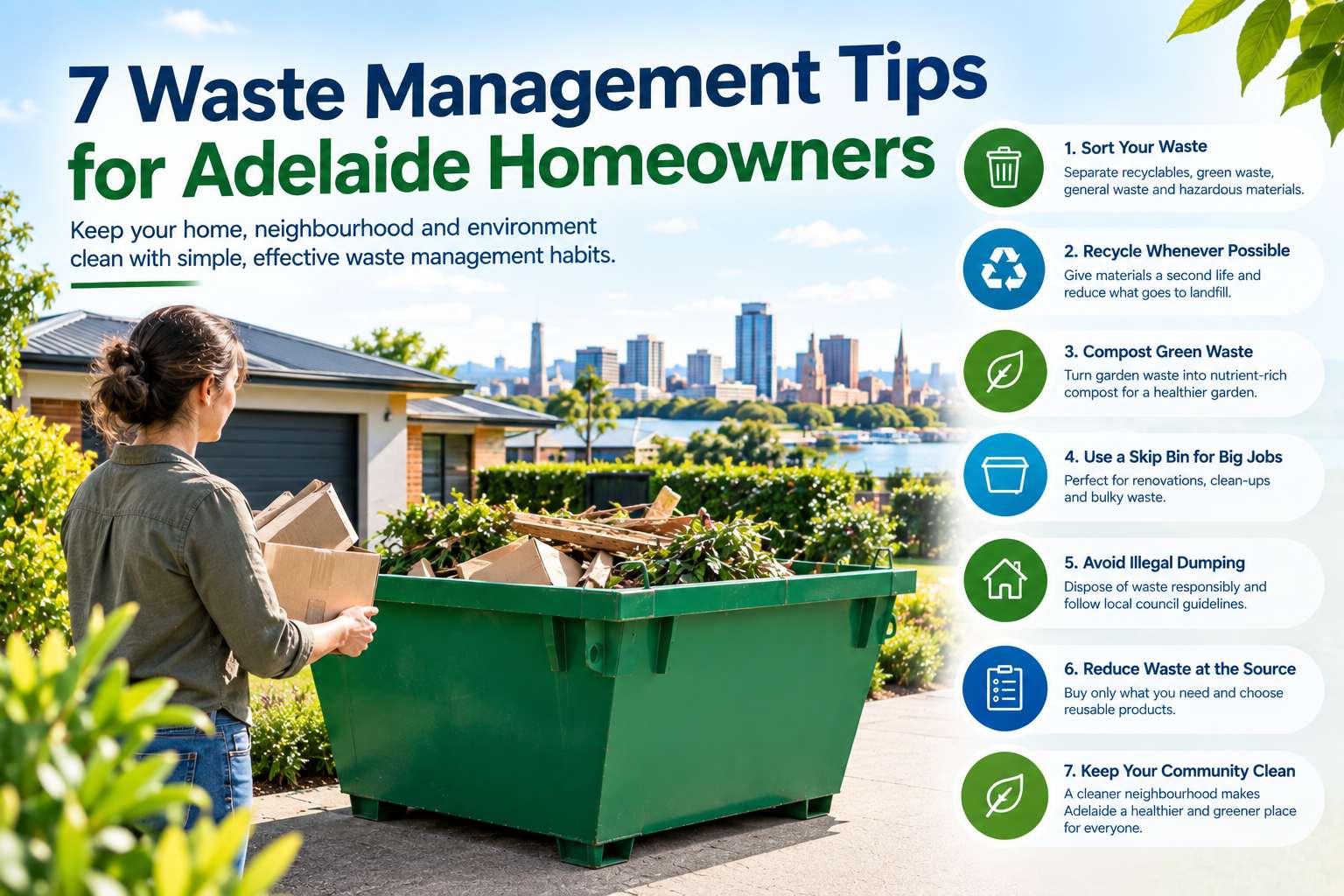
Discover 7 practical waste management tips for Adelaide homeowners, including recycling, green waste disposal, skip bin hire and responsible rubbish removal.
Good waste management at home isn’t about one big system, it’s a handful of small, consistent habits that keep rubbish under control before it becomes a bigger problem to sort out later. Whether it’s everyday household waste, a seasonal clean-up, or preparing for a bigger project, a bit of planning makes the whole process considerably smoother.
Here are seven waste management tips for Adelaide homeowners worth building into a regular routine.
Separating general rubbish, green waste, and recyclables as you go is far easier than trying to sort a mixed pile later. This matters for everyday kerbside bins just as much as it does for bigger clean-ups, since correctly sorted waste has a genuine chance of being recycled or composted, while mixed loads are far more likely to end up as landfill regardless of what they actually contain.
Not every waste situation needs the same solution. A single bulky item might be handled through council hard rubbish collection, while a full renovation or property clean-out generally needs a properly sized skip bin. Choosing the right method for the scale of the job avoids both underestimating, which leads to waste piling up with nowhere to go, and overpaying for a solution bigger than what’s actually needed.
Spring cleaning, post-holiday clear-outs, and garden overhauls after a growing season all tend to generate more waste than everyday household rubbish. Planning for these in advance, rather than reacting once the mess has already built up, means booking the right disposal option before you’re overwhelmed, and often avoids the higher demand and longer wait times that come with peak clean-up periods.
Certain materials, batteries, chemicals, gas cylinders, and particularly asbestos, should never go into general household waste. Asbestos in particular deserves extra caution in homes built before the 1990s, where it was commonly used in roofing, fencing, and flooring. If there’s any doubt during a renovation, having the material checked by a licensed professional before disturbing it is worth the extra step.
A lot of what comes out during a clean-out or renovation, furniture, fittings, building material, is still genuinely usable. Setting these aside for donation, resale, or reuse before defaulting to disposal reduces overall waste and often means a smaller, more manageable load for whatever disposal method you end up using.
Electronics and eligible drink containers shouldn’t go into general household bins. Most areas have dedicated e-waste drop-off points, and South Australia’s container deposit scheme allows eligible containers to be returned for a small refund rather than placed in standard recycling. Both diverted correctly, this keeps valuable materials out of landfill and, in the case of container deposits, comes with a small financial incentive as well.
Whether it’s a kerbside bin, a skip bin in Adelaide, or a council collection, every option has a limit, and stacking waste above it usually creates more problems than it solves. Overloaded bins can go uncollected, and overflow left beside them can attract exactly the kind of informal dumping councils actively try to prevent. If you’re consistently running over capacity, it’s worth reassessing whether the disposal method matches the actual volume of waste being generated, rather than continuing to push against the limit.
None of these tips require significant time or cost individually, but together they make a noticeable difference to how manageable household waste stays over time. Homeowners managing larger properties, including bigger blocks common in areas like Reynella, often find that consistent sorting and planning matter even more, simply because the volume of waste involved in a seasonal clean-up tends to be larger to begin with.
Good waste management doesn’t come down to one major change, it’s built from consistent, practical habits: sorting as you go, matching disposal methods to the actual job, and planning ahead for the bigger clean-ups that come around each year. Building these into a routine keeps waste manageable year-round, rather than becoming a stressful problem to solve every time it builds up.
What’s the easiest habit to start with for better waste management?
Sorting waste by category as you go, rather than after the fact, tends to have the biggest impact for the least ongoing effort.
How do I know if I need a skip bin instead of council collection?
If your waste exceeds council volume limits, involves renovation or construction material, or needs to be dealt with sooner than a scheduled collection date, a skip bin is generally the better fit.
Is it worth checking for asbestos before a small renovation?
Yes, particularly in homes built before the 1990s. It’s worth having any doubtful material checked by a licensed professional before demolition or removal begins.
What should I do with old electronics I no longer need?
Take them to a dedicated e-waste drop-off point rather than placing them in general household rubbish, since many contain materials that shouldn’t go to landfill.
Does sorting waste properly actually make a difference to what gets recycled?
Yes, significantly. Contaminated or mixed loads are far more likely to be treated as general waste, even when a large portion could have been recycled with correct sorting.




